
Who Is Saint Michael in the Bible? What Scripture Says
In the Bible, Michael is a named archangel and heavenly prince who appears in Daniel, Jude, and Revelation. Many Christians later honor him as Saint Michael, but Scripture itself presents him more simply as Michael or Michael the archangel: a powerful defender of God's people and a warrior who fights under God's authority.
The Bible gives Michael a handful of decisive scenes, not a full biography. It does not tell readers what he looked like, where he first came from, or every tradition later attached to his name. To understand who Saint Michael is in the Bible, the best place to begin is with the passages that mention him directly.
Why do Christians call him Saint Michael?
Christians call him Saint Michael because they honor him as a holy angel who serves God faithfully. Here, saint is being used as an honorific, not as a claim that Michael lived an ordinary human life and was later canonized the way many Christian saints were.
The Bible itself never uses the phrase Saint Michael. It refers to Michael by name and, in Jude 1:9, calls him the archangel. His name is commonly explained as meaning Who is like God? That fits the way Scripture presents him: not as someone seeking glory for himself, but as a servant who stands on God's side against evil.
So when Christians say Saint Michael the Archangel, they are using later church language for a figure the Bible really does describe. The important thing is to start with Scripture itself and let later tradition stay in second place.
Where does Michael appear in the Bible?
Michael appears by name in only a small number of passages, but those passages are enough to form a clear picture.
Michael in Daniel
Daniel gives the fullest biblical context for Michael. In Daniel 10:13, an angel tells Daniel that he was delayed by the prince of Persia until Michael, one of the chief princes, came to help. That scene gives readers a rare glimpse of spiritual conflict taking place behind earthly events.
A few verses later, in Daniel 10:21, Michael is called your prince, which ties him especially to Daniel's people. Then Daniel 12:1 calls Michael the great prince who stands watch over God's people during a time of severe distress and deliverance.
Taken together, those verses show why Michael is often described as a protector. Daniel does not present him as a distant background figure. He appears as a strong defender connected to God's people in moments of conflict and trouble.
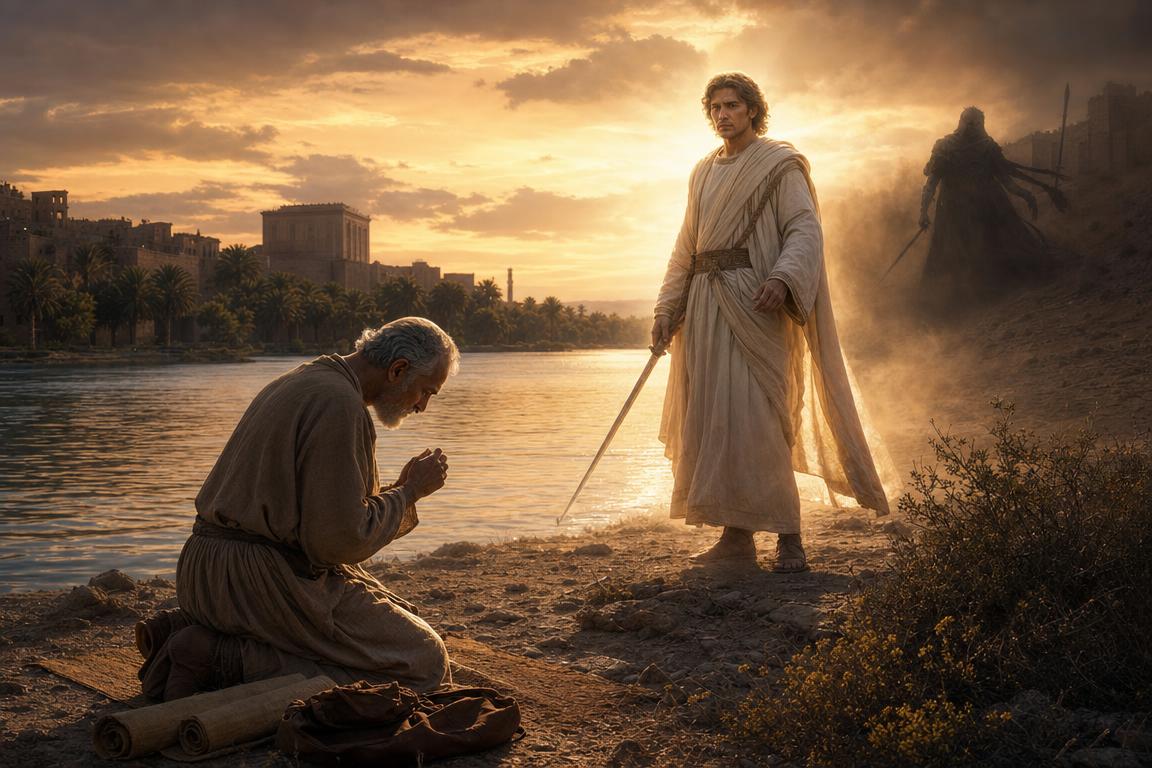
Michael in Jude 1:9
Jude gives one of the Bible's clearest snapshots of Michael's character. When Michael disputes with the devil over the body of Moses, he does not speak with self-importance. Instead, he says, The Lord rebuke you.
The scene shows both Michael's strength and his restraint. He is not a minor figure. Jude calls him the archangel. Yet even in direct conflict with the devil, he does not act as though he were independent of God. He leaves final rebuke and judgment where they belong: with the Lord.
Michael in Revelation 12:7-9
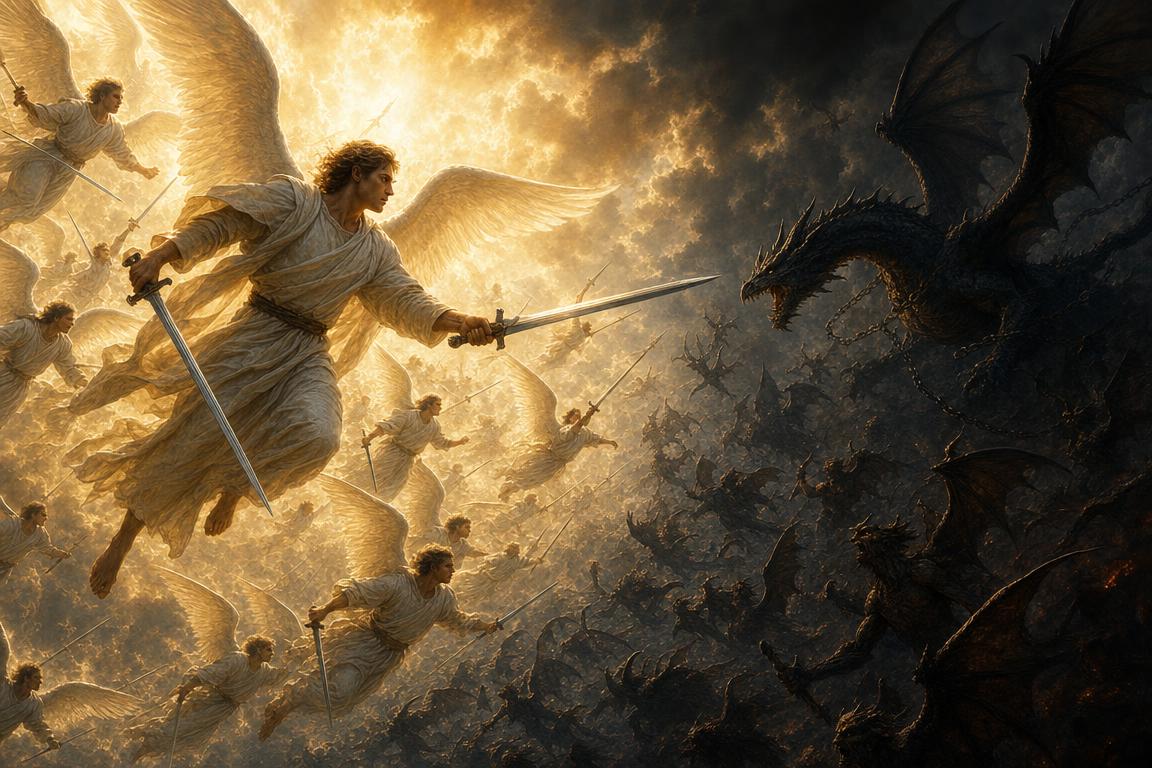
Revelation 12 shows Michael in open conflict with Satan. War arose in heaven, and Michael and his angels fought against the dragon and his angels. The dragon is then identified as the devil and Satan, the deceiver of the whole world.
This is the passage that most strongly shapes the familiar picture of Michael as a heavenly warrior. Scripture shows him leading heaven's side in battle against evil, and the result is Satan being cast down.
That is why Michael is often linked in Christian reflection with courage, defense, and resistance to evil. Revelation does not present him as a symbolic mascot. It presents him as an active participant in God's victory over the dragon.
What does Michael do in the Bible?
When you place those passages side by side, Michael's biblical role becomes easier to see.
First, Michael protects God's people. That is the clearest takeaway from Daniel, where he is tied to Israel and shown standing watch in a time of distress.
Second, Michael fights evil. Jude shows him contending with the devil, and Revelation shows him leading angels in war against Satan. If you are reading about Satan elsewhere in Scripture, Michael's Revelation scene helps explain why so many Christians think of him as a defender in spiritual conflict.
Third, Michael acts under God's authority. That point is easy to miss if readers focus only on the dramatic battle imagery. Michael is powerful, but he is not presented as a second god or as a free agent. In Jude, he leaves rebuke to the Lord. In Daniel and Revelation, he acts within God's larger purposes, not apart from them.
That combination is what makes Michael distinct. He is strong, but submitted. He is a warrior, but not a boastful one. He is a protector, but always as a servant of God.
Michael is also one of the few angels named in Scripture. Gabriel is the other best-known example, but Gabriel's scenes center more on delivering messages, while Michael's scenes center more on conflict, defense, and protection.
Is Michael the archangel Jesus?
This is one of the most common follow-up questions about Michael, and Christians do not all answer it the same way.
Some Christians believe Michael is another name or title for the pre-incarnate Christ. They often point to Michael's authority over angels, his protective role in Daniel, his battle against Satan in Revelation, and the phrase the voice of an archangel in 1 Thessalonians 4:16.
Others reject that view because the Bible never explicitly says Michael is Jesus, and because other passages distinguish the Son from angels in ways they think matter.
The safest summary is this: the Bible clearly presents Michael as a mighty heavenly prince, but it never directly says, in so many words, Michael is Jesus. For that reason, it is best to treat the identification as a debated interpretation, not as the main answer to who Michael is in the Bible.
Key Bible passages about Michael
If you want to study Michael more closely, start with these passages:
- Daniel 10:13 - Michael is described as one of the chief princes who helps in spiritual conflict
- Daniel 10:21 - Michael is called
your princein connection with Daniel's people - Daniel 12:1 - Michael stands watch over God's people during a time of distress and deliverance
- Jude 1:9 - Michael the archangel disputes with the devil and says,
The Lord rebuke you - Revelation 12:7-9 - Michael and his angels fight the dragon, identified as Satan, and cast him down
Those passages are the heart of what the Bible says about Michael. Most later Christian teaching, devotion, and art about Saint Michael grows out of them.
A short prayer inspired by Michael's example
Lord, thank You for showing through Michael that strength and humility belong together. Teach me to stand firm against evil without trusting in myself more than I trust in You. Give me courage, wisdom, and peace when life feels like a spiritual battle, and guide me into faithful prayer for protection, spiritual warfare, and deeper trust in Your power. If I want to keep praying along these lines, lead me also to the Archangel Michael prayer as a devotional next step. In Jesus' name, amen.
Frequently asked questions about Michael in the Bible
Is Saint Michael Lucifer's brother?
The Bible never describes Michael and Satan as brothers. Scripture simply shows Michael opposing the devil in Jude 1:9 and fighting against him in Revelation 12. Christians may debate some details of Michael's identity, but the Bible does not use sibling language for Michael and Satan.
Does the Bible describe what Michael looks like?
No. The Bible tells readers what Michael does far more than what he looks like. Later Christian art often shows him with armor, a sword, or a dragon beneath his feet, but those details come from artistic and devotional tradition rather than a direct physical description in Scripture.
Is Michael the only archangel in the Bible?
Michael is the only angel Scripture explicitly calls the archangel in Jude 1:9. First Thessalonians 4:16 mentions the voice of an archangel, but it does not name Michael there. So the safest wording is that Michael is the only angel explicitly given that title in the Bible.

