
Who Is Boaz in the Bible? Ruth's Redeemer Explained
Boaz in the Bible is a respected Bethlehem landowner in the book of Ruth. He is the relative who protected Ruth, stepped in as a family redeemer, married her, and became part of the family line that led to King David and, later, Jesus. His story matters because it joins everyday kindness and integrity to one of Scripture's clearest pictures of God's quiet provision.
Who was Boaz in the Bible?
Boaz appears in the book of Ruth as a respected man from Bethlehem. Ruth 2:1 introduces him as a worthy man from the clan of Elimelech. That means he was connected to Naomi's late husband's family and not just a kind stranger who happened to cross Ruth's path.
That detail matters because Naomi and Ruth were in a deeply vulnerable position. Naomi had lost her husband and both of her sons. Ruth had lost her husband too, and as a Moabite widow she had no obvious security waiting for her in Bethlehem. Boaz enters the story as a man with standing, resources, and a real family connection to their crisis.
So the clearest answer is this: Boaz was a well-regarded landowner whom God used to protect Ruth, care for Naomi, and carry the story toward David and Jesus.
If you want the fuller background on Ruth herself, PrayersFor already has a separate page on who Ruth was in the Bible.
What did Boaz do for Ruth?
Boaz first becomes important in Ruth's life when she goes out to glean in the fields. Gleaning was a way for poor people and widows to gather leftover grain after the main harvest. Ruth was doing humble, difficult work just to help herself and Naomi survive.
When Boaz saw Ruth in his field, he did much more than tolerate her presence. He treated her with unusual generosity and care. He told her to stay in his fields, told the young men not to touch or harass her, invited her to eat with his workers, and later instructed his men to leave extra grain behind for her.
Those details show what kind of man Boaz was. He was not generous only in theory. His kindness was practical. He used his position to protect someone more vulnerable than he was.
Ruth 2 also makes clear that Boaz knew Ruth's reputation. He had heard how she had stayed with Naomi after her husband's death and had come back with her to Bethlehem. His kindness was not shallow pity. He respected her faithfulness and responded with honor.
If you want the broader shared story after this moment, PrayersFor also has a deeper page on Ruth and Boaz in the Bible.
What is a kinsman-redeemer, and how was Boaz one?
This is one of the most important parts of Boaz's story.
A kinsman-redeemer was a close family relative who could step in when a family was in serious need and a near relative had a duty to help. In Ruth, that need involved both provision and family continuity. Naomi had returned to Bethlehem empty, and Ruth was a widow without protection. Because Boaz was connected to Elimelech's family, he was in a position to act on their behalf.
Naomi recognizes this in Ruth 2:20 when she says Boaz is one of their redeemers. That comment prepares the reader for what comes next.
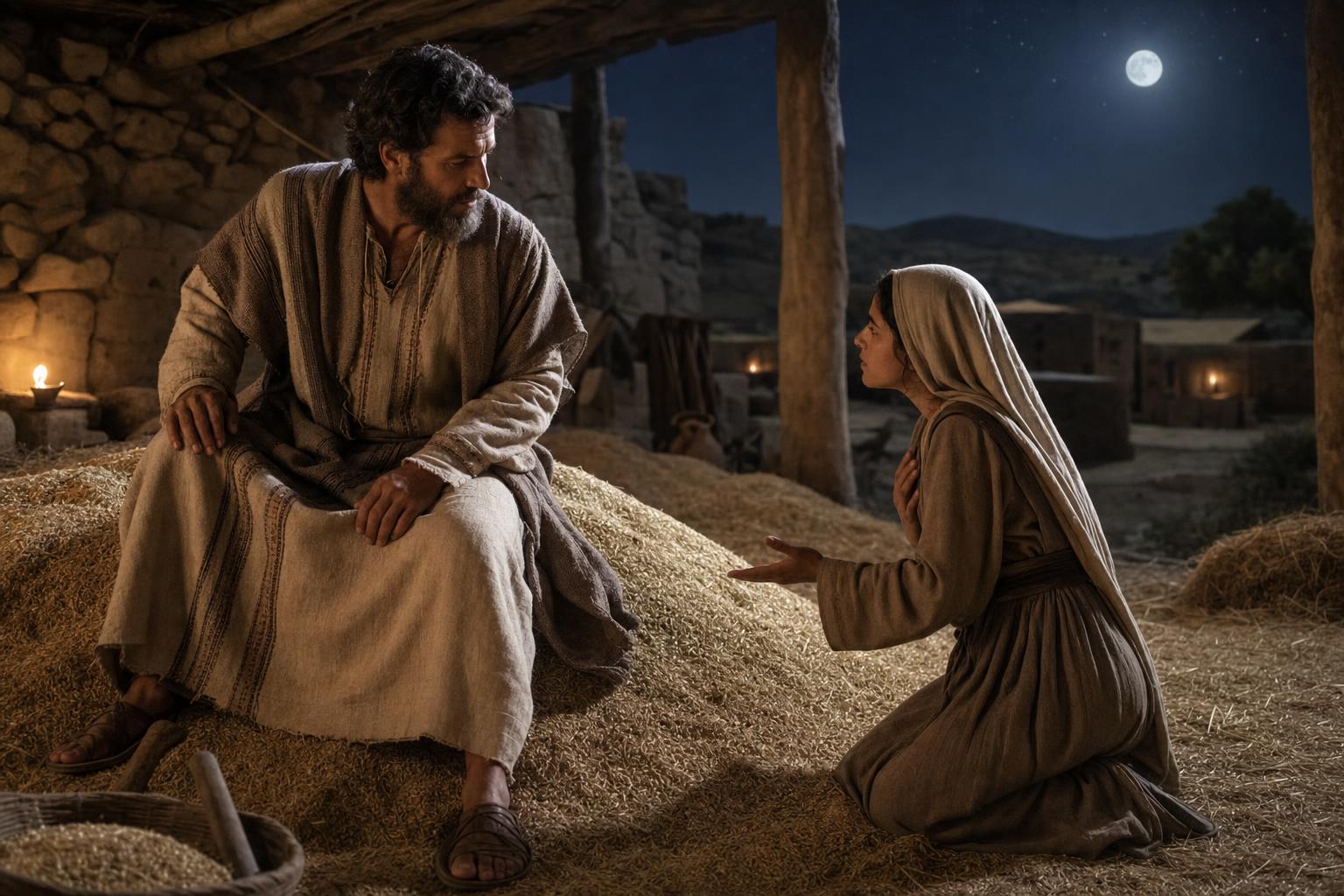
In Ruth 3, Ruth approaches Boaz at Naomi's instruction and asks him to spread his garment over her because he is a redeemer. In simple terms, Ruth is asking Boaz to take responsibility for her and for Naomi's family situation in the way the law and family duty allowed.
Boaz's response is one of the clearest windows into his character. He does not take advantage of Ruth. He does not rush around the truth. He tells her he is willing, but he also explains that another relative has a nearer claim. In other words, Boaz is compassionate, but he is also careful to do what is right.
That combination is part of what makes Boaz memorable. His kindness is real, but so is his integrity.
Why did Boaz marry Ruth?
Boaz married Ruth because he was willing to act as her family redeemer and because the nearer relative stepped aside.
Ruth 4 shows Boaz taking the matter to the city gate, where legal and family matters were handled publicly. He gathered witnesses, presented the situation, and gave the nearer redeemer the chance to act first. When that man declined, Boaz openly took on the responsibility himself.
That means Boaz did not marry Ruth on impulse. He married her through a process that protected her, honored the family line, and settled the matter publicly.
This is why the story is deeper than a simple love story. Boaz's marriage to Ruth includes affection and kindness, but it also includes covenant responsibility, public integrity, and redeeming care. He does not cut corners. He does what is right, even when doing what is right requires patience and public clarity.
That is one reason so many readers remember Boaz as a model of godly strength. He uses his position to restore rather than take advantage of someone in need.
Why was Boaz important in the Bible?
Boaz is important in the Bible both within Ruth's story and in the Bible's larger story.
Within Ruth's story, Boaz changes everything for Ruth and Naomi. He protects Ruth when she is exposed, provides for both women in their need, and helps move their season of emptiness toward restoration. Through Boaz, the book of Ruth moves from loss and uncertainty toward stability and joy.
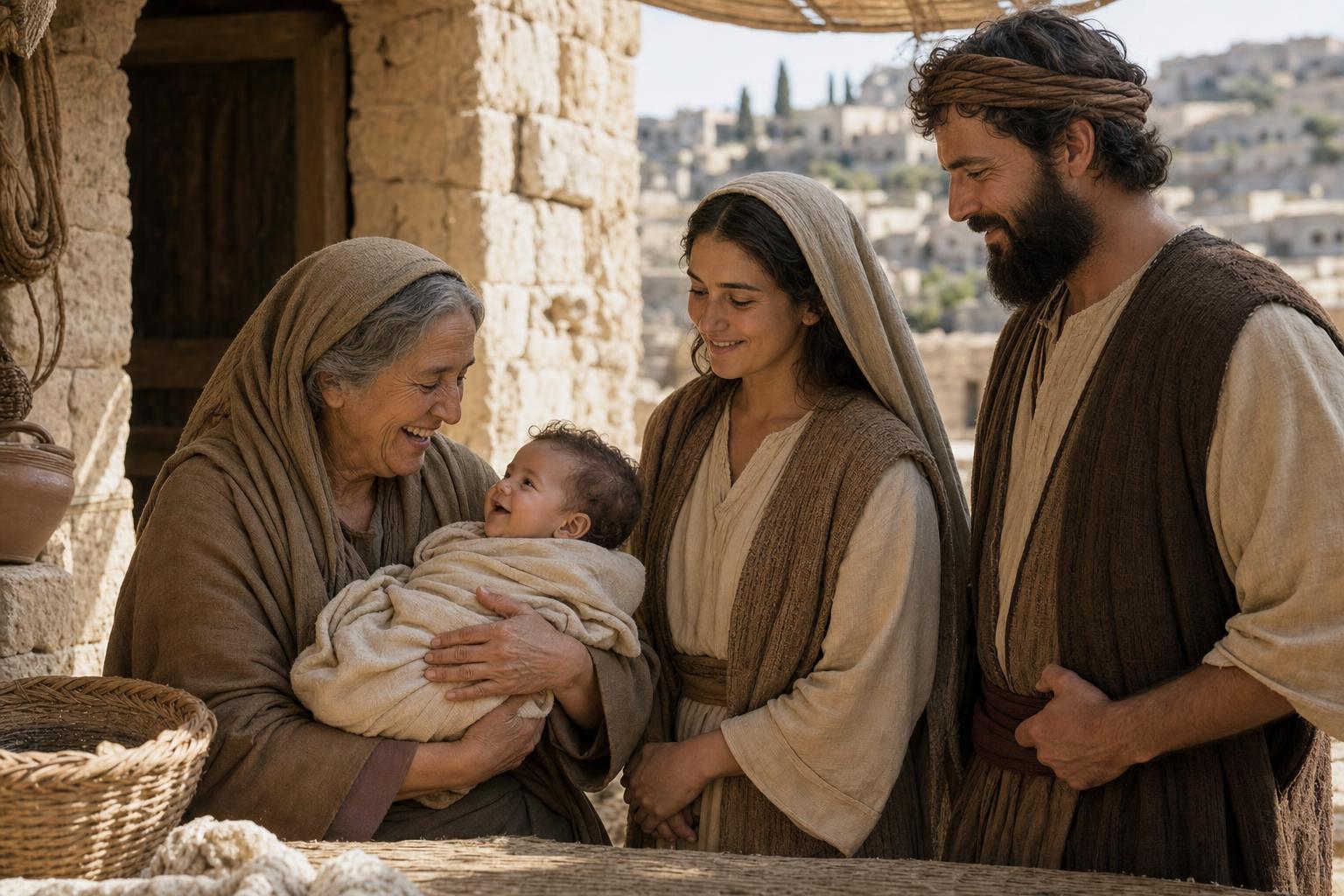
In the Bible's larger story, Boaz becomes part of one of Scripture's most important family lines. Ruth 4 says Boaz and Ruth had a son named Obed. Obed became the father of Jesse, and Jesse became the father of David. Then Matthew 1:5 names Boaz in Jesus' genealogy.
So Boaz is not just a kind man in one short Old Testament book. He stands inside the line that leads to Israel's king and, in the New Testament, to Christ.
That is one reason Boaz is remembered so clearly. His story brings together God's provision, faithful care, and long purposes across generations.
Common questions about Boaz
Was Rahab Boaz's mother?
Matthew 1:5 says that Salmon was the father of Boaz by Rahab. So yes, the New Testament genealogy presents Rahab as Boaz's mother.
That detail makes Boaz's place in Scripture even more striking. The line of Jesus includes people whose stories show God's mercy, surprising grace, and faithful purpose across generations.
Was Boaz married before Ruth?
The Bible does not say whether Boaz had a previous wife.
Some readers guess about Boaz's age or imagine extra background for him, but Scripture does not give a clear answer on that point. The safest answer is simply that the Bible does not tell us.
What does the name Boaz mean?
The name Boaz is commonly understood to mean "in him is strength." The Bible also uses Boaz as the name of one of Solomon's temple pillars.
Still, when most readers ask who Boaz is in the Bible, they mean the man in Ruth, not the pillar. The main answer to remember is the person: the honorable redeemer in Bethlehem who cared for Ruth and Naomi.
Key Bible passages about Boaz
If you want to read Boaz's story directly in Scripture, start here:
- Ruth 2:1-12 - Boaz is introduced and notices Ruth in his field.
- Ruth 2:14-20 - Boaz feeds Ruth, provides extra grain, and Naomi identifies him as one of their redeemers.
- Ruth 3:9-13 - Ruth asks Boaz to act as redeemer, and Boaz responds with honor.
- Ruth 4:1-10 - Boaz settles the matter publicly at the city gate.
- Ruth 4:13-17 - Boaz marries Ruth, and Obed is born.
- Ruth 4:21-22 - Boaz is named in the line leading to David.
- Matthew 1:5 - Boaz is named in Jesus' genealogy.
If you want to keep tracing the main idea behind Boaz's role after reading those passages, PrayersFor's Bible verses about redemption are a helpful next step.
A short prayer after reading about Boaz
Lord, thank You for the story of Boaz and for the way it shows strength used with kindness, honor, and mercy. Teach me to protect the vulnerable, act with integrity, and do what is right even when it takes patience and courage. Help me trust Your redeeming care in seasons that feel uncertain or empty. In Jesus' name, amen.
If Boaz's story has you praying about your own household, PrayersFor also has a prayer for family. If you want a simple way to keep reflecting on Scripture after reading Ruth, the daily devotional is a good next step.

