
Who Is Lot in the Bible? Abraham, Sodom, and Why He Matters
Lot in the Bible was Abraham's nephew, the son of Haran, and the man God brought out of Sodom before judgment fell on the city. His story is told mainly in Genesis 11-19, then remembered again in Luke 17 and 2 Peter 2. That means Lot matters for more than one dramatic Bible scene. He matters because his life shows both God's mercy and the danger of moving too close to what God has warned against.
Scripture does not present Lot as a simple hero. He begins as part of Abraham's household, becomes entangled with Sodom, escapes by God's mercy, and ends in a deeply tragic family situation. If we want to answer who Lot was in the Bible faithfully, we need the whole picture, not only the most famous headline.
How was Lot related to Abraham?
Lot was the son of Haran and the nephew of Abram, who was later called Abraham. Genesis 11 introduces him inside Abraham's family line, and Genesis 12 shows that Lot went with Abraham into Canaan. So Lot was not a random man living near Abraham for a short time. He traveled with him, lived alongside him, and shared in the early journey that shaped Abraham's story.
That family connection matters because Lot's life keeps intersecting with Abraham's. When Abraham obeyed God's call, Lot was part of the household that moved with him. When Lot later got into danger, Abraham still went after him. And when Sodom was about to be judged, Genesis says God remembered Abraham while rescuing Lot.
In other words, the clearest short answer is this: Lot was Abraham's nephew and part of his extended household, but his own choices took his life in a very different direction.
Why did Lot move toward Sodom?
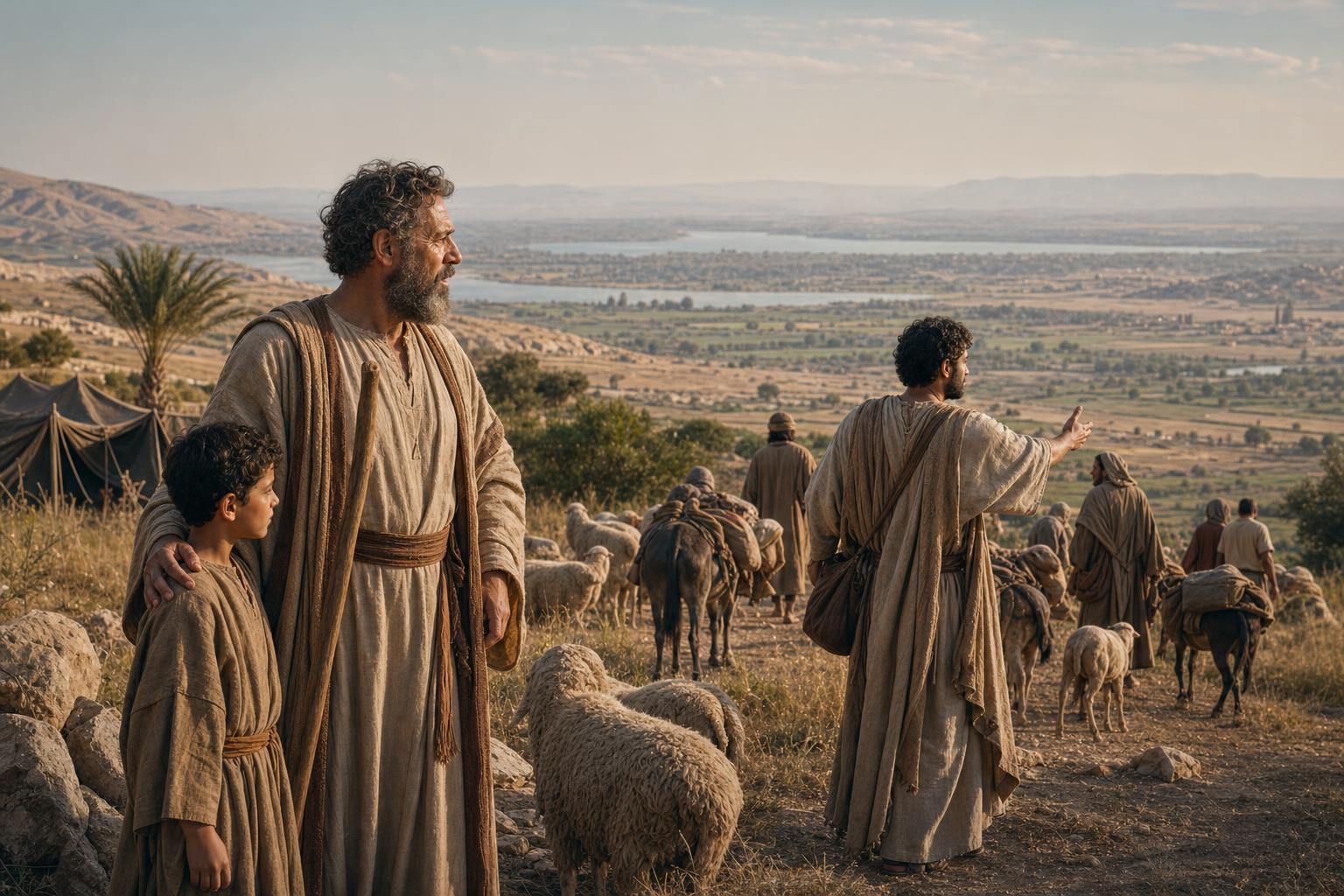
As Abraham and Lot grew wealthier, their herdsmen began to fight because the land could not support both camps together. Abraham responded with generosity and let Lot choose the land first. Lot looked at the well-watered plain of the Jordan and chose it, while Abraham stayed in the land God gave him.
That choice did not look foolish at first. The land looked fertile, prosperous, and practical. But Genesis immediately gives a warning: the men of Sodom were wicked before the Lord. Lot's story is a reminder that some choices look good on the surface while quietly pulling us closer to danger.
Abraham and Lot did not completely disappear from each other's lives after separating. In Genesis 14, invading kings captured Lot during a regional war around Sodom, and Abraham rescued him. That episode matters because it shows Lot was already deeply tied to the place he had chosen. His drift toward Sodom was no longer theoretical. It was shaping his home, his safety, and his future.
Lot's early story is therefore not just about geography. It is about proximity. A person can start by choosing what looks easiest and still end up far closer to compromise than expected. If you are asking God for help resisting that kind of drift, these prayers for temptation are a helpful companion.
What happened to Lot in Sodom and Gomorrah?
By Genesis 19, Lot was living in Sodom. Two angels came to the city, and Lot welcomed them into his home. What follows is one of the darkest scenes in Genesis. The men of Sodom surrounded the house in violent wickedness, and the chapter records both the city's corruption and Lot's own morally troubling weakness, including his shocking offer to hand over his daughters.
The Bible does not tell this story to excuse anyone. It tells it to show how lawless and warped Sodom had become, and how dangerous it is to live inside a place shaped by that kind of rebellion. Even Lot, who was distressed by the evil around him, had clearly been affected by the world he was trying to survive in.
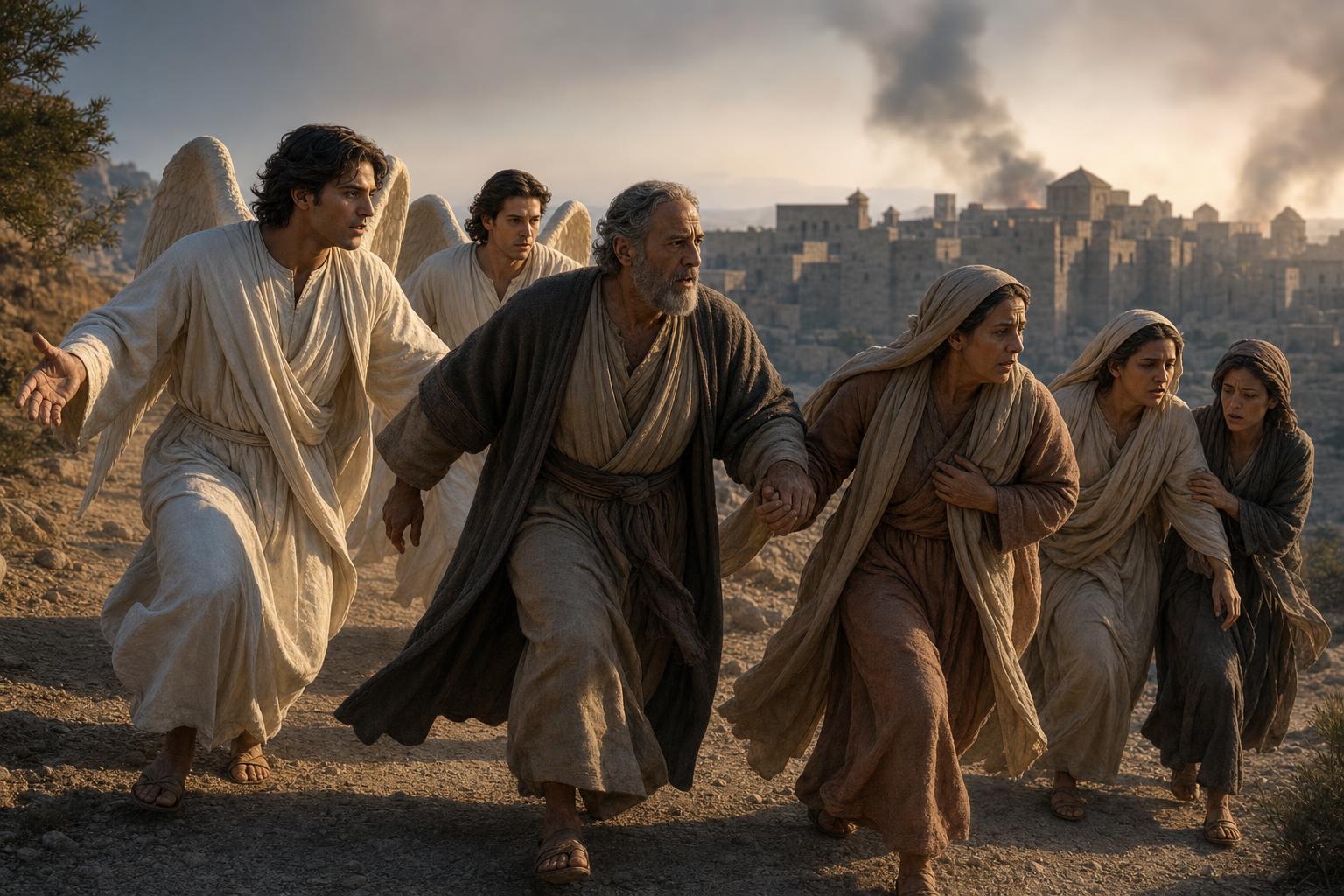
The turning point comes when the angels pull Lot back inside, strike the mob with blindness, and warn Lot to flee. Lot hesitated, but the angels brought him, his wife, and his daughters out of the city. Genesis 19:29 says God remembered Abraham and sent Lot out before the overthrow. So Lot's rescue was not the result of sharp instincts or personal strength. It was mercy.
That mercy is one reason Lot's story still matters. God did judge Sodom and Gomorrah, but He also rescued the one He intended to spare. Readers who want to pursue a life set apart from the moral pull of the world may also find help in these prayers for holiness.
What happened to Lot's wife and daughters?
Lot's wife famously looked back as the family fled and became a pillar of salt. The Bible gives only a short description, but the warning is strong enough that Jesus later said, "Remember Lot's wife." Her story has long been understood as a warning against divided obedience and a heart that still clings to what God is telling us to leave behind.
Lot's final family chapter is even harder. After the destruction of Sodom, Lot first took refuge in Zoar and then later lived in a cave with his two daughters. Genesis 19 says the daughters believed there was no man left in the land to come to them, so they made Lot drunk on successive nights and conceived children by him. From that tragic episode came Moab and Ben-ammi, ancestors of the Moabites and Ammonites.
Scripture records this plainly, but it does not celebrate it. The end of Lot's story is marked by loss, fear, and broken family consequences. That is one reason the article should not treat Lot as a neat example of success. His story includes real rescue, but it also shows how compromise can leave deep damage behind. Scripture does not tell us how Lot died, and after Genesis 19 the Bible leaves him mostly in silence. Even so, the wider Bible later shows that God can still bring grace out of damaged family lines, because Ruth the Moabite eventually becomes part of David's family line and, later, the line of Jesus. For readers walking through family pain of their own, these prayers for broken families may be a meaningful next step.
Why does 2 Peter call Lot righteous?
Second Peter 2:7-8 speaks of "righteous Lot" and says he was distressed by the lawless deeds he saw and heard around him. That can surprise readers who remember Genesis 19 and wonder how the Bible could speak of Lot that way.
The clearest way to understand it is not to treat "righteous" as "flawless." Peter is showing that Lot was not comfortable with Sodom's wickedness. He was tormented by it. He belonged to God rather than to the city around him. At the same time, Genesis does not hide the ways Lot's choices placed him too close to corruption, nor does it hide the weakness and tragedy that followed.
So the Bible holds both truths together. Lot was not the same as the lawless culture around him, yet he was still a compromised and deeply imperfect man. That tension is actually part of what makes his story useful. It warns us not to settle near evil while also reminding us that God's mercy can still reach people who have made damaging choices. If you want to study that theme more broadly, these Bible verses about righteousness are worth reading alongside Lot's story.
What can Christians learn from Lot today?
One lesson from Lot is that compromise usually starts gradually. Lot did not begin with the destruction of Sodom. He began with a reasonable-looking choice that moved him closer and closer to a corrupt place. Many believers experience the same pattern in slower forms: small compromises, tolerated temptations, and habits that place them near what they should be fleeing.
Another lesson is that God's warnings should be obeyed without delay. Lot hesitated when it was time to leave. His wife looked back. Jesus turned that memory into a living warning. When God tells us to turn from sin, we should not bargain with it, admire it, or keep one foot pointed back toward it. That is why Scripture repeatedly calls us to repentance and why many readers may want to pray through these prayers for repentance.
Lot's story also teaches that wisdom matters more than appearances. The Jordan plain looked good. Sodom looked established. But the apparently strong choice became the spiritually dangerous one. If you are facing a decision where appearances are pulling one way and obedience another, these Bible verses about wisdom and these prayers for wisdom fit naturally with the lesson of Lot's life.
Finally, Lot's story reminds us that God's mercy is real. He rescued Lot from judgment. Even in a story full of warning, mercy is not absent. The right response to that mercy is not carelessness, but humble obedience.
Key Bible passages about Lot
If you want to study Lot directly in Scripture, these are the key places to start:
- Genesis 11:27-32 - introduces Lot as the son of Haran and part of Abraham's family line.
- Genesis 13:5-13 - explains the separation from Abraham and Lot's choice of the Jordan plain near Sodom.
- Genesis 14:12-16 - shows Abraham rescuing Lot after he was taken captive.
- Genesis 19:1-29 - tells the story of the angels, Lot's escape, and the destruction of Sodom and Gomorrah.
- Genesis 19:30-38 - records the tragic final episode with Lot's daughters and the origin of Moab and Ben-ammi.
- Luke 17:28-32 - Jesus uses the days of Lot and the example of Lot's wife as a warning.
- 2 Peter 2:6-9 - calls Lot righteous and says he was distressed by the wickedness around him.
A short prayer for wisdom and obedience
Lord, give me wisdom where choices look attractive but lead me away from You. Keep my heart from compromise, and help me obey quickly when You warn me to turn. Make me holy, steady, and willing to leave behind what You say is dangerous. Thank You for mercy, and teach me not to look back when You call me forward. In Jesus' name, amen.

