
Who Is Moloch in the Bible? Meaning and Worship
Moloch in the Bible was not a human person, but a false god, idol, or form of idolatrous worship associated with child sacrifice. Scripture treats Moloch with unusual seriousness because anything tied to Molech worship was an abomination that profaned God's name and drew His people into horrifying evil.
That is why this subject matters more than a Bible-dictionary footnote. Moloch shows how far people can fall when they turn from the living God to false worship. If you have wondered who Moloch was in the Bible, the clearest answer comes from the passages where God forbids this worship, exposes it, and judges it.
Who was Moloch in the Bible?
Moloch, also spelled Molech or Molek, is presented in the Bible as a detestable false god or idol connected with children being offered in the fire. Although the name can sound like a personal name, Scripture does not treat Moloch as a human Bible character with a personal story. It treats Moloch as a warning.
That warning matters because the Bible speaks about Molech in connection with one of the darkest forms of idolatry. Leviticus 18:21 says God's people must not give any of their children to Molech. Leviticus 20 then shows how seriously God viewed the sin, saying it defiled His sanctuary and profaned His holy name.
Some historical sources debate whether Molech was strictly the name of a deity, a title, or even a term tied to a sacrificial practice. That background can be useful, but the main biblical meaning is not unclear. Whatever the exact historical nuances, the Bible presents Molech worship as false worship that God utterly rejects.
Where is Moloch mentioned in the Bible?
The main references to Moloch appear in a short but weighty line of passages. In Leviticus 18:21 and Leviticus 20:1-5, God forbids His people from giving their children to Molech and treats the practice as a grave evil. Those passages are the clearest starting point because they show the law of God drawing a sharp line between holy worship and pagan abomination.
Moloch then appears in Israel's later history. First Kings 11:7 says Solomon built a high place for Molech, the abomination of the Ammonites, which turns the subject from a warning about surrounding nations into a tragedy inside Israel's own story. That compromise helps explain why later reform was needed. If you want the wider background to that failure, this guide to who Solomon was in the Bible is a helpful companion.
Second Kings 23:10 shows King Josiah defiling Topheth in the Valley of Hinnom so no one could make a son or daughter pass through the fire to Molech. Jeremiah 32:35 returns to the same horror and says Judah caused sons and daughters to pass through fire to Molech, something God says He never commanded and that never even entered His mind.
Moloch also appears once in the New Testament by name. In Acts 7:43, Stephen recalls Israel's idolatrous rebellion and mentions the tabernacle of Moloch. That reference shows Moloch was remembered not merely as an isolated Old Testament detail, but as part of the larger pattern of false worship that pulled God's people away from Him.
What did worship of Moloch involve?
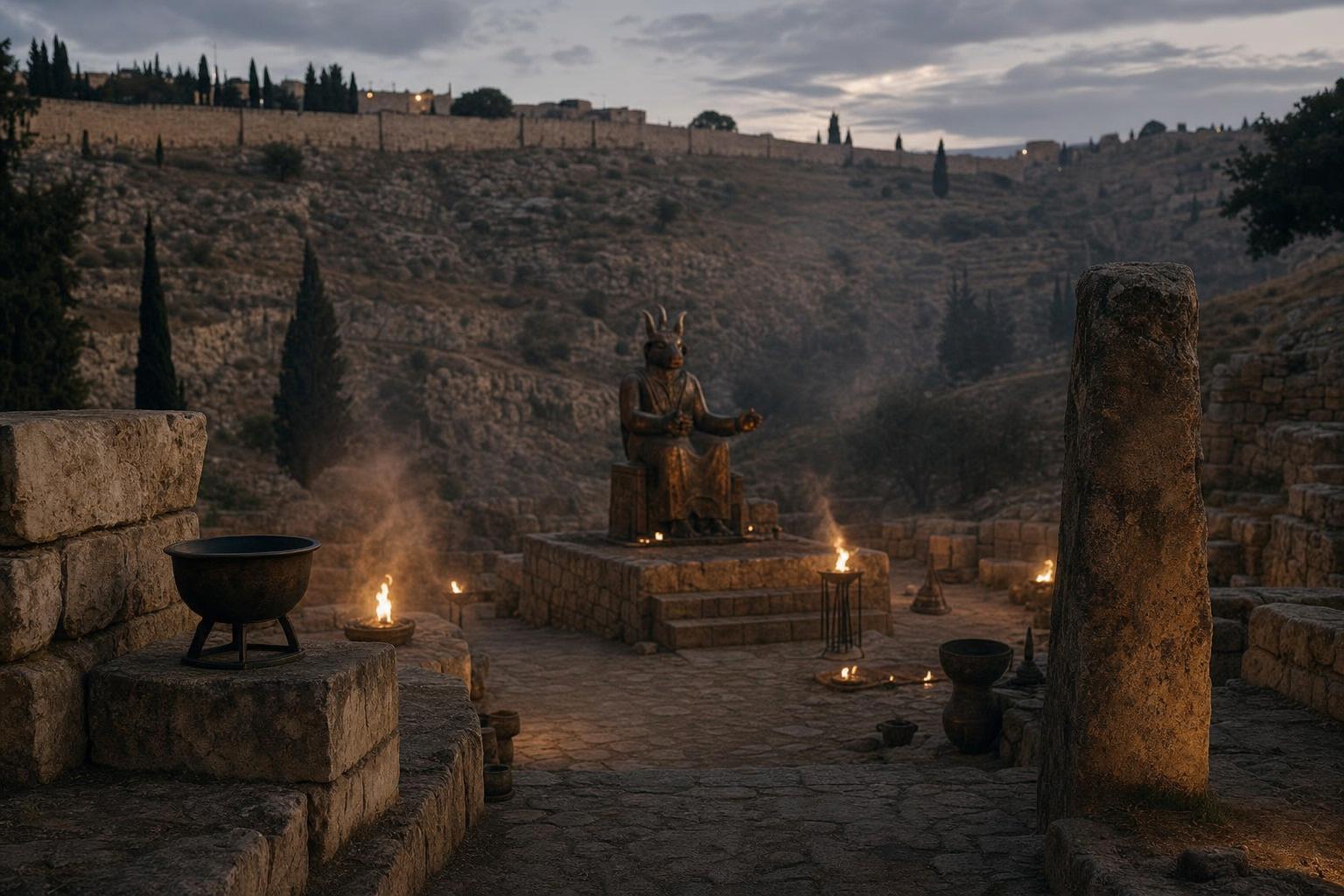
The Bible describes Moloch worship in sober but unmistakable terms. The repeated language is giving children to Molech or making sons and daughters pass through the fire. Scripture does not treat this as symbolic, harmless, or spiritually neutral. It presents it as a real act of false worship bound up with the destruction of innocent life.
The passages also connect this worship to Topheth in the Valley of Hinnom near Jerusalem. That location became one of the best-known historical settings for Molech worship in Judah. So when the Bible names Moloch, it is not talking about a vague religious idea. It is talking about a concrete form of idolatry that corrupted worship, family life, and the nation itself.
The Bible is clear enough without graphic description. Scripture wants the reader to understand the evil of the practice, not to dwell on shocking detail. What matters most is that Molech worship asked for what belonged to God alone and did violence to the vulnerable in the process.
Why did God condemn Moloch so strongly?
God condemned Moloch worship so strongly because it joined false worship with direct rebellion against His holiness. Leviticus 20 says it profaned His holy name and defiled His sanctuary. In other words, Molech was not just another bad religious option. It was a complete corruption of covenant life.
It also showed how idolatry always demands more than it promises. False gods do not give life. They take it. That is part of why Scripture speaks so strongly about idolatry and every form of evil sacrifice. Molech stands as one of the clearest biblical pictures of where false worship leads when it is embraced instead of resisted.
The history around Molech also shows how compromise spreads. Solomon's high place, Judah's later participation, and Josiah's reform all reveal that God's people were not immune to the pressure of surrounding worship. That is why Moloch is not only a warning about pagan nations. It is a warning to God's own people not to borrow the practices of a world that does not honor Him.
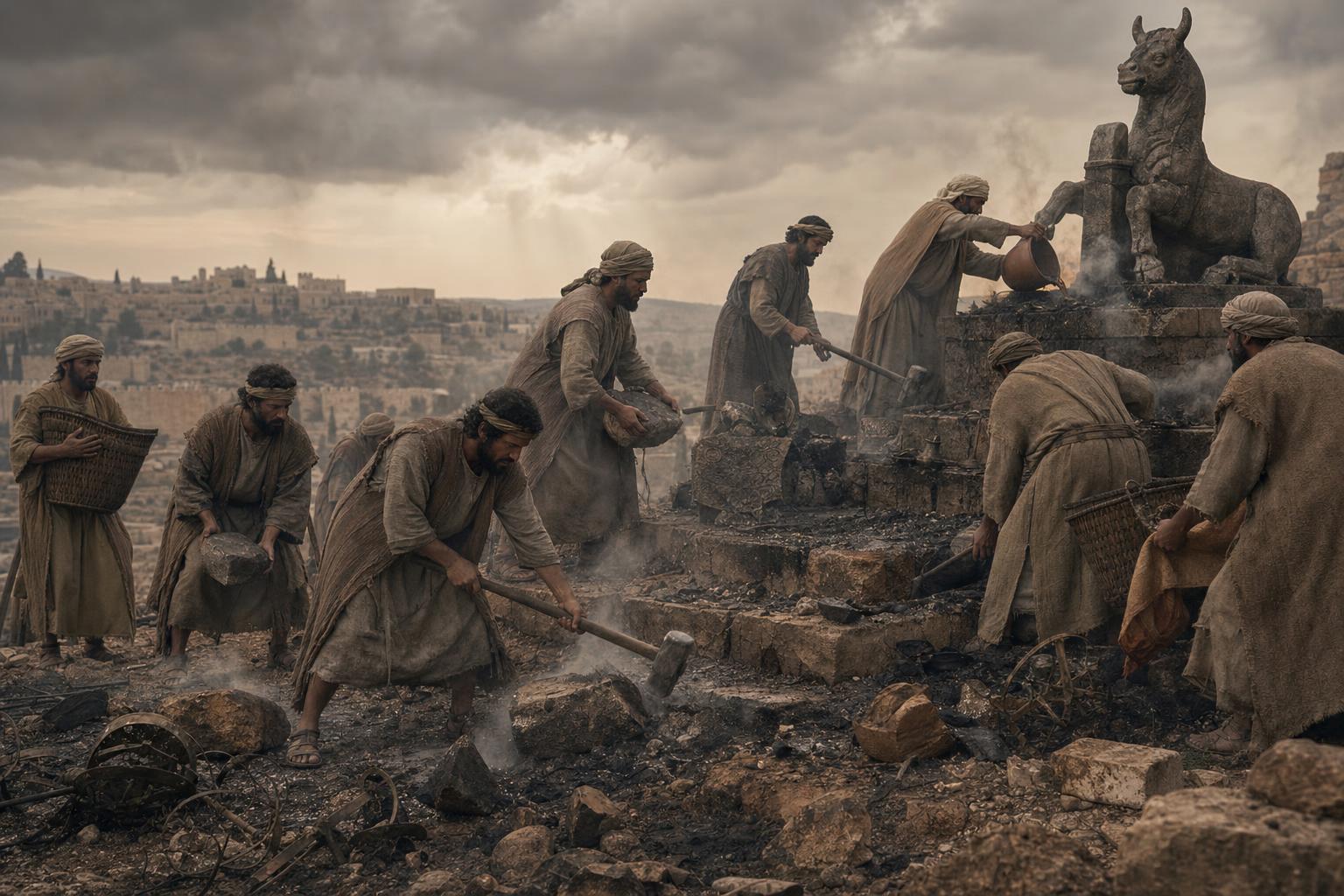
Second Kings 23 is especially striking because Josiah did not merely preach against the sin. He defiled Topheth so the practice could not continue there. That is a picture of repentance taking visible form. Sometimes turning back to God means removing what has been feeding false worship in the first place.
What can Christians learn from Moloch today?
Christians should not read about Moloch as though it were only an ancient curiosity. The clearest lesson is that idolatry always deforms what it touches. When people give their fear, trust, love, or obedience to something other than God, the result is never life-giving in the end.
That does not mean every modern idol looks like an ancient statue. The deeper warning is about anything that takes the place of God and trains the heart to justify sin. Moloch is an extreme biblical example, but the call behind the warning is the same in every age: flee false worship, refuse compromise, and belong wholly to the Lord.
That is why this topic should lead not to fascination, but to humility. God calls His people back to true worship, honest repentance, and lives set apart for Him. If you need help turning back to God in a specific area of your life, these prayers for repentance are a natural next step.
The subject of Moloch also reminds believers to value what God values. The God of Scripture is not honored by the destruction of life, by spiritual compromise, or by worship that imitates the world. He calls His people to holiness, faithfulness, and love that refuses evil rather than making peace with it.
Key Bible passages about Moloch
If you want to read the main Molech passages directly in Scripture, these are the strongest places to start:
- Leviticus 18:21 - God forbids giving children as a sacrifice to Molech.
- Leviticus 20:1-5 - God shows how seriously He judges Molech worship because it profanes His holy name.
- 1 Kings 11:7 - Solomon builds a high place for Molech, showing how compromise entered Israel's story.
- 2 Kings 23:10 - Josiah defiles Topheth so children can no longer be passed through the fire to Molech.
- Jeremiah 32:35 - God condemns Judah for causing sons and daughters to pass through fire to Molech.
- Acts 7:43 - Stephen mentions Moloch as part of Israel's long pattern of idolatrous rebellion.
If you want a verse-based companion page after this article, the broader themes are reinforced by Bible verses about idolatry and evil sacrifice.
A short prayer for holiness and faithfulness
Lord, keep my heart from every false god and every form of compromise. Help me worship You alone with reverence, obedience, and love. Give me wisdom to recognize what competes for my devotion, and give me courage to turn from it quickly. Make me holy in the way I think, live, and worship, and keep me faithful to You. In Jesus' name, amen.

