
Who Is Saul in the Bible? Israel's First King Explained
When people ask who Saul is in the Bible, they usually mean King Saul, the first human king of Israel. He was the son of Kish from the tribe of Benjamin, he was chosen during the days of Samuel, and his story runs mainly through 1 Samuel.
Saul matters because his life has both a strong beginning and a tragic ending. He starts as a chosen leader with clear advantages, but his story turns into one of the Bible's clearest warnings about partial obedience, jealousy, and leadership without a fully surrendered heart.
One more detail helps right away: some readers mean Saul of Tarsus, the man who later became the apostle Paul. This page is mainly about King Saul, because that is the dominant search intent for this keyword.
Who is Saul in the Bible?
Saul in the Bible is the first king of Israel. He was chosen after the people asked for a king like the surrounding nations, even though God had already been ruling His people. If you want the wider Bible theme around rulers, PrayersFor also has a companion page on kings.
He came from the tribe of Benjamin and is introduced as the son of Kish in 1 Samuel 9. The text also highlights his outward appearance: he stood taller than the others and looked like the kind of leader the people expected. That physical description matters because Saul's story later shows that outward impressiveness is not the same thing as spiritual faithfulness.
So the shortest answer to the query is this: Saul was Israel's first king, a man chosen in a turbulent period, remembered both for his early promise and for the way his reign unraveled.
Is this Saul the same person as Saul who became Paul?
No. King Saul belongs to the Old Testament and reigns in the time of Samuel and David. Saul of Tarsus belongs to the New Testament and later becomes the apostle Paul.
That distinction matters because the search term can sound broader than the real intent. Most people searching this phrase want the first king of Israel, not the persecutor-turned-apostle from Acts. If you mean the later Saul, PrayersFor already has a separate page on Saul becoming Paul.
A strong article on this keyword should therefore answer King Saul first and then remove confusion early instead of leaving the reader to guess which Saul is being discussed.
How did Saul become king?
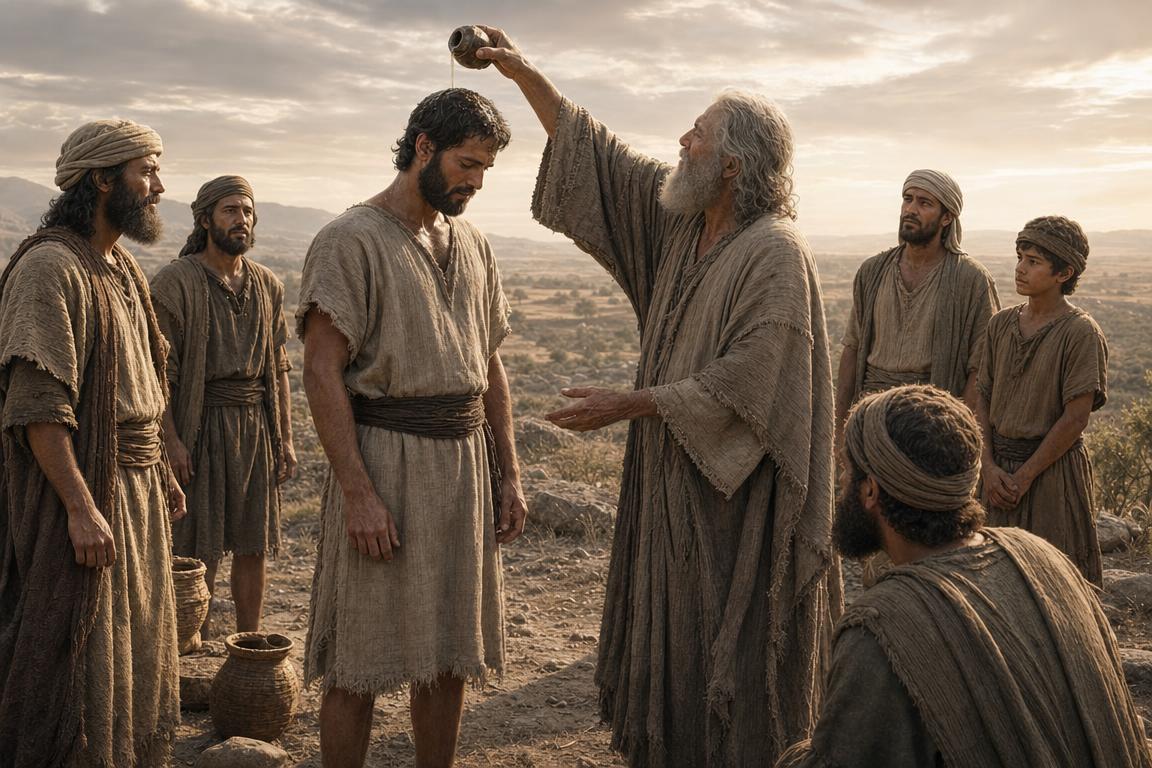
Saul became king after Israel asked Samuel for a human ruler. The request itself came from a troubled place: the people wanted to be like the nations around them. Even so, God allowed a king to be appointed, and Samuel anointed Saul.
At first, Saul's rise looks hopeful. He is modest in the early scenes, he receives confirmation through Samuel, and he begins leading the nation in battle. Scripture presents him as a real leader, not a cartoon villain from the start. That early promise makes his later downfall more sobering.
This part of the story also shows why Saul cannot be reduced to one moral lesson. He is not only the man who fell. He is also the man who was given real responsibility, real opportunity, and real confirmation before his heart turned in the wrong direction.
What was Saul known for?
Saul is known for three big things in Scripture: he was Israel's first king, he led in major military conflicts, and he became increasingly consumed by fear and rivalry once David began to rise.
His early reign includes genuine victories, and that is easy to miss if readers jump straight to the end of his story. But 1 Samuel also shows that Saul's kingship never settled into healthy trust in God. Instead, the pressure of leadership exposed a heart that could look impressive outwardly while drifting inwardly. That tension becomes especially clear once David enters the picture. If you want David's side of the contrast, PrayersFor already has a helpful page on David.
Saul is also remembered for the contrast between appearance and heart. When God later chose David, Scripture emphasized that the Lord looks beyond surface appearance. That is why Saul's story naturally sits beside PrayersFor's page on God looking at the heart.
Why did Saul lose the kingdom?
Saul lost the kingdom because he repeatedly disobeyed God and then defended himself instead of humbling himself. Two failures stand out in particular. First, he offered sacrifice when he was supposed to wait for Samuel. Second, he failed to carry out God's command against Amalek the way he had been told.
Those moments matter because Saul's downfall was not only about one mistake. It was about a pattern. He acted as though partial obedience would be good enough, and he often seemed more concerned with holding his position than with honoring God's word. That is why Saul's story pairs naturally with PrayersFor's page on disobedience.
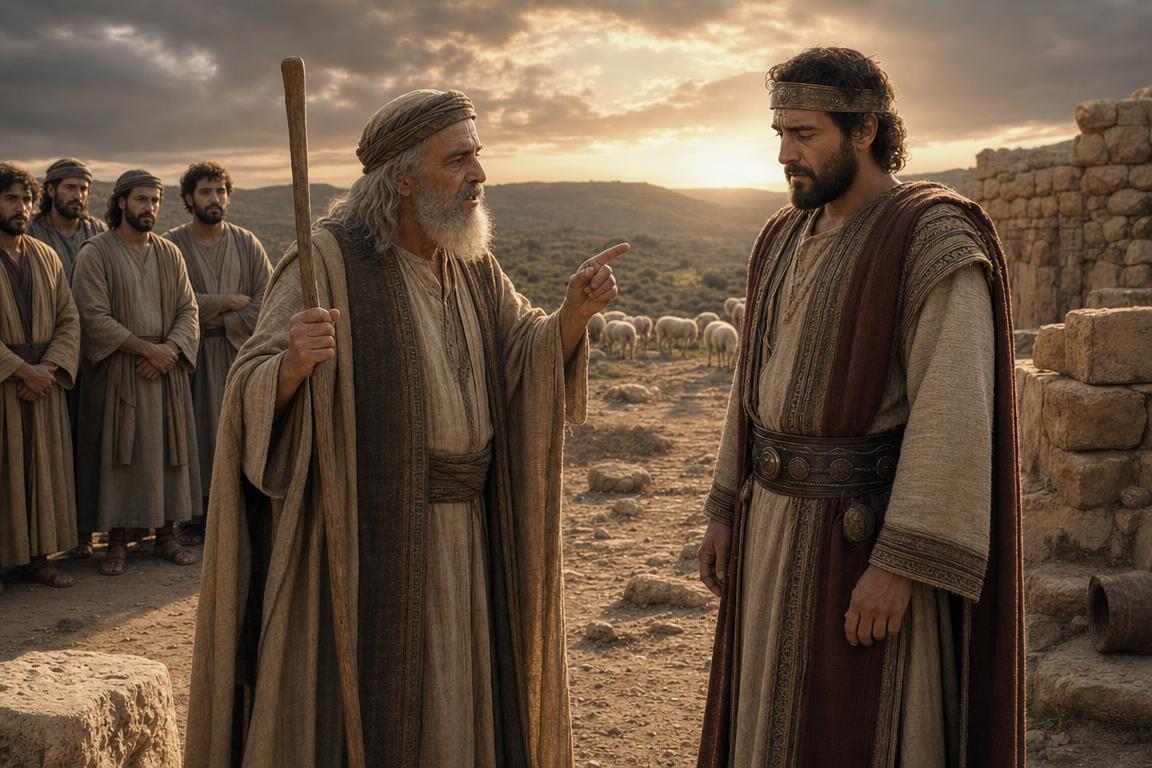
His jealousy of David deepened the collapse. Instead of rejoicing that God had raised up another faithful servant, Saul became threatened, suspicious, and violent. The story turns darker as envy starts directing his choices. If you want the broader theme, PrayersFor also has a page on jealousy.
By the end of his reign, Saul is not acting like a man resting in God's help. He is acting like a man trying to keep control while losing his center. That is why his story feels tragic instead of merely instructive.
How did Saul die?
Saul died in battle against the Philistines on Mount Gilboa. The defeat was severe, several of his sons died, and Saul himself was badly wounded. Rather than be captured and abused by the enemy, he fell on his own sword.
That ending is one of the reasons the story of Saul carries so much weight. The first king of Israel does not finish in peace or restoration. He finishes in collapse, fear, and judgment after years of resisting the direction God had made clear.
Even here, though, the point is not to treat Saul's life like a spectacle. The Bible preserves the ending so readers will understand where pride, stubbornness, and unhealed jealousy can lead when they are never truly surrendered.
What can we learn from Saul's story?
First, a strong start does not guarantee a faithful finish. Saul had real advantages, real calling, and real opportunity, yet none of that replaced the need for ongoing obedience.
Second, outward strength can hide inward weakness. Saul looked like the king people wanted, but his story proves that leadership is finally tested in the heart, not only in appearance, charisma, or public success.
Third, jealousy can rot a person's judgment. Saul's rivalry with David was not a small emotional problem. It bent his leadership, redirected his energy, and hardened his heart. Readers who feel that same danger should not ignore it just because it begins quietly.
Finally, Saul's life teaches that God desires obedience, humility, and trust more than image management. His story is tragic, but it is also useful because it keeps readers from romanticizing power or assuming that position alone means spiritual health.
Key Bible passages about Saul
If you want to read Saul's story directly in Scripture, these passages are the best starting places:
- 1 Samuel 8:4-9 - Israel asks for a king, and the request reveals the spiritual setting behind Saul's rise.
- 1 Samuel 9:1-2 - Saul is introduced as the son of Kish from Benjamin.
- 1 Samuel 10:1, 17-24 - Samuel anoints Saul and presents him publicly as king.
- 1 Samuel 13:8-14 - Saul offers sacrifice without waiting, exposing a serious failure of trust and obedience.
- 1 Samuel 15:17-23 - Saul's incomplete obedience against Amalek leads to Samuel's sharp rebuke.
- 1 Samuel 18:6-12 - Saul's jealousy of David becomes clear.
- 1 Samuel 28:5-20 - Saul seeks out the medium at Endor in one of the darkest scenes of his life.
- 1 Samuel 31:1-6 - Saul dies on Mount Gilboa as the Philistines defeat Israel.
A short prayer after reading Saul's story
Lord, keep me from the pride, fear, jealousy, and partial obedience that damaged Saul's life. Give me a heart that listens quickly, obeys humbly, and stays soft before You even when pressure is high. Help me care more about faithfulness than appearance, and more about Your approval than protecting my own image. In Jesus' name, amen.

