
What Is the Ark of Testimony? Meaning and Purpose
The ark of testimony is another biblical name for the ark of the covenant. It was the sacred gold-covered chest God told Moses to make in Exodus, and it was closely tied to the covenant tablets God gave Israel. Scripture places it in the Most Holy Place and treats it as one of the clearest signs of God's holy presence among His people.
If you want the short answer, the word testimony emphasizes what was inside the ark and what it represented. The names ark of testimony and ark of the covenant point to the same object. Once that is clear, the main questions are what the ark held, why it mattered, and what the Bible does and does not say about what happened to it later.
What is the ark of testimony?
The ark of testimony is the sacred chest described in Exodus 25. God told Moses to have it made for the tabernacle, the worship tent where the Lord would dwell among His people during Israel's wilderness journey. It was not an ordinary storage box. It belonged to the holiest part of Israel's worship life.
In simple terms, the ark of testimony was the covenant chest of Israel. It was built from acacia wood, overlaid with gold, and set beneath the mercy seat. It later stood at the center of the tabernacle and, after that, in Solomon's temple. When readers search for the ark of testimony, they are asking about that object.
Is the ark of testimony the same as the ark of the covenant?
Yes. The ark of testimony and the ark of the covenant are the same sacred object. Scripture uses different phrases to emphasize different aspects of it.
When the Bible highlights the covenant, it points to the agreement God made with Israel. When it uses the word testimony, it points to the witness God gave His people, especially the covenant tablets placed inside the ark. The names are different, but the object is the same.
That is why it is better to explain the two terms together instead of treating them like two separate biblical artifacts. The search query sounds narrow, but the answer belongs inside the larger ark-of-the-covenant story.
Why is it called the ark of the testimony?
The name comes from what God told Moses to place inside it. In Exodus 25:16, the Lord says to put the testimony into the ark. That testimony refers to the covenant witness God gave Israel, most clearly the stone tablets of the law.
So the phrase ark of testimony is not a mystery title. It means the ark was the chest that held God's testimony to His people. The name focuses on what the ark guarded. It was not holy because it was beautiful or ancient. It was holy because it was tied to God's covenant word.
What was inside the ark of testimony?
The clearest and most central answer is this: the ark held the tablets of the covenant. That is the heart of the testimony language, and it is the first thing Scripture wants readers to understand.
Later passages add more detail. Hebrews 9:4 associates the ark with a golden jar of manna and Aaron's rod that budded, along with the tablets of the covenant. At the same time, temple passages such as 1 Kings and 2 Chronicles emphasize the tablets when describing the ark in Solomon's day. The safest way to put it is that the tablets were central, and Hebrews also preserves the fuller association with manna and Aaron's rod.
That nuance matters because it keeps the article accurate without making a simple question feel more confusing than it needs to be.
What did the ark look like and where was it kept?
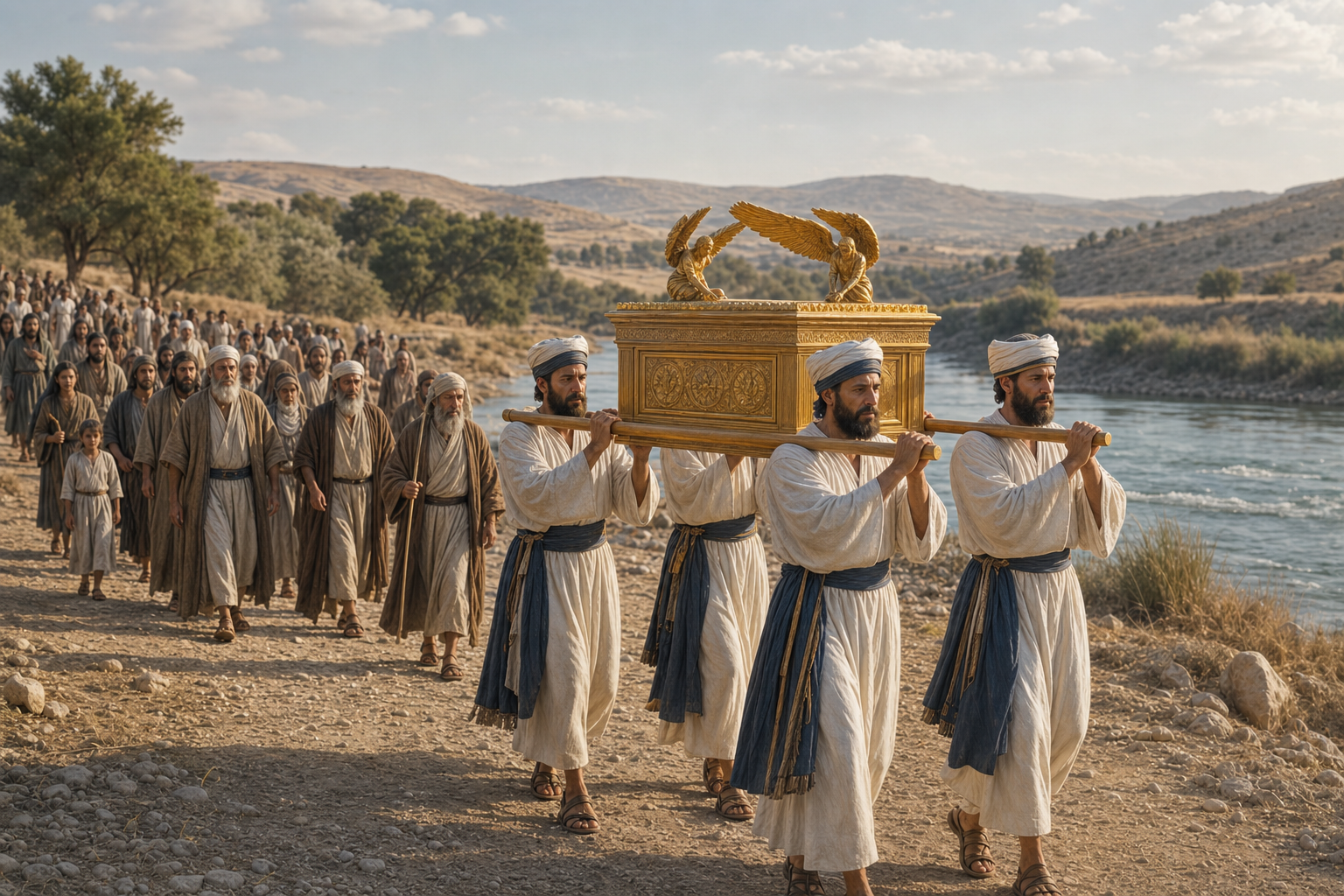
The ark was a rectangular chest made of acacia wood and overlaid inside and out with gold. It had rings and carrying poles so it could be moved without being handled casually. Its lid was the mercy seat, with cherubim above it, which is why the ark cannot be explained apart from mercy and atonement themes.
In the wilderness, the ark stood inside the tabernacle, behind the veil, in the area later called the Holy of Holies. After the temple was built, the ark was placed in that same inner sanctuary. Only the priestly ministry approached this space, and the Bible's strict handling rules reinforced God's holiness rather than any kind of superstition.
If you want the wider worship setting, PrayersFor's page on the tabernacle helps explain where the ark belonged and why that placement mattered.
What was the purpose of the ark of testimony?
The ark of testimony signified God's covenant rule, holy presence, and mercy-seat meeting place among His people. It was not a decorative object and not a lucky charm. It marked the place where the covenant testimony rested and where God chose to meet with Israel in a unique way.
That is why the ark appears at major moments in Israel's story. It went before the people in the wilderness. It was present at the Jordan crossing. It appears in conquest and temple scenes. Yet the Bible also makes clear that the ark itself was never the real source of power. The Lord was. The Philistine stories especially show that people could not control God by possessing the ark.
That balance matters. The ark was a visible sign of God's presence, but the object itself was never independent from Him. Scripture invites reverence, not superstition.
What happened to the ark of testimony?
The ark eventually came to Jerusalem, and Solomon placed it in the temple's inner sanctuary. After that, Scripture grows quieter. Later Old Testament passages describe the temple's plunder, but they do not give one simple statement that identifies the ark's final location.
Because of that, the Bible does not let readers speak with certainty about where the ark is today. Many later traditions and claims exist, but they go beyond what Scripture clearly says. The safest answer is that the Bible records the ark's importance in Israel's worship and history, but it does not clearly reveal its final resting place after the monarchy.
Key Bible passages about the ark of testimony
If you want to study the ark of testimony in Scripture, start with these passages:
- Exodus 25:10-22 - the ark's design, mercy seat, and the command to place the testimony inside it.
- Deuteronomy 10:1-5 - Moses recounts putting the covenant tablets into the ark.
- Numbers 10:33-35 - the ark goes before Israel during the wilderness journey.
- 1 Samuel 4-6 - the ark's capture and return show that God, not the object itself, is the source of power and judgment.
- 1 Kings 8:6-11 - Solomon places the ark in the temple's inner sanctuary.
- Hebrews 9:4 - the New Testament's best-known summary of the ark's associated contents.
If you want to keep exploring related themes after those passages, PrayersFor also has helpful Bible-verse pages on priests and the law.
A short prayer for reverence and faithfulness
Lord, teach me to approach You with reverence, obedience, and gratitude. Help me remember that Your holiness is real, Your mercy is near, and Your presence is not something to treat lightly. Give me a heart that loves Your Word, honors Your ways, and walks with humble faithfulness before You. In Jesus' name, amen.

