
Who Is Job in the Bible? His Story, Suffering, and Faith
When people ask who Job is in the Bible, they mean the righteous man at the center of the Book of Job. He is introduced as a blameless and upright man from the land of Uz, and he is remembered for severe suffering, honest lament, steadfast faith, and God's eventual restoration.
Job matters because his story answers more than a biography question. It gives readers one of the Bible's deepest looks at suffering, integrity, and what it means to trust God when life stops making sense.
If the name looks confusing, remember that this page is about Job the person, not the modern word "job" meaning work or employment. The search results for this query are overwhelmingly about the biblical man.
Who is Job in the Bible?
Job in the Bible is a godly man from the land of Uz. Scripture introduces him as "blameless and upright," a man who feared God and turned away from evil. He was also wealthy, respected, and the head of a large family.
That introduction matters because the book does not present Job as an obviously wicked man getting what he deserves. It presents him as a righteous man whose life raises hard questions about suffering. If you want to keep reading about that theme, PrayersFor already has a companion page on Job trusting God.
So the shortest answer is this: Job is the righteous man in the Old Testament Book of Job, known for suffering deeply while continuing to bring his pain before God.
What was Job known for?
Job is known for three main things in Scripture: his integrity, his suffering, and his endurance. Before disaster struck, he was known as a man of unusual spiritual seriousness. Then he became known for losing his possessions, his children, and his health in rapid succession.
He is also remembered because his response was not shallow. Job did not pretend pain was easy, and he did not hide his grief. He worshiped, questioned, lamented, and wrestled. That fuller picture is important because people often reduce Job to a symbol of patience alone. James 5:11 later highlights his perseverance, which is why this story pairs naturally with PrayersFor's page on perseverance.
Job is therefore remembered not only as a man who suffered, but as a man whose suffering became one of the Bible's clearest case studies in faith under pressure.
What happened to Job?
Job's trials begin when Satan challenges the sincerity of Job's faith. The accusation is basically that Job only fears God because his life is protected and prosperous. God then permits Job to be tested, though within clear limits.
In a short span, Job loses his livestock, servants, and children. Later he is struck with painful sores from head to foot. The losses are so complete that readers immediately understand the book is dealing with extreme suffering, not ordinary inconvenience. If you want to study that broader theme, PrayersFor already has pages on suffering and why God allows suffering.
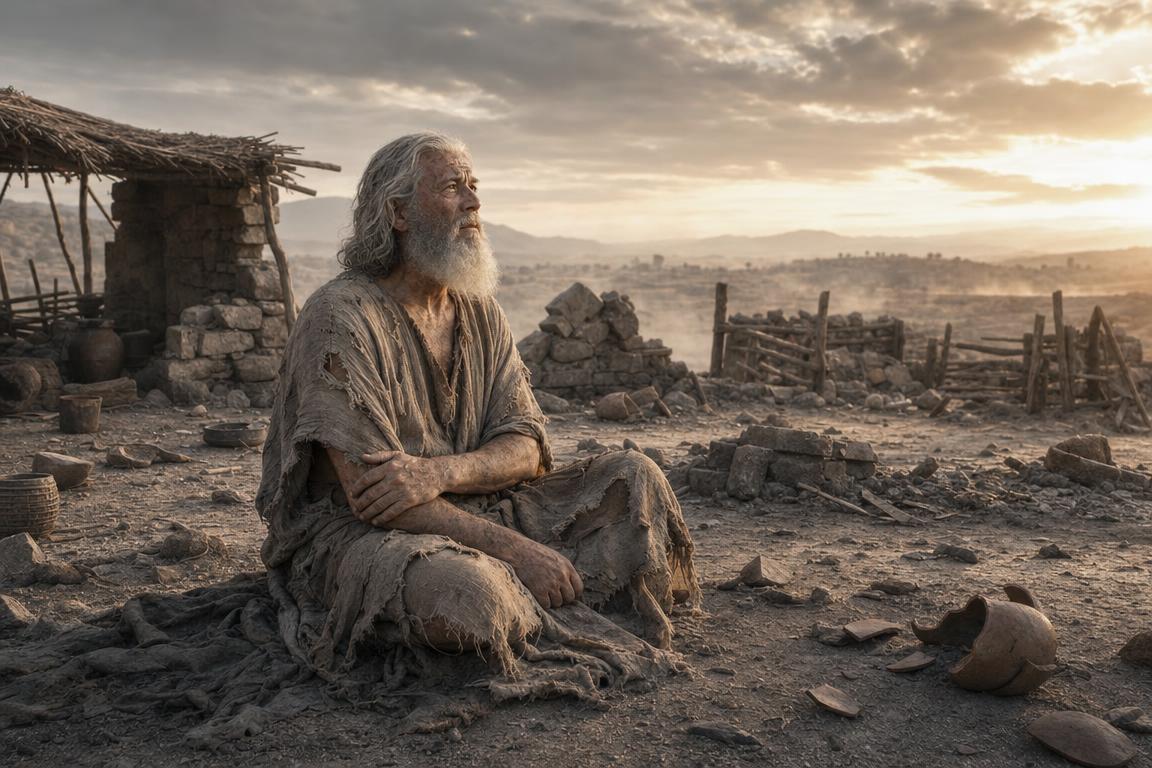
Job's friends arrive to comfort him, but the conversation turns into a long argument. They assume suffering of this scale must prove hidden sin, while Job insists he has not brought this disaster on himself in the way they claim. That tension drives much of the book.
How did Job respond to suffering?
Job's response is one of the reasons his story is so memorable. At first, he grieves and worships at the same time. He tears his robe, falls to the ground, and says, "The Lord gave, and the Lord has taken away; blessed be the name of the Lord."
But Job's faith does not mean emotional numbness. As the book continues, he speaks with raw honesty. He mourns, questions, protests, and asks why this has happened. That part of the story matters because biblical faith is not the absence of pain. It is the refusal to abandon God even when pain becomes difficult to understand.
That is why Job is so helpful for readers in hard seasons. He shows that trust in God can include lament, confusion, and unanswered questions without becoming unbelief.
What did God say to Job?
Near the end of the book, God answers Job out of the whirlwind. Instead of giving Job a simple explanation for every event, God reveals His wisdom, power, and unmatched authority over creation.
The point is not that Job's questions were silly. The point is that God's wisdom is larger than Job's field of vision. Job is reminded that he is not in a position to rule the world or fully judge the hidden purposes of God. In response, Job humbles himself before the Lord.

God also rebukes Job's friends. That detail is easy to miss, but it matters. Their confident explanations about suffering were not as wise as they claimed. The book does not end by saying the friends understood everything correctly. It ends by showing that God alone sees the whole picture.
How did Job's story end?
Job's story ends with restoration. God restores Job's fortunes, blesses the latter part of his life, and gives him renewed family and long years.
That ending does not erase the weight of what happened earlier. The book never treats Job's pain lightly. But the restoration matters because it shows that suffering is not the final word in his story. For readers who want to study that theme more closely, PrayersFor also has a page on restoration.
So when people ask how Job's story ends, the answer is that God restored him after the long season of testing, lament, and divine confrontation.
What can we learn from Job's story?
First, suffering is not always a simple punishment for personal sin. Job's friends were wrong to force that conclusion.
Second, faithfulness does not mean silent denial. Job cried out to God honestly, and Scripture preserves those prayers and protests instead of hiding them.
Third, God is wise even when His purposes are not fully explained to us. Job does not receive every detail he wanted, but he does encounter the reality of God's greatness.
Fourth, endurance matters. Job's story became a lasting biblical example of patient faith under pressure, which is why it still helps readers carrying grief, confusion, or loss.
Finally, Job points readers toward humble trust. The book does not call people to easy answers. It calls them to bring suffering before God truthfully and to keep believing that His wisdom is greater than what they can currently see.
Key Bible passages about Job
If you want to read Job's story directly, these passages are the best starting places:
- Job 1:1-5 - Job is introduced as upright, God-fearing, and prosperous.
- Job 1:6-22 - Job loses his possessions and children.
- Job 2:1-10 - Job is afflicted physically but still refuses to curse God.
- Job 2:11-13 - Job's friends arrive and sit with him in grief.
- Job 38:1-11 - God begins answering Job out of the whirlwind.
- Job 40:1-5 - Job responds humbly to the Lord.
- Job 42:1-6 - Job confesses God's greatness and his own limited understanding.
- Job 42:10-17 - God restores Job and blesses the latter part of his life.
A short prayer after reading Job's story
Lord, teach me to trust You with the same honesty and endurance Job showed in suffering. Keep me from easy answers, help me stay faithful when life feels confusing, and remind me that Your wisdom is greater than what I can see right now. Strengthen me to grieve honestly, pray sincerely, and keep hoping in You. In Jesus' name, amen.

