
Apollos in the Bible: His Story, Role in Acts, and Lessons
Apollos is a lesser-known but important New Testament figure. If you are looking for Apollos in the Bible, he is not the Greek god Apollo or one of the modern brands that can appear in search results. He is a first-century Jewish Christian teacher whose story appears in Acts and in Paul's letters.
The short answer is this: Apollos was an eloquent teacher from Alexandria who knew the Scriptures well, received fuller instruction from Priscilla and Aquila, powerfully defended that Jesus is the Christ, and later became an important co-worker in the early church.
Who Was Apollos in the Bible?
Acts 18 introduces Apollos as a Jew from Alexandria in Egypt. He is described as eloquent, fervent in spirit, and mighty in the Scriptures. Those details matter because they help explain why he quickly became such a strong public teacher.
Apollos was not as prominent as Paul or Peter, but he was far more than a background name. The New Testament presents him as a gifted and useful servant whose ministry helped strengthen believers in key places like Ephesus and Corinth.
What Did Apollos Do in the Bible?
Apollos first appears in Ephesus. There he taught boldly about Jesus, but Acts says he knew only John's baptism. In other words, he had real zeal and real knowledge, but his understanding was not yet complete.
That is where one of the most beautiful parts of his story begins. Priscilla and Aquila heard him, took him aside privately, and explained the way of God more accurately. Apollos was teachable enough to receive that help. His story is not one of public embarrassment, but of humble correction that made him even more useful.
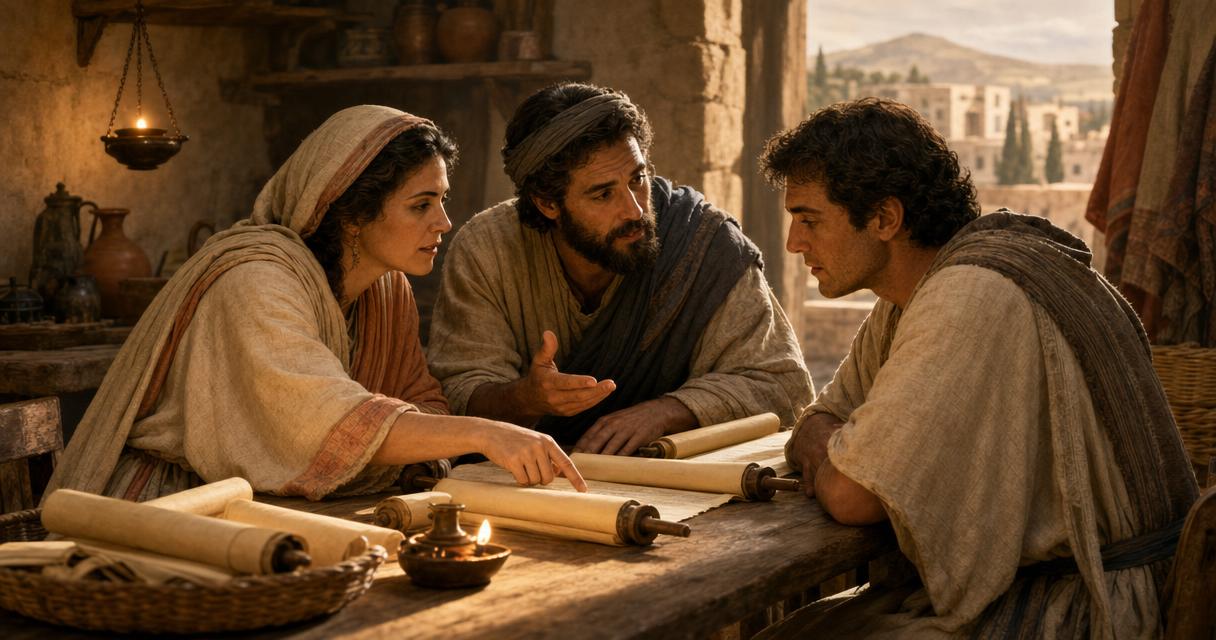
After that, Apollos went to Achaia and greatly helped believers there. Acts says he powerfully refuted opponents in public and showed from the Scriptures that Jesus is the Christ. That makes Apollos a strong example of someone who combined biblical understanding, bold witness, and a willingness to keep growing. If you want to keep exploring those themes, PrayersFor already has pages on understanding the Word of God, baptism, and discipleship.
Why Does Apollos Matter in 1 Corinthians?
Apollos shows up again when Paul writes to the Corinthians. Some believers in Corinth had started dividing themselves around favorite leaders, saying things like I follow Paul or I follow Apollos. Paul rebuked that attitude because it turned Christian service into personality rivalry.
Instead of treating Apollos like a competitor, Paul described both of them as servants. His best-known line is simple and memorable: I planted. Apollos watered. But God gave the increase. That means Apollos mattered, but not as a celebrity. He mattered as a faithful worker in God's field.
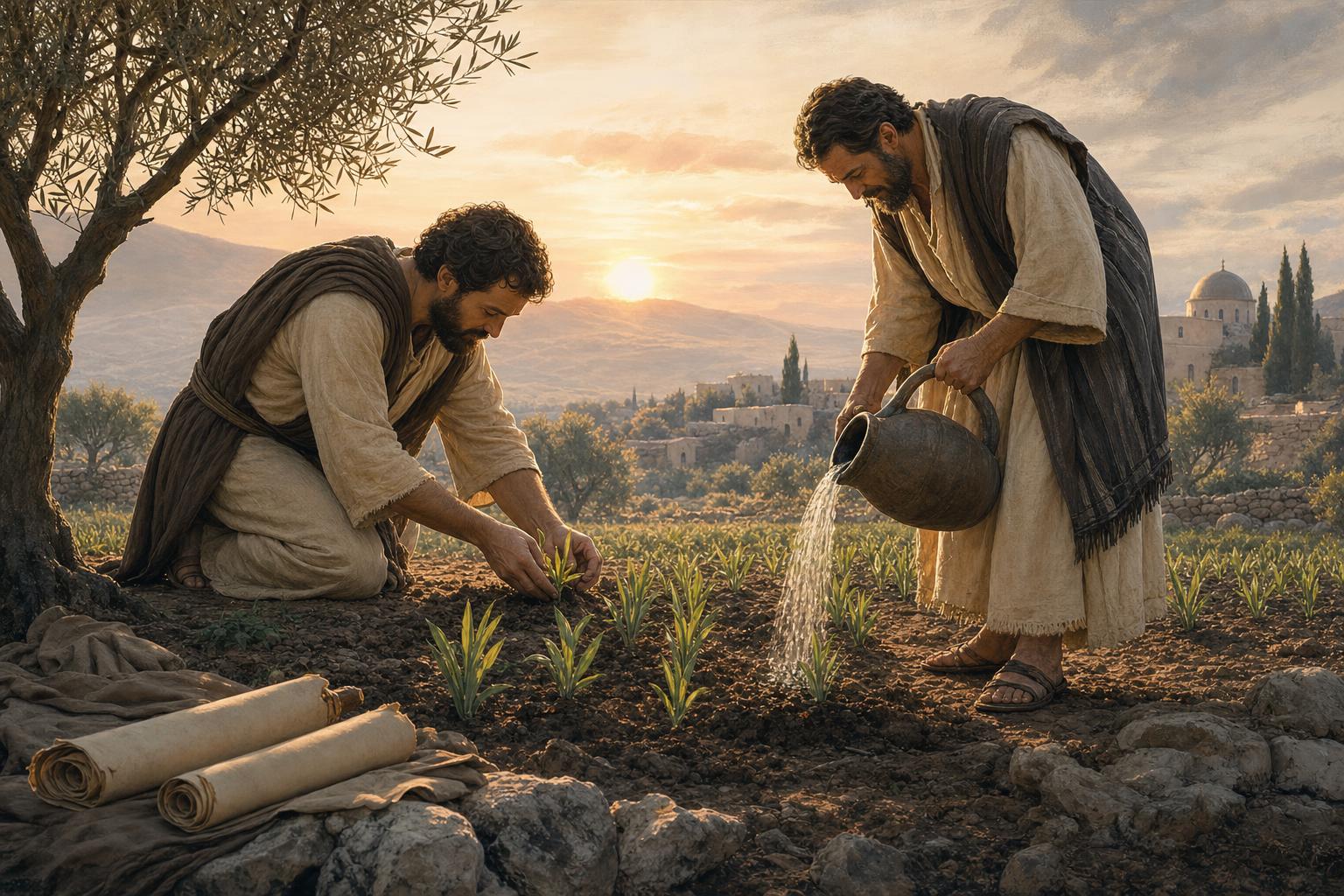
This part of Apollos' story is deeply practical. It reminds readers that ministry is not about building our own name. It is about serving Christ faithfully and refusing the kind of competition that breaks church unity. That is why this page connects naturally with PrayersFor resources on sharing your faith, humility, and unity.
What Can We Learn From Apollos?
Apollos' story is short, but it carries several strong lessons.
1. Love Scripture deeply
Apollos was mighty in the Scriptures. His usefulness did not begin with charisma alone. It was tied to his knowledge of God's Word. Believers still need that same hunger for truth today.
2. Stay teachable even when you are gifted
Apollos already had knowledge and skill, yet he still needed help. His willingness to receive correction from Priscilla and Aquila is one of the clearest reasons his story matters. Giftedness is not weakened by humility. It is strengthened by it.
3. Use your gifts to point people to Christ
Acts presents Apollos as someone who used his ability to help believers and show from Scripture that Jesus is the Christ. That is a healthy model for anyone with teaching, speaking, or leadership gifts. Usefulness in the kingdom is not measured by attention, but by faithfulness.
4. Refuse rivalry in Christian service
Paul and Apollos were not enemies building competing ministries. They were servants working in different ways under the same Lord. That is a needed reminder for every church, ministry, and believer today.
Key Bible Passages About Apollos
If you want to read Apollos' story directly in Scripture, start here:
A Short Prayer Inspired by Apollos
Lord, give readers the kind of heart Apollos showed. Help them love Your Word deeply, speak truth boldly, receive correction humbly, and serve without rivalry. Give wisdom where understanding is incomplete, growth where faith is still forming, and joy in building up others for Your glory. Amen.
If you want to keep praying into those themes, spend time with our prayers for wisdom and prayers for growth as well.
Frequently Asked Questions
Was Apollos an apostle?
The New Testament does not clearly call Apollos one of the apostles. He is better understood as a gifted teacher and minister in the early church.
Who taught Apollos more accurately?
Priscilla and Aquila did. Acts says they took him aside and explained the way of God more accurately.
What happened to Apollos after Corinth?
The last certain New Testament mention of Apollos is in Titus 3:13, where Paul asks that he be helped on his journey. That suggests he remained an active and trusted worker in Christian ministry.
Did Apollos write Hebrews?
Some later interpreters suggested that Apollos may have written Hebrews, but the Bible does not say that, and there is no conclusive evidence proving it.
Why is Apollos important in the Bible?
Apollos is important because his story shows how Scripture knowledge, humility, correction, bold witness, and unity can work together in a faithful servant of Christ.

