
Concubines in the Bible: Meaning, Examples, and Context
A concubine was a woman attached to a man in a marriage-like relationship, but with lower status than a wife. In the Bible, concubines were secondary wives or household women who lived under a man's authority without enjoying the same honor, security, or inheritance standing as a full wife.
If you are asking what concubines were in the Bible, the short answer is this: concubinage belonged to the broken social systems of the ancient world. Scripture records it honestly, but it does not present it as God's design for marriage.
This page explains what concubines were, how they differed from wives, where they appear in the Bible, and how Christians should understand those passages today.
What were concubines in the Bible?
In modern English, the word concubine often sounds like a secret girlfriend or mistress. That is not the best starting point for biblical usage. In Scripture, a concubine was usually part of a man's household in a recognized union, but she held a lower rank than a wife.
That lower status mattered. A concubine could be more vulnerable, could come from a servant or slave background, and did not carry the same standing as a primary wife. So when the Bible mentions concubines, it is talking about a real household structure in the ancient world, not just casual dating or hidden adultery in the modern sense.
At the same time, calling a concubine a "secondary wife" does not make the arrangement healthy or ideal. It simply helps explain why biblical concubinage was different from the way many people use the word today. If you want the wider biblical backdrop for these households, PrayersFor already has a helpful page on polygamy.
How was a concubine different from a wife?
The clearest difference was status. A wife held the honored place of marriage in the household. A concubine belonged to the same household but with less dignity, less authority, and fewer protections. In some cases she came from a lower social rank, and in other cases she was connected to the household through servitude.
That is why the Bible can speak about wives and concubines separately. The relationship was not exactly the same. A concubine could bear children, live under the man's care, and be treated as part of the household, but she was not regarded as equal to a full wife.
This also means a concubine was not simply the same as a secret act of adultery. Biblical concubinage still fell inside an ancient household order, even though that order was far from God's best. In practice, it often sat alongside marrying a second wife and other forms of polygamous family life that brought rivalry, confusion, and pain.
Why did people have concubines in the ancient world?
Different situations led to concubinage. Sometimes a barren wife gave a servant to her husband so the household could have children. That is part of the background in the story of Hagar, and similar patterns appear again with Bilhah and Zilpah in Jacob's family.
In other settings, concubines expanded a wealthy or royal household. Kings kept wives and concubines as signs of status, power, and dynasty. That is why royal concubines appear in stories about Saul, David, and Solomon.
Ancient culture also left women with far fewer protections than women should have. A woman without family support, stable status, or economic security could become deeply vulnerable. Scripture records these realities without pretending they were good. It shows what life looked like in a fallen world, not what marriage was meant to be from the beginning.
Who were some concubines in the Bible?
The Bible mentions concubines in several different kinds of stories. A few examples are especially important.
Hagar in Abraham's household
In Genesis 16, Sarah gave Hagar to Abraham because Sarah had not yet borne a child. That story is one of the clearest examples of how concubinage could grow out of barrenness, impatience, and household pressure. Hagar was not treated as a full equal, and the relationship quickly produced conflict, pride, hurt, and division.
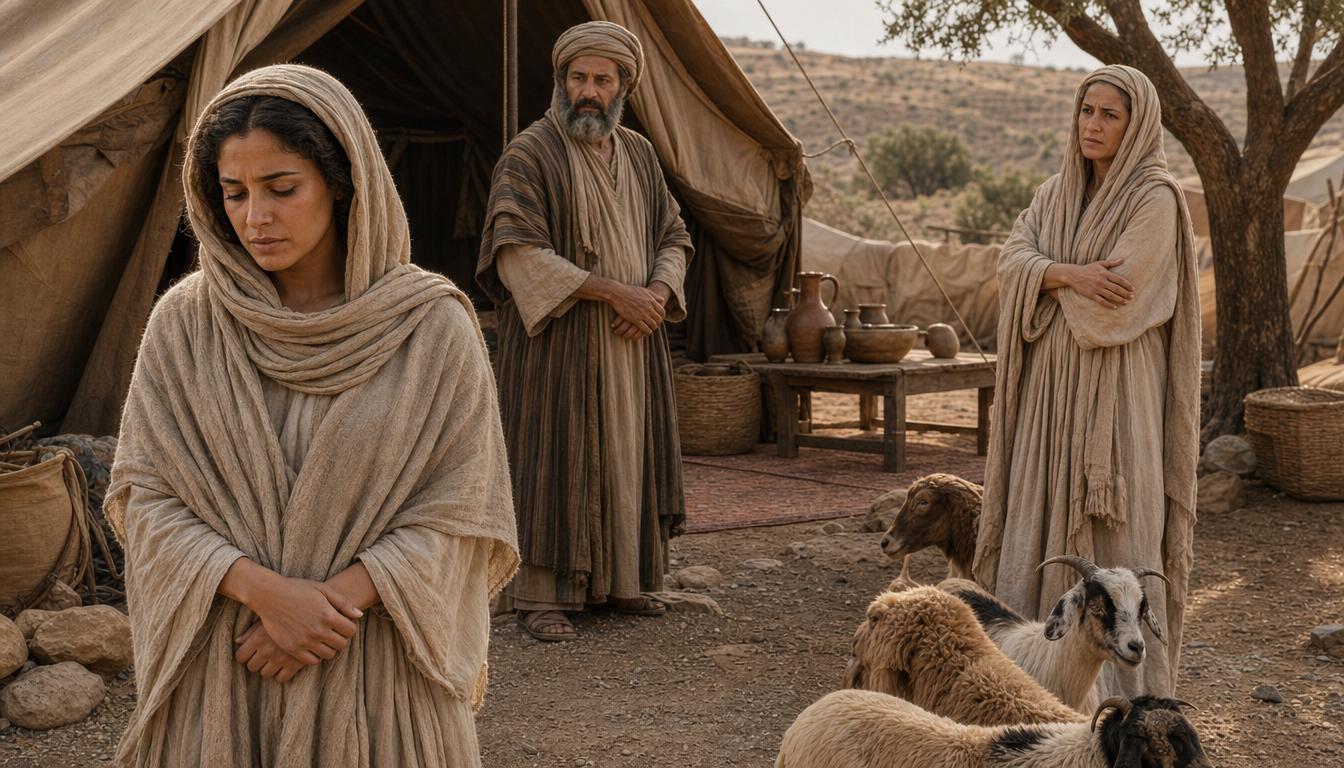
That is one reason the story of Abraham matters here. Concubinage did not create peace in his household. It exposed how human attempts to force God's promises often wounded other people.
Bilhah and Zilpah in Jacob's family
Rachel and Leah each gave their servants, Bilhah and Zilpah, to Jacob so children could be born through them. Again, the pattern is ancient and household-based rather than romantic. These women were tied to a family system driven by rivalry, grief, and competition for children.
Their presence helps readers see that concubinage in the Bible was often bound up with power imbalance and family strain, not just sexual behavior.
Royal concubines under Israel's kings
Concubines also appear in royal settings. Saul had the concubine Rizpah. David had wives and concubines. Solomon famously multiplied both wives and concubines, and Scripture ties that household sprawl to spiritual compromise and divided loyalty.
In royal stories, concubines were not only domestic figures. They could carry political meaning. Taking a king's concubines could signal a challenge to the throne itself. That helps explain why the Bible mentions royal concubines in stories of succession, shame, and rebellion.

The concubine in Judges 19
One of the darkest stories in Scripture is Judges 19, where a concubine is abused and killed. That passage does not highlight concubinage as a harmless custom. It shows how vulnerable women could become in a lawless, violent society.
The point of the chapter is not to defend the system. It is to expose how badly Israel had fallen. When Christians read the story of the concubine in Judges 19, they should hear a cry against wickedness, abuse, and moral collapse.
Did the Bible approve concubines?
The Bible records concubinage, but that is not the same as approving it.
From the opening chapters of Genesis, the pattern for marriage is a man and a woman joined as one flesh. Jesus later points back to that design in Matthew 19. The existence of concubines in Old Testament history shows what people did, not what God delighted in.
In fact, the stories tied to concubinage usually come with obvious damage. Hagar's story is full of tension and sorrow. Jacob's household is marked by rivalry. The royal households of David and Solomon show disorder, temptation, and divided loyalties. Judges 19 is openly horrific.
That is why Christians should read these narratives as descriptive, not prescriptive. Scripture is honest enough to show broken families, but it is also clear enough to point beyond them to God's marriage covenant. The New Testament's leadership standard of one wife further shows the direction of Christian teaching.
How should Christians understand concubines today?
First, Christians should avoid two mistakes.
One mistake is reading the word concubine only through modern language and assuming every biblical reference means "mistress" in the exact way people use the word now. That can flatten the ancient context too much.
The other mistake is using the ancient practice to excuse modern sin. The fact that the Bible reports concubinage does not mean believers are free to copy it. Scripture often records things it does not bless.
A wiser approach is to read these passages with honesty and humility. Concubines belonged to a world shaped by patriarchy, polygamy, servitude, and human hardness of heart. The Bible does not hide that world. It shows it clearly, and then it leads readers toward God's better design for covenant faithfulness, holiness, and love.
So when you read about concubines, ask: What does this passage reveal about human sin, unequal power, and the need for redemption? How does it push me back toward God's design for marriage, purity, and faithfulness? Those are more helpful questions than trying to make concubinage sound normal or harmless.
Key Bible passages about concubines
If you want to study concubines in Scripture, start with these passages:
- Genesis 16:1-6 - Hagar is given to Abraham after Sarah's barrenness.
- Genesis 30:1-13 - Bilhah and Zilpah enter Jacob's household.
- Judges 19:1-30 - the Levite and his concubine in one of the Bible's darkest narratives.
- 2 Samuel 3:7 - Rizpah, Saul's concubine, becomes part of a political conflict.
- 2 Samuel 5:13 - David takes more wives and concubines in Jerusalem.
- 2 Samuel 16:21-22 - David's concubines are used in Absalom's rebellion.
- 1 Kings 11:1-4 - Solomon's wives and concubines help show the danger of a divided heart.
- Matthew 19:4-6 and 1 Timothy 3:2 - key passages for the Christian understanding of God's design for marriage.
A short prayer for wisdom in difficult Bible passages
Lord, help me read hard passages of Scripture with honesty and humility. Keep me from calling good what You do not call good, and keep me from missing Your mercy when You show the brokenness of the human heart. Teach me to understand Your Word faithfully and to honor Your design for truth, purity, and covenant love. In Jesus' name, amen.

