
Biblical Story of Elijah: Summary, Miracles, and Lessons
The biblical story of Elijah follows a prophet who confronted idolatry, prayed through drought and rain, and learned to hear God even when he was worn down. Elijah appears mainly in 1 Kings 17-19, with his final scenes in 2 Kings 1-2. He stands against King Ahab and Queen Jezebel, announces a drought, sees God provide in famine, calls down fire on Mount Carmel, flees to Horeb in fear, and is later taken to heaven in a whirlwind.
Elijah's story is not only about public miracles. It is also about prayer, courage, loneliness, and God's patient care for a tired servant. That balance is one reason readers still return to him.
Elijah story summary
Elijah first appears in 1 Kings 17 during the reign of Ahab, one of Israel's most wicked kings. Because Ahab and Jezebel have pushed the nation deeper into Baal worship, Elijah announces that there will be no rain except at God's word. That drought sets the stage for the whole story.
During the famine, God keeps Elijah alive in surprising ways. He is fed by ravens at the brook Cherith, then sent to a widow in Zarephath whose flour and oil do not run out. When the widow's son dies, Elijah prays and the boy is restored to life. These scenes show that Elijah's ministry includes both judgment and mercy.
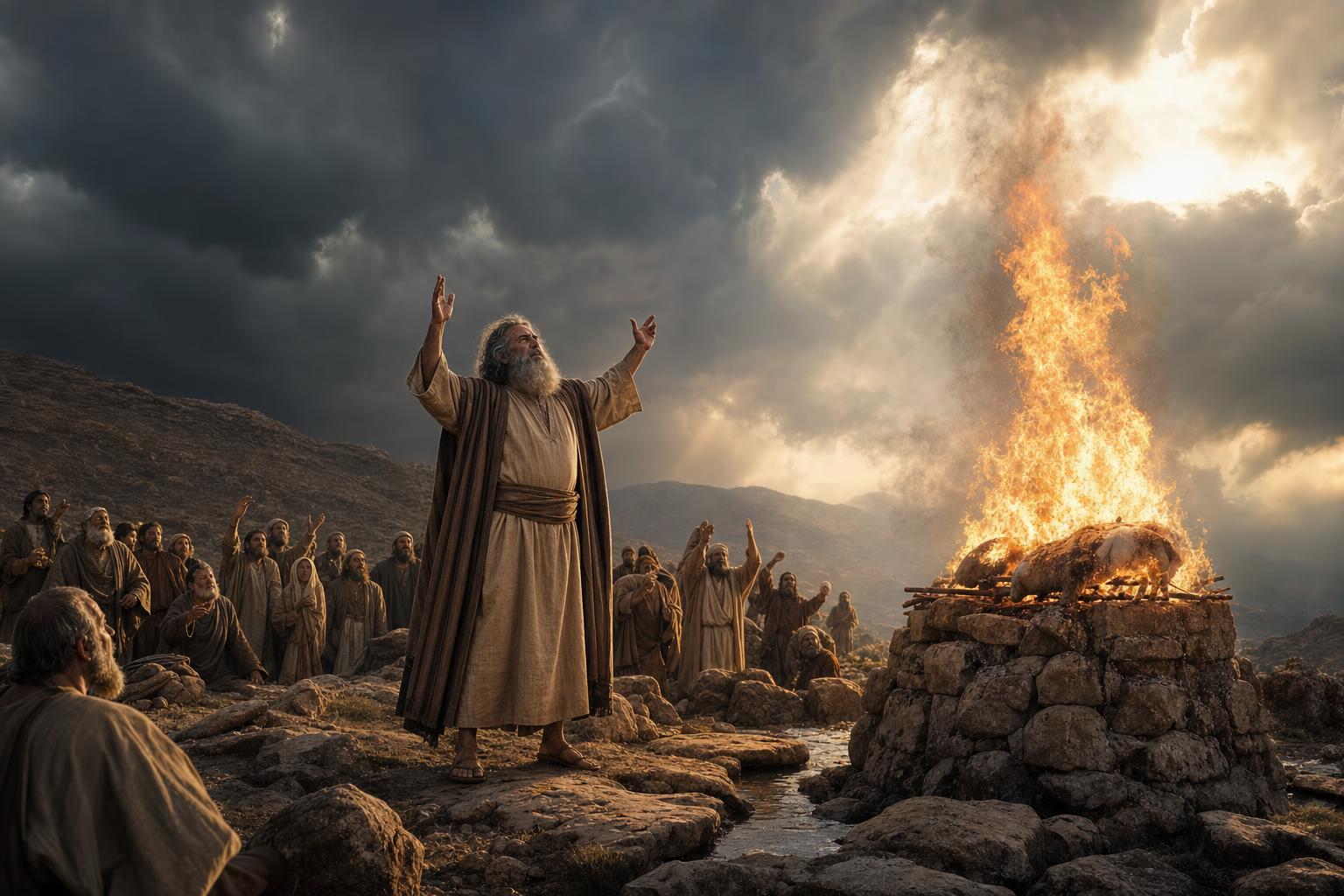
The story reaches its public high point on Mount Carmel. Elijah challenges the prophets of Baal, repairs the altar of the Lord, and prays. Fire falls from heaven on the soaked sacrifice, proving that the Lord is God. After that, Elijah prays again and the rain returns.
But Carmel is not the end. Jezebel threatens Elijah, and the same prophet who stood fearlessly before a nation runs into the wilderness. At Horeb, Elijah collapses under the strain, and God meets him with food, rest, and a low whisper rather than another dramatic sign. Later, Elijah calls Elisha to follow him, keeps speaking for God, and is finally taken up in a whirlwind with chariots of fire.
Who was Elijah in the Bible?
Elijah was a prophet from Tishbe in Gilead. The Bible introduces him suddenly, without a long backstory, which makes his first appearance feel even more forceful. He steps into the story as a man sent by God to confront a nation that had drifted into false worship.
His story is told mainly in 1 Kings 17-19, then 2 Kings 1-2. Those chapters show him as a prophet of both confrontation and compassion. He speaks hard truth to kings, but he is also the man through whom God feeds the hungry, restores a widow's son, and models the power of prayer.
Elijah's name is commonly understood to mean "My God is the Lord." That fits the whole direction of his life. Everything about Elijah's ministry pushes Israel back to the truth that the Lord, not Baal, is the living God.
Why did Elijah confront Ahab and Jezebel?
Elijah confronted Ahab and Jezebel because they were leading Israel further away from the Lord. Ahab's rule was marked by compromise and open rebellion, and Jezebel aggressively promoted Baal worship. Elijah's ministry rose in that setting as a direct challenge to idolatry.
The drought matters because it was not just a random hardship. It was a judgment that exposed the emptiness of Baal worship and the seriousness of Israel's spiritual decline. Elijah was sent to make clear that the Lord alone rules creation, sends rain, withholds rain, and deserves worship.
That part of Elijah's story still feels close to readers today. He was not simply a miracle worker. He was a faithful witness in a hostile environment. He spoke the truth when leaders were corrupt and when the crowd was confused. That courage is one reason his life still stands out so sharply in Scripture.
Elijah's key miracles in the Bible
Elijah's story includes several miracles, and each one reveals something different about God's power.
The first is God's provision at Cherith. While the drought is still underway, ravens bring Elijah bread and meat. The scene is simple but unforgettable because it shows that God can sustain His servant in ways no one would have planned.
The second is the miracle at Zarephath. A widow with almost nothing shares her last meal, and God makes sure her flour and oil do not fail. In the same household, Elijah later prays over the widow's son and the child lives again. That moment makes clear that Elijah's ministry is not only about judgment on sin. It is also about life, mercy, and restoration.
The best-known miracle is the fire on Mount Carmel. Elijah lets the prophets of Baal call out first, then drenches the Lord's altar with water before he prays. When the fire falls, the point is unmistakable: the Lord is God. Many readers would rightly identify Carmel as Elijah's greatest public miracle because it answers the central conflict of his ministry so clearly.
The return of rain also matters. After the fire, Elijah prays again until a small cloud appears, and then the skies open. That scene reminds readers that Elijah's boldness is tied to prayer, not spectacle alone.
What happened when Elijah fled to Horeb?
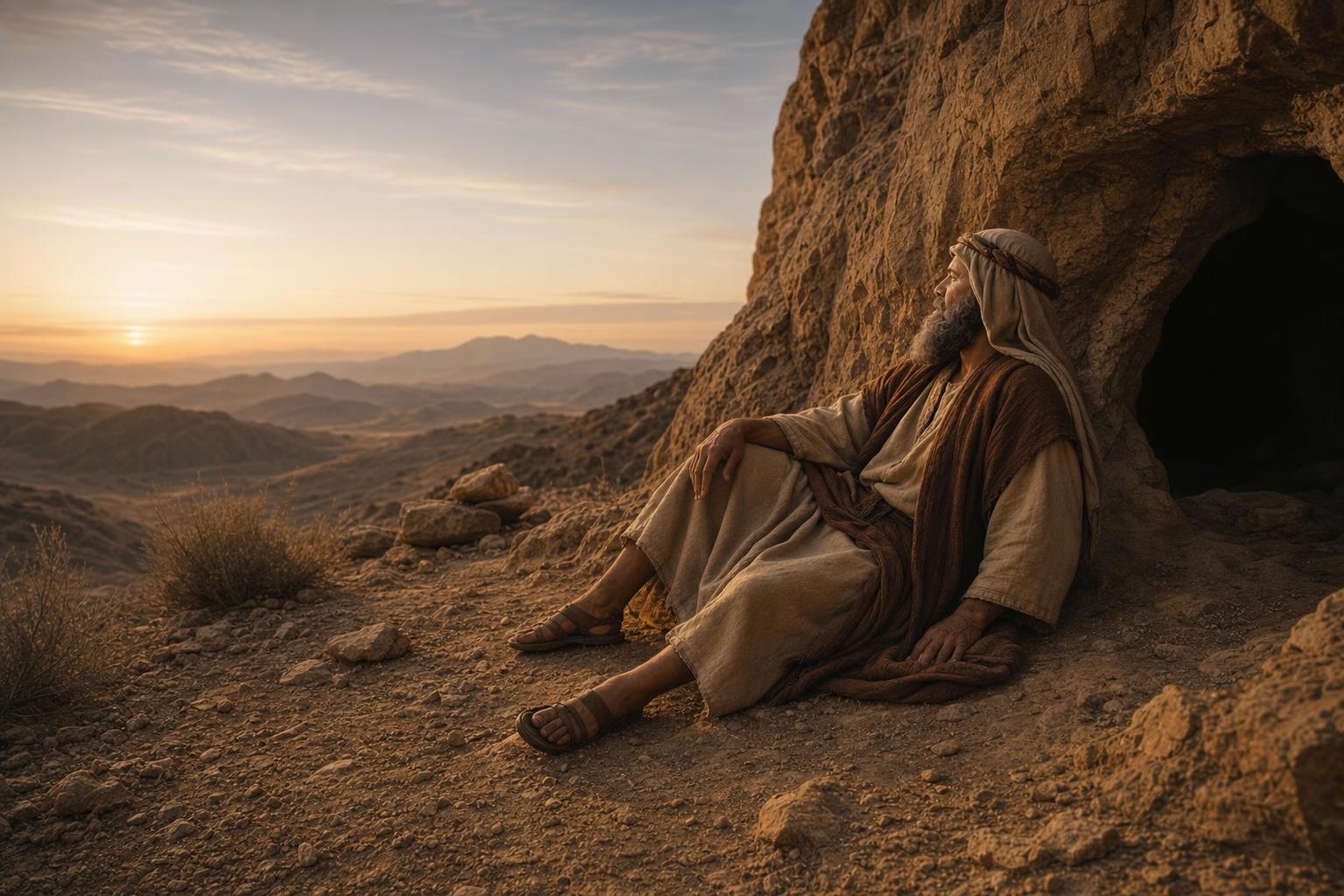
After Mount Carmel, Jezebel threatens to kill Elijah. Instead of staying on the mountain of victory, Elijah runs into the wilderness. He becomes so overwhelmed that he asks God to take his life. This is one of the most honest parts of Elijah's story because it shows that spiritual courage and emotional exhaustion can exist in the same person.
God does not answer Elijah's despair with immediate rebuke. First He gives him food, water, and rest. That detail matters. Before Elijah receives new direction, he is cared for in his weakness.
At Horeb, Elijah experiences wind, an earthquake, and fire, but the Lord speaks in a low whisper. The lesson is not that God never works through dramatic moments. Elijah has already seen dramatic moments. The lesson is that God is not limited to them. He can meet His servant quietly, personally, and gently when public victory has given way to private collapse.
This part of the story is one reason Elijah remains so helpful for readers today. His life teaches that burnout after faithful effort is real, and that God's care is still present there. Elijah also receives a renewed mission at Horeb, including the call of Elisha, which shows that God had not finished with him.
How was Elijah taken to heaven?
Elijah's final departure is one of the most memorable endings in the Bible. In 2 Kings 2, Elijah and Elisha cross the Jordan together. Then a whirlwind and chariots of fire appear, and Elijah is taken up alive into heaven.
That scene answers one of the most common questions about Elijah: what happened to him? Unlike most biblical figures, Elijah does not die in the ordinary way. His departure is dramatic, but it is also connected to legacy. His mantle falls to Elisha, and Elisha takes up the prophetic work that Elijah had carried.
So Elijah's ending is not only about wonder. It is also about continuation. The God who sent Elijah keeps speaking, and the work does not end with one servant.
Why Elijah still matters in the Bible
Elijah still matters because the Bible keeps returning to him after the Kings narrative ends. James 5 remembers him as a man of prayer with a nature like ours. That keeps Elijah from feeling like a distant, unreachable hero. He is remembered as a real human being whose praying life mattered deeply.
Elijah also appears with Moses at Jesus' transfiguration. That moment shows how important Elijah remains in the biblical story. He is not only a prophet from a difficult season in Israel's past. He becomes part of the wider testimony to God's redemptive work.
His story also matters because it holds several truths together at once. Elijah is bold, but he also trembles. He sees fire fall, but he also needs sleep and food. He confronts kings, yet he still needs God to steady him in loneliness. That makes his story serious and deeply human.
Lessons Christians can learn from Elijah
One lesson from Elijah is that faithfulness matters more than popularity. Elijah did not wait for the culture around him to agree with him before he obeyed God. He stood firm when false worship was common and when powerful people wanted him silent.
Another lesson is that prayer belongs at the center of courage. Elijah's story is full of public action, but those actions are tied to dependence on God. He prays in drought, he prays over a dead boy, he prays on Carmel, and he prays for rain.
A third lesson is that spiritual victory does not make a person immune to exhaustion. Elijah's collapse after Carmel warns against romanticizing strength. Even faithful servants can grow tired, fearful, and disoriented. God does not abandon Elijah there. He restores him.
Finally, Elijah's story teaches that God is present not only in dramatic breakthroughs but also in quiet nearness. The whisper at Horeb reminds readers to keep listening for God even when life feels stripped down and fragile. If Elijah's story makes you want to pray for steady courage, this prayer for prophets is a natural devotional next step.
Key Bible verses about Elijah
These passages give the clearest path back into Elijah's story:
- 1 Kings 17:1 - Elijah announces the drought before Ahab.
- 1 Kings 17:2-6 - God provides for Elijah at Cherith.
- 1 Kings 17:8-16 - the widow's flour and oil do not run out.
- 1 Kings 17:17-24 - the widow's son is restored to life.
- 1 Kings 18:36-39 - fire falls on Mount Carmel.
- 1 Kings 19:11-13 - God speaks in the low whisper at Horeb.
- 1 Kings 19:19-21 - Elijah calls Elisha.
- 2 Kings 2:11 - Elijah is taken up in a whirlwind.
- James 5:17-18 - Elijah is remembered as a man of prayer.
A short prayer inspired by Elijah's story
Lord, give me Elijah's courage when truth is costly and his humility when I feel weak. Teach me to trust You for daily provision, to pray with faith, and to listen for Your voice even when my heart is tired. When fear or loneliness rises, meet me with the same care You showed Elijah. Strengthen me to stay faithful, leave a godly legacy, and keep walking with You. In Jesus' name, amen.

