
Eunuchs Meaning in the Bible: Definition and Context
In the Bible, a eunuch is usually a man who could not father children, often because he had been castrated. In some passages, the word can also point more broadly to a royal court official or trusted servant. That is why the term needs context. It does not carry one identical shade of meaning every time it appears.
The clearest places to start are Matthew 19:12, Isaiah 56:3-5, and Acts 8:26-39. Jesus speaks about three kinds of eunuchs, Isaiah gives a promise of dignity to eunuchs who hold fast to God, and Acts shows an Ethiopian eunuch receiving the gospel with joy. Put together, those passages show both the literal meaning of the word and the larger biblical theme of belonging, devotion, and welcome.
What does eunuch mean in the Bible?
In the ancient world, eunuchs were often men who had been physically altered so they could not father children. Many served in royal households, where rulers trusted them with sensitive work. That court setting matters because some Bible uses of the word lean toward the role of a chamberlain or court servant, not only the physical condition itself.
Bible dictionaries often point out that the word can describe a bed-keeper or chamberlain and not necessarily a mutilated man in every single passage. Scripture itself shows eunuchs close to kings, queens, and treasuries. The Ethiopian eunuch in Acts 8, for example, is a man of great authority under Candace, queen of the Ethiopians. So when you read the word, it helps to ask whether the passage is stressing physical inability, court office, or both.
That also keeps readers from flattening the word into a modern label too quickly. In the Bible, eunuch is not a catch-all for every modern discussion about sex, identity, or singleness. Sometimes it names a bodily condition. Sometimes it names a social role. Sometimes, as Jesus shows, it becomes a way of talking about a life not centered on marriage.
The simplest starting definition is this: a eunuch in the Bible is someone set apart from ordinary family life by physical condition, human action, or royal service, and the exact nuance depends on the context.
What did Jesus mean by the three eunuchs in Matthew 19:12?
Matthew 19 is one of the most important passages because Jesus uses the term in three ways. He says some eunuchs were so born from their mother's womb, some were made eunuchs by men, and some made themselves eunuchs for the kingdom of heaven's sake.
The first group points to people who were born unable to marry or reproduce in the usual way. The second group describes those whose condition came through the action of other people, which matches the more literal historical use of the word. The third group is the one that often needs the most explanation. Jesus is not praising self-harm. In the context of marriage and discipleship, He is describing voluntary renunciation of marriage so a person can give undivided attention to God's kingdom.
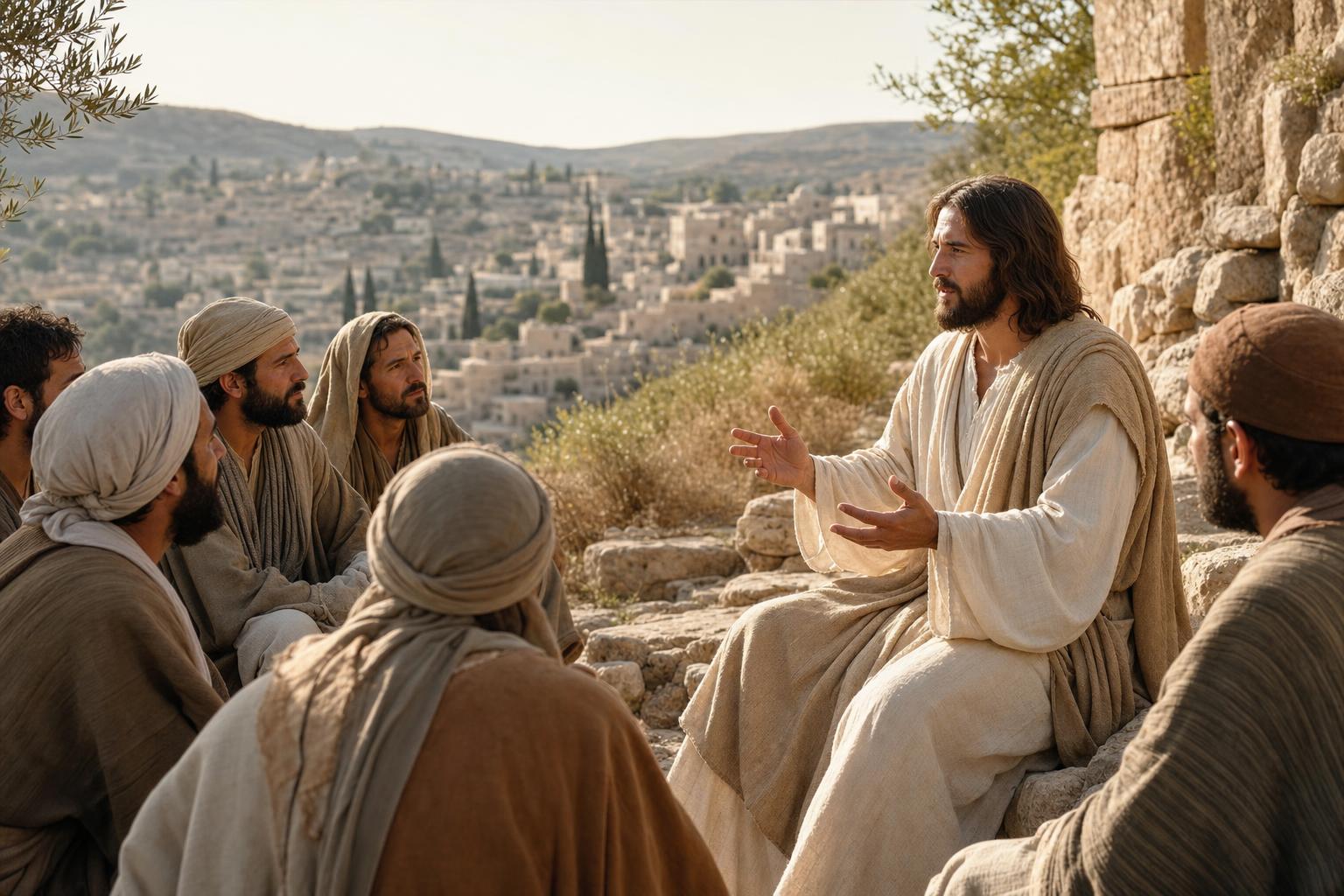
That is why many Christians connect this verse with faithful celibacy, being single, and chastity for the sake of devotion to God. Jesus is acknowledging that not every believer will walk the same path. Some are called to marriage. Some are called to kingdom-focused singleness. His point is not that one state makes a person holier by itself, but that obedience to God's call matters more than trying to fit one social pattern.
The end of the verse matters too: "He that is able to receive it, let him receive it." Jesus treats this as a calling to be discerned, not a rule to be forced on everyone.
How do Deuteronomy 23, Isaiah 56, and Acts 8 fit together?
Deuteronomy 23:1 gives the hard Old Testament background. Under Israel's covenant law, a man with damaged sexual organs could not enter the assembly of the Lord. That verse explains why eunuchs could be associated with exclusion, shame, and distance from full participation in the covenant community.
Isaiah 56 answers that pain with a striking promise. God says, "Neither let the eunuch say, Behold, I am a dry tree." Then He promises faithful eunuchs "a place and a name better than of sons and of daughters" and "an everlasting name, that shall not be cut off." In other words, God speaks directly to the fear that a eunuch might be forgotten, fruitless, or permanently outside His blessing. He promises remembrance, belonging, and honor.
That promise makes Acts 8 especially beautiful. The Ethiopian eunuch comes to Jerusalem to worship, is reading Isaiah on the road home, and Philip explains the good news about Jesus to him. When they come to water, the eunuch asks what prevents him from being baptized. The answer, in effect, is that through Christ he is not shut out. He is welcomed in, baptized, and goes on his way rejoicing.
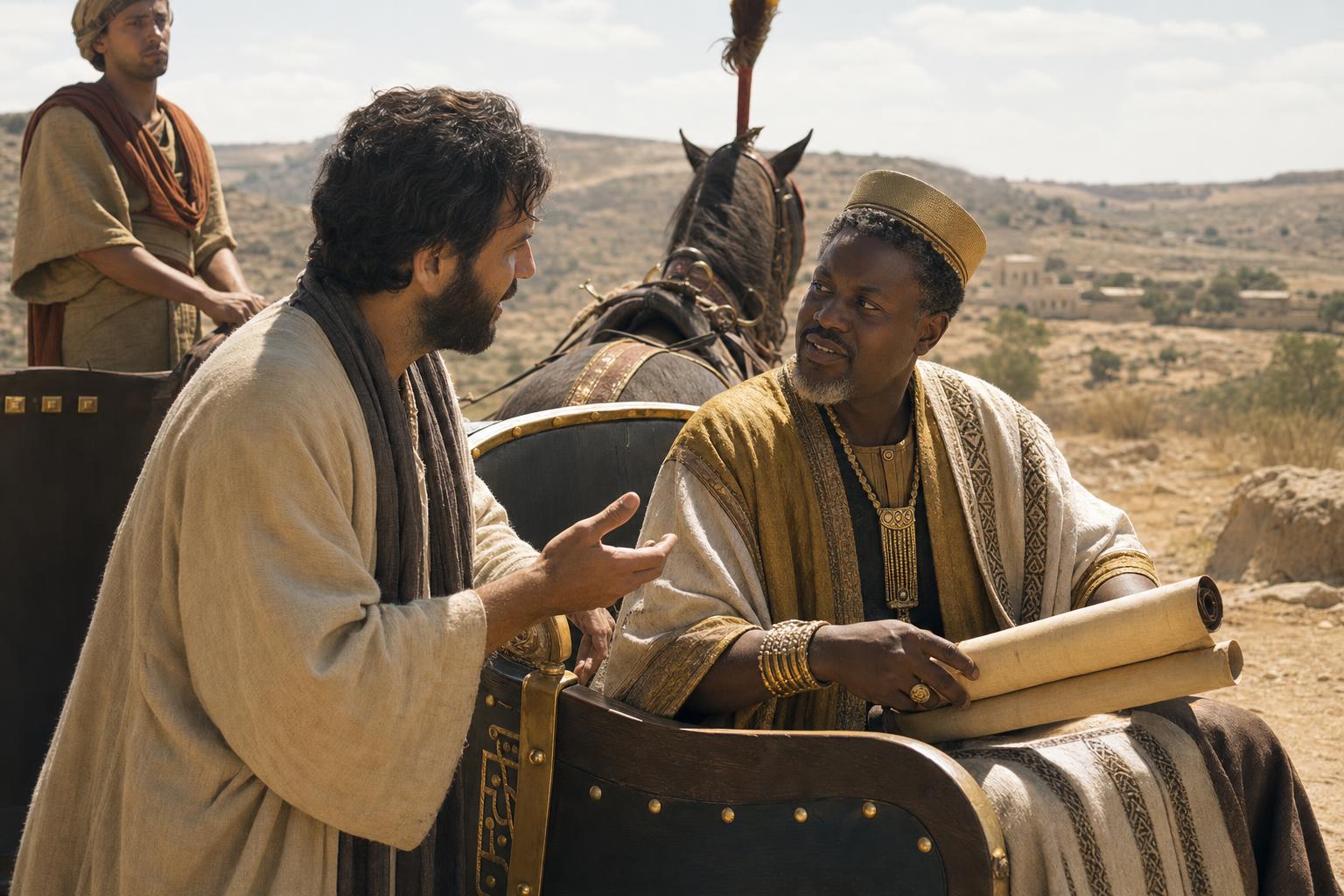
Read together, these passages show a real biblical movement. Deuteronomy shows the reality of exclusion under the law. Isaiah announces God's promise to those who seemed cut off. Acts shows that promise breaking into open daylight through Jesus. That does not erase the seriousness of the earlier texts. It shows that God's grace reaches the very people who once seemed far away.
That is one reason the Ethiopian eunuch matters so much. He is not only an interesting Bible character. He is a living picture that the gospel reaches outsiders, dignifies the shamed, and brings joyful welcome to those who trust Christ.
Key Bible passages about eunuchs
A few passages give the clearest picture of what eunuchs mean in Scripture:
- Matthew 19:12 - Jesus names three kinds of eunuchs and uses the third category to describe chosen kingdom singleness.
- Deuteronomy 23:1 - the law explains why eunuchs could be seen as excluded from the assembly.
- Isaiah 56:3-5 - God tells eunuchs not to call themselves a dry tree and promises them a place and a name that will not be cut off.
- Acts 8:26-39 - the Ethiopian eunuch hears the gospel, believes, is baptized, and goes away rejoicing.
- Esther 2:3 - eunuchs appear as royal attendants, which helps explain why the word can sometimes carry an official court sense as well as a physical one.
Together, those passages show that the Bible uses eunuch as more than a crude biological label. The word sits inside a bigger story about royal service, bodily condition, kingdom devotion, and God's welcome.
The simplest way to understand eunuchs in the Bible
The simplest way to understand eunuchs in the Bible is this:
A eunuch is usually someone set apart from ordinary marriage and childbearing, sometimes by physical condition, sometimes by human action, and sometimes by a life of chosen devotion to God's kingdom.
That definition is broad enough to fit the main passages without forcing them to say the same thing in the same way. It also keeps the emphasis where Scripture keeps it. The Bible is not interested only in anatomy or court custom. It is also interested in dignity, calling, and belonging before God.
So if you ask what eunuchs mean in the Bible, the clearest answer is that the word describes people whose lives stood outside ordinary family patterns, and Scripture shows that God sees them, speaks to them, and welcomes those who trust Him.
A short prayer for belonging and devotion
Father, thank You that no one who comes to You in faith is forgotten or shut out. Give clarity where Scripture needs humility, dignity where there has been shame, and deep devotion to everyone You call to follow You. Help me receive Your Word with reverence and trust Your welcome through Jesus. In His name, amen.

