
Who Is Moses in the Bible? Story, Role, and Why He Matters
Moses in the Bible is the Hebrew prophet, deliverer, and lawgiver whom God used to bring the Israelites out of slavery in Egypt and lead them toward the Promised Land. He stands near the center of the Old Testament because his story connects the Exodus, the Ten Commandments, the covenant at Sinai, and Israel's long years in the wilderness.
That is why Moses matters so much. He is not only a man with a dramatic birth story or a famous Red Sea miracle. He is the leader through whom God rescued His people, gave them His law, and shaped them into a covenant nation. If you want companion study pages while you read, keep Bible verses about Moses' birth, the plagues of Egypt, and the Ten Commandments nearby.
Who was Moses in the Bible?
Moses was a Hebrew man from the tribe of Levi, born during a time when Pharaoh ordered Hebrew baby boys to be killed. His mother hid him, placed him in a basket on the Nile, and Pharaoh's daughter found and raised him in the royal household. So the same man who would later confront Egypt's ruler first grew up inside Egypt's palace.
That background helps explain why Moses became such an important figure. He knew both worlds. He belonged to the Hebrew people by birth, but he was raised with unusual access, education, and protection in Pharaoh's house. Later, when God called him, Moses was able to stand before Pharaoh not as a stranger to Egyptian power, but as someone who understood what he was facing.
So the shortest answer to the question is this: Moses was the prophet and leader God chose to deliver Israel from Egypt, receive the law at Sinai, and guide the people through the wilderness. His main story is told across Exodus, Leviticus, Numbers, and Deuteronomy.
How did Moses become Israel's leader?
Moses did not begin as a confident public hero. As a young man, he saw an Egyptian beating a Hebrew and killed the Egyptian. When the act became known, Moses fled to Midian. There he started a different kind of life: he married Zipporah, worked as a shepherd, and spent years far from the center of power.
Everything changed when God spoke to him from the burning bush. In that moment, God called Moses to return to Egypt and bring His people out of slavery. Yet Moses hesitated. He questioned himself, raised objections, and worried that people would not believe him. He even argued that he was not a strong speaker.

That part of the story matters because it keeps Moses from feeling distant or untouchable. God did not choose Moses because he looked naturally fearless. God chose him and then sustained him. Aaron, Moses' brother, was appointed to help speak, and Moses learned to lead through dependence on God rather than confidence in himself.
For readers who want a leadership-focused companion page, PrayersFor also has Bible verses about Moses being a leader.
What did Moses do in the Bible?
Moses is most widely known for leading Israel out of Egypt.
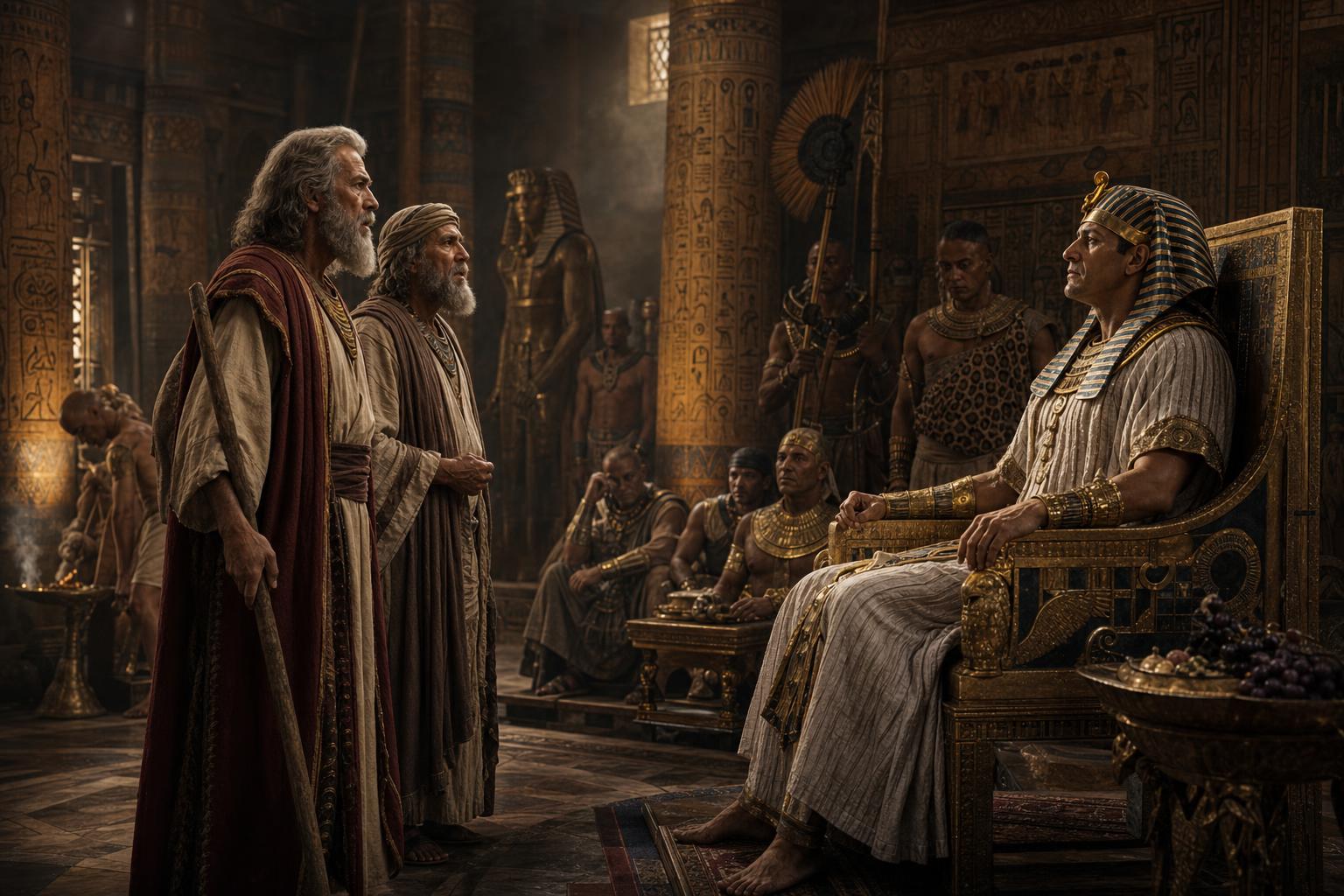
After returning from Midian, Moses and Aaron stood before Pharaoh and delivered God's command: let My people go. Pharaoh refused, and the conflict moved through the ten plagues, the first Passover, and the final release of Israel from bondage. When Pharaoh later pursued the Israelites, God used Moses in the crossing of the Red Sea, one of the defining moments in the Old Testament. If you want to stay with those scenes, PrayersFor already has pages on Passover, Moses parting the Red Sea, and the plagues of Egypt.
But Moses' role was bigger than the Exodus alone.
At Mount Sinai, Moses received the Ten Commandments and the covenant law. He served as the mediator between God and the people, bringing God's words to Israel and bringing Israel's cries before God. In that way, Moses became not only a rescuer, but also the covenant leader who helped form Israel's worship, life, and obedience.
Moses also led the people through the wilderness for forty years. That season included guidance, judgment, intercession, rebellion, mercy, manna, and constant pressure. So when people ask what Moses did in the Bible, the full answer includes at least four major roles:
- he confronted Pharaoh and led the Exodus,
- he received and taught God's law,
- he interceded for Israel when the people failed,
- and he shepherded the nation through the wilderness.
That broader picture is one reason Moses remains so central. He was not only present at one miracle. He carried one of the Bible's longest and most demanding leadership assignments.
Why was Moses so important in the Bible?
Moses was important because God used him at one of the Bible's most foundational turning points. Through Moses, Israel was delivered from slavery, gathered as a people, brought into covenant, and taught how to live before the Lord.
He was also important because of the kind of relationship Scripture describes between him and God. The Bible presents Moses as a prophet of singular importance. Deuteronomy closes by saying no prophet had arisen in Israel like Moses, whom the Lord knew face to face. Numbers 12 also presents Moses as unusually faithful in God's house.
That does not mean Moses was flawless. In fact, part of what makes his story so powerful is that he felt inadequate, spoke reluctantly, and needed help. God chose Moses anyway. That gives readers a more honest picture of calling. God often works through people who know they are not enough on their own.
Moses also matters because he stands at the center of the law and covenant. When readers think about Sinai, the commandments, the tabernacle, and Israel's early identity, Moses is the human leader who holds those threads together. He is one of the Bible's clearest examples of a man who both led publicly and pleaded privately before God for the sake of the people.
Christians also see Moses as a major preparatory figure in the larger story of Scripture. Even so, for this page the main point is simpler: Moses mattered because God used him to rescue, teach, govern, and guide His people in a way no other Old Testament leader quite matched.
Why did Moses not enter the Promised Land?
One of the most common follow-up questions about Moses is why he never entered the Promised Land after leading Israel all that way.
The Bible's answer centers on the incident at Meribah in Numbers 20. God told Moses to speak to the rock before the people, but Moses struck it and spoke rashly in a way that failed to honor God as holy before Israel. Water still came out, but the moment carried consequences. Moses would lead the people to the edge of the land, but he would not enter it himself.
That detail is important because it keeps the story honest. Moses was a great leader, but he was still accountable to God. His closeness to God did not place him above obedience. If anything, leadership made that obedience more serious, not less.
Even so, Moses' story does not end in disgrace. God allowed him to see the land from Mount Nebo, and Deuteronomy remembers him with unusual honor. Scripture says he died at 120 years old, with his strength still intact. So the right way to read this part of the story is not that Moses failed in every sense, but that even a great servant of God remained a human servant, not the Lord Himself.
If you want a nearby theme page after this section, PrayersFor also has Bible verses about the Promised Land.
Key Bible passages about Moses
If you want to read Moses' story directly in Scripture, these are strong starting places:
- Exodus 2:1-10 - Moses is born and rescued from the Nile.
- Exodus 3:1-12 - God calls Moses from the burning bush.
- Exodus 12:31-42 - Israel leaves Egypt after the first Passover.
- Exodus 14:21-31 - the crossing of the Red Sea.
- Exodus 19:1-6 and 20:1-17 - Sinai and the Ten Commandments.
- Numbers 12:6-8 - Moses' unique prophetic role.
- Numbers 20:7-13 - the sin at Meribah.
- Deuteronomy 34:1-12 - Moses sees the land, dies, and is remembered.
- Acts 7:17-44 - Stephen's summary of Moses' mission.
- Hebrews 11:23-29 - Moses remembered as a model of faith.
Taken together, these passages show why Moses is such a major biblical figure. He is the man through whom deliverance, covenant, law, and wilderness leadership all come into focus.
A short prayer after reading about Moses
Lord, thank You for the story of Moses and for the way You work through people who feel weak, hesitant, or unprepared. Teach me to trust Your calling, obey Your voice, and depend on Your strength more than my own. Give me courage when I feel afraid, humility when I lead, and faith to keep following You step by step. Amen.

