
Who Is Solomon in the Bible? King Solomon Explained
When people ask who Solomon is in the Bible, they usually mean King Solomon, the son of David and Bathsheba who became the third king of united Israel. He is remembered for extraordinary wisdom, the building of the first temple in Jerusalem, and the tragic way his heart turned away from God late in life.
That mix is why Solomon's story matters so much. He begins as a ruler who asks God for wisdom and leads during a season of peace and prosperity, but he ends as a warning that gifts and success do not guarantee faithfulness. One quick clarification also helps here: this page is about King Solomon, not only the biblical book called the Love Song of Solomon and not the later legends attached to Solomon's name.
Who was Solomon in the Bible?
Solomon in the Bible was the son of David and Bathsheba and the king who followed David on the throne. If you want the family line behind that story, PrayersFor already has a companion page on David.
He ruled over Israel during the height of the united kingdom and is one of the best-known rulers in Scripture. That is why Solomon naturally belongs in the wider biblical theme of kings. He is remembered not only because he held power, but because his reign combined wisdom, worship, wealth, and later spiritual compromise in one life.
Scripture also says Solomon reigned for forty years. So the shortest answer to the query is this: Solomon was David's son, Israel's king, and one of the Bible's clearest examples of both God-given wisdom and the danger of drifting from wholehearted devotion.
How did Solomon become king?
Solomon became king during a tense succession moment near the end of David's life. As David grew old, Adonijah tried to position himself as the next ruler. But Bathsheba and the prophet Nathan reminded David of his earlier intent, and David ordered that Solomon be anointed publicly.
Solomon did not simply wander onto the throne by accident. His kingship was established through David's command and through a public anointing that made his place clear before the people. The opening chapters of 1 Kings present that moment as both political and spiritual: the kingdom needed a successor, but Solomon also had to prove faithful to the God who had given Israel its throne in the first place.
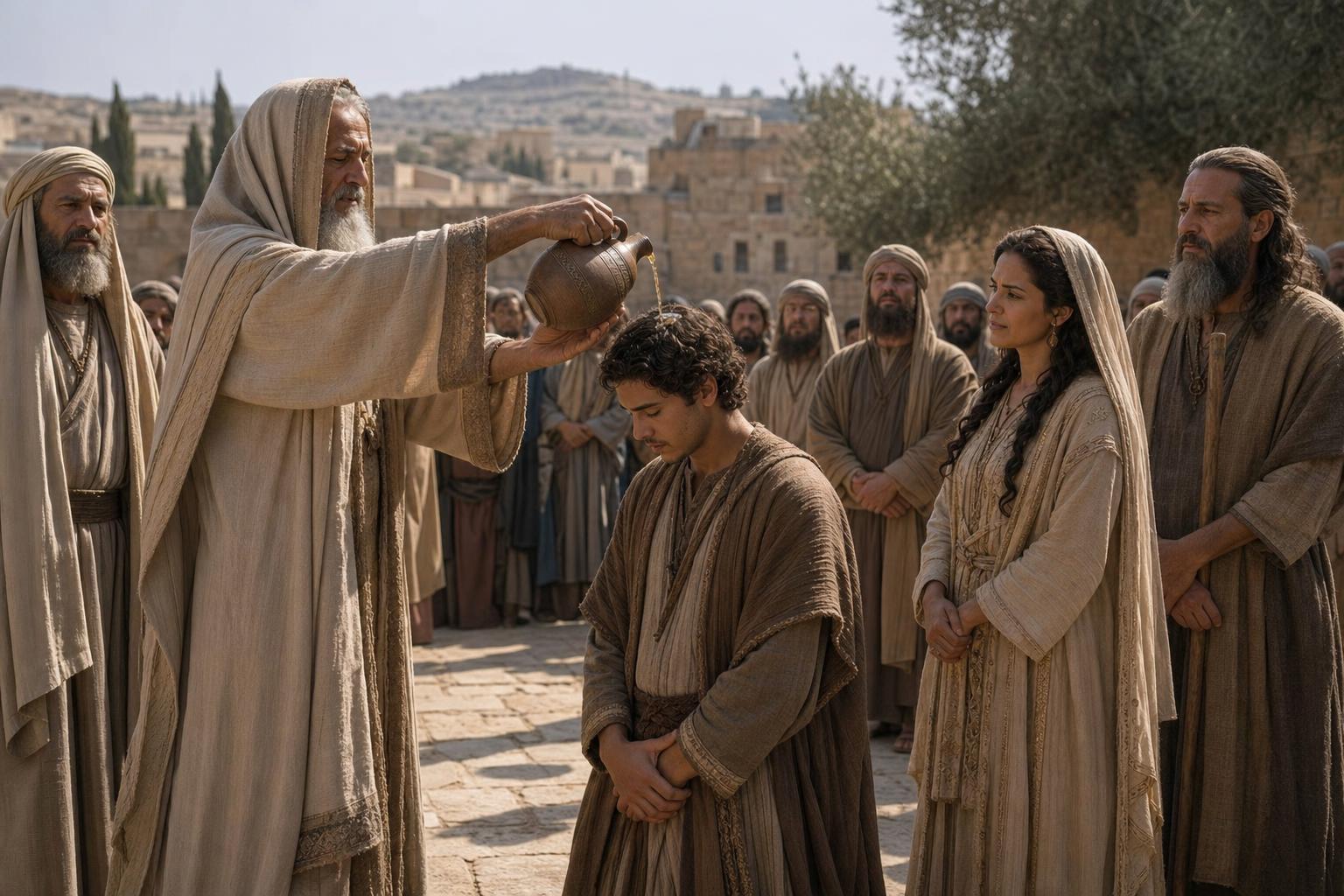
This early stage of Solomon's story still feels hopeful. He is not introduced as a cautionary figure first. He appears as a chosen king with a real opportunity to lead well.
What was Solomon known for?
Solomon was known above all for wisdom. In 1 Kings 3, God invited him to ask for what he wanted, and Solomon asked for understanding so he could govern God's people well. That prayer set the tone for how later generations remembered him. If you want the broader theme that surrounds this part of the story, PrayersFor has a useful Bible-verse page on wisdom and a companion prayer page on wisdom.
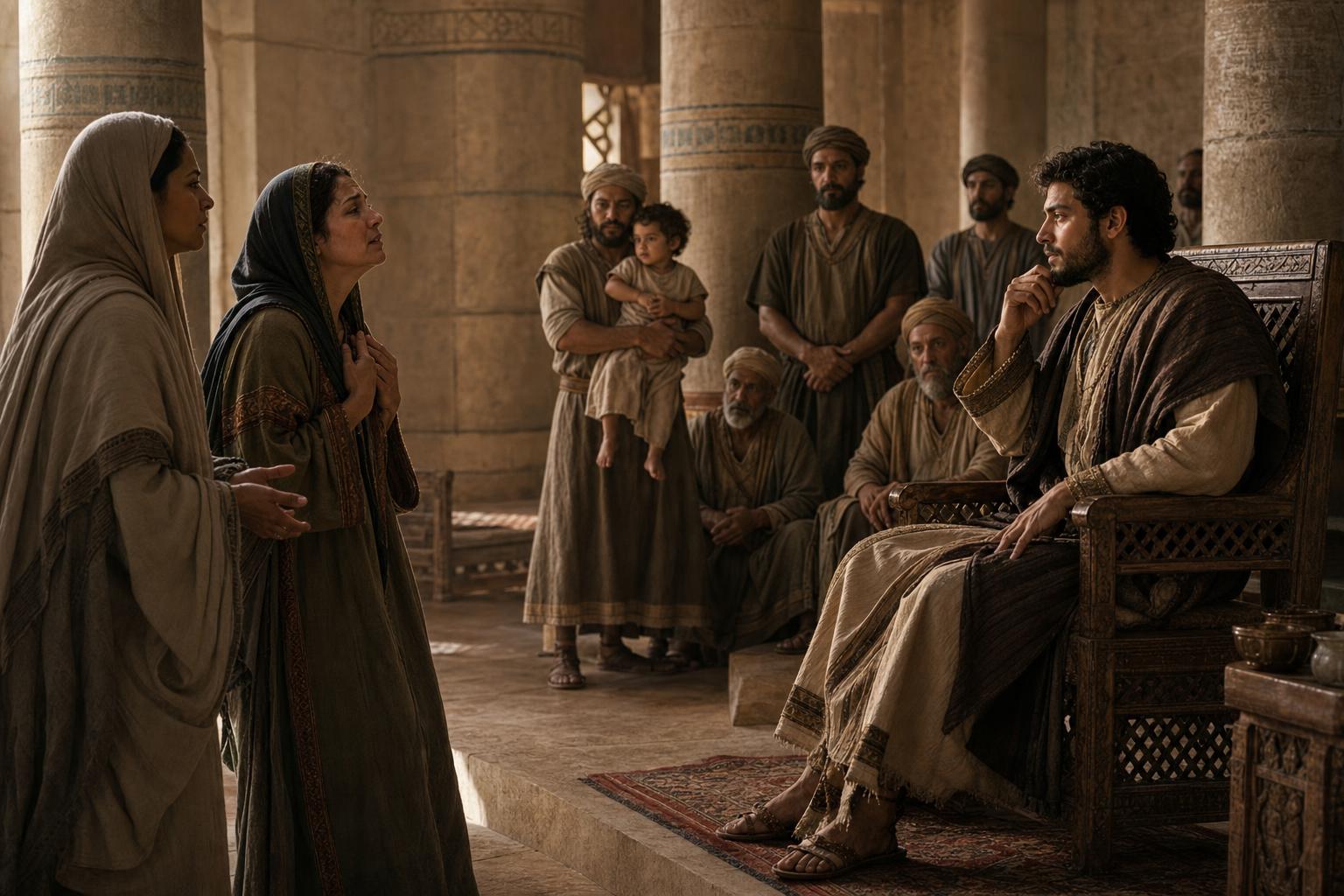
The most famous example of Solomon's wisdom is the judgment between the two women claiming the same child. Instead of relying on surface appearances, Solomon exposed the real mother's heart by the way she responded. That scene became the classic picture of wise judgment under pressure.
He was also known for building the temple in Jerusalem. That was one of the defining achievements of his reign, because it gave Israel a central place of worship and marked a major moment in the story of God's people. For readers who want more temple-focused verses, PrayersFor already has a related page on the temple of the Lord.
Solomon's reign was also associated with peace, wealth, large building projects, and international recognition. The visit of the Queen of Sheba shows how far his reputation spread. Tradition also commonly connects Solomon with Proverbs, Ecclesiastes, and Song of Solomon. Even where readers know there are authorship debates around some of those books, the broader point still stands: Solomon became a lasting symbol of wisdom in biblical memory.
Why did Solomon fall away from God?
For all his wisdom, Solomon did not finish well. First Kings 11 says his many wives turned his heart after other gods. That is the clearest biblical explanation for his decline.
This keeps Solomon from becoming a flat success story. Scripture does not present him as a king who simply grew older and stayed steady. It shows a gifted ruler whose compromises slowly weakened his devotion. His foreign marriages were not just personal decisions. They carried spiritual influence with them, and over time they led Solomon into idolatry. That is why this section naturally overlaps with PrayersFor's pages on polygamy and idolatry.
The tragedy is not that Solomon lacked insight. He had more wisdom than most people will ever know. The tragedy is that wisdom, by itself, did not keep his heart soft before God. His story shows that a person can be brilliant, successful, and admired while still drifting inwardly.
That is one of the strongest lessons in Solomon's life. God's gifts are never meant to replace obedience. Wisdom is meant to lead to faithfulness, not to make faithfulness feel optional.
How did Solomon die, and what happened after him?
The Bible records Solomon's death briefly. First Kings 11 does not describe a dramatic battle or a sudden public collapse the way some other royal stories do. It simply says that Solomon died after reigning forty years and was buried in the city of David.
That quiet ending is useful to know because many readers ask how Solomon died and assume there must be some dramatic final scene. Scripture does not give one. Instead, the emphasis falls on what his reign left behind.
After Solomon, his son Rehoboam became king. Very soon the united kingdom fractured. That split did not happen because of one moment alone, but Solomon's compromise and the tensions of his reign set the stage for it. So Solomon's story ends with both greatness and loss: he leaves behind the memory of wisdom and the temple, but also a kingdom that will not remain whole.
What can we learn from Solomon's story?
First, wisdom is a gift to ask for. Solomon's early prayer is still one of the best reminders in Scripture that God cares about giving wisdom to people who know they need it.
Second, a strong beginning does not guarantee a faithful finish. Solomon began with humility and dependence, but later success did not protect him from compromise.
Third, spiritual drift often happens slowly. Solomon did not wake up in one morning as a different man. His story reads like gradual erosion. That makes the warning feel closer to ordinary life. Many people do not fall because they stop knowing what is right. They fall because they keep making room for what pulls their hearts away.
Finally, Solomon's story teaches that outward blessings do not remove the need for inward faithfulness. Peace, wealth, influence, and even wisdom are not substitutes for loving God with an undivided heart.
Key Bible passages about Solomon
If you want to read Solomon's story directly in Scripture, these are the clearest places to start:
- 2 Samuel 12:24-25 - Solomon is born to David and Bathsheba and is also called Jedidiah.
- 1 Kings 1:28-40 - Solomon is anointed king.
- 1 Kings 3:5-14 - Solomon asks God for wisdom.
- 1 Kings 3:16-28 - Solomon's judgment between the two women.
- 1 Kings 6:1-38 - Solomon builds the temple.
- 1 Kings 8:22-61 - Solomon's temple dedication prayer.
- 1 Kings 10:1-10 - the Queen of Sheba visits Solomon.
- 1 Kings 11:1-13 - Solomon's heart turns after other gods.
- 1 Kings 11:41-43 - Solomon dies after a forty-year reign.
- 1 Kings 12:1-19 - the kingdom divides after Solomon's reign.
A short prayer for wisdom and faithfulness
Lord, thank You for the wisdom You gave Solomon and for the warning written into his story. Teach me to seek wisdom with humility, to use every gift You give in a way that honors You, and to guard my heart from slow compromise. Help me finish faithfully, not just begin well. In Jesus' name, amen.

