
Bible Study Methods: 7 Simple Ways to Study Scripture
The best Bible study methods are the ones that help you pay attention to Scripture and respond to God honestly. If you want a simple daily rhythm, start with SOAP. If you want to dig deeper into context, try the inductive method or a book study. If you want to study one question, one theme, or one season of life, a topical or character study may fit better.
That is why Bible study methods matter. They give structure to your reading so you are not just moving your eyes across a page. A good method helps you slow down, notice what the passage says, understand what it means, and carry it into prayer and obedience. You do not need to master every method on this list. You just need one faithful starting point.
What are Bible study methods?
Bible study methods are simple frameworks for reading, understanding, and applying Scripture. They are not extra rules God added to the Bible. They are tools that help you stay focused when you open it.
Some methods help you study one short passage slowly. Some help you trace a topic across multiple verses. Others help you understand a whole book or learn from one person's life. These Bible study techniques all serve the same larger purpose: helping you hear God's Word more carefully and respond to it more faithfully.
That is why there is no single best Bible study method for every person in every season. The better question is, "Which method will help me read God's Word with attention and faith today?"
How to choose the right Bible study method
A quick chooser can make the decision much easier:
- Choose SOAP if you want a simple daily structure and an easy way to end in prayer.
- Choose inductive Bible study if you want to observe the text carefully and go deeper into context.
- Choose a topical study if you are walking through one question, struggle, or theme and want to trace it through Scripture.
- Choose a character study if you learn best by following the life of a Bible person.
- Choose a book study if you want the big picture and do not want verses pulled out of context.
- Choose a chapter summary method if you want a manageable daily habit that helps you retain what you read.
- Choose verse mapping if one verse keeps standing out and you want to slow down with each word.
You can also change methods from season to season. What helps during a quiet devotional season may not be the same method that helps when you are studying a book deeply, looking for wisdom on one issue, or trying to rebuild consistency after a long gap.
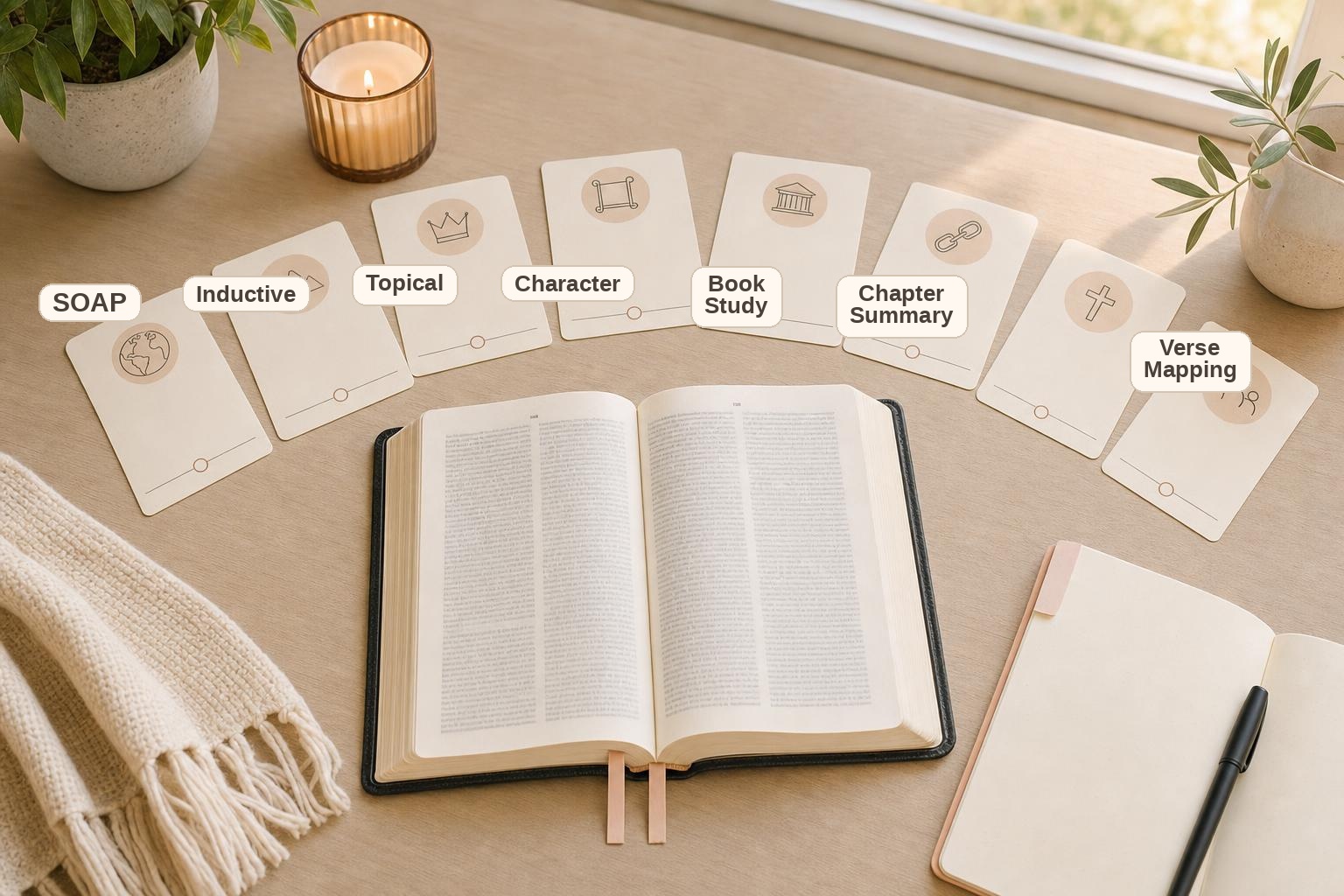
7 Bible study methods to try
1. The SOAP method
The SOAP Bible study method is one of the easiest places to start. SOAP stands for Scripture, Observation, Application, and Prayer. You read a short passage, write down the key verse, note what stands out, decide how it applies to your life, and then turn that response into prayer.
SOAP is especially helpful for daily quiet time because it is simple without feeling shallow. It gives you just enough structure to keep moving, but not so much that the habit becomes heavy.
Best for:
- beginners
- journaling
- short daily study times
- readers who want a natural bridge from Bible reading into prayer
If you want a method you can use tomorrow morning with a Bible and a notebook, SOAP is hard to beat. If you later want a close cousin of SOAP, methods like HEAR or TEXT offer a similar guided rhythm with slightly different prompts.
2. The inductive Bible study method
The inductive method is a slower, deeper way to study Scripture. It usually moves through three broad questions: What does the passage say? What does it mean? How should I respond? Some versions break that process into more detailed steps such as background, paraphrase, cross-references, insights, application, and summary.
This method works well when you want to stay close to the actual words of the text instead of jumping quickly to personal meaning. It helps you notice context, repeated themes, key terms, commands, promises, and the flow of the passage.
Best for:
- deeper study
- learning context
- small-group preparation
- readers who want a more thorough process
If you often feel like you rush past important details, the inductive method can teach you to slow down and listen more carefully before you decide what the passage means for you.
3. A topical Bible study
A topical study follows one subject through multiple parts of the Bible. You might study peace, wisdom, forgiveness, fear, prayer, identity, or waiting on God. Instead of staying in one chapter, you gather related passages and compare what Scripture says across them.
This method is helpful when you are in a specific season and need biblical clarity on one issue. It can also help when a recurring question keeps following you and you want to see the Bible's wider teaching instead of relying on one familiar verse.
Best for:
- specific life seasons
- recurring questions
- word or theme studies
- readers who want to connect multiple passages
The key is to let the Bible set the topic's shape. A topical study goes wrong when we cherry-pick verses to prove what we already wanted to hear. Go slowly, keep passages in context, and ask what the whole counsel of Scripture is showing you.
4. A character study
A character study focuses on one person in the Bible and traces what Scripture reveals about that life. You might study Peter, Ruth, David, Martha, Joseph, Esther, Paul, or Mary. As you trace their story, you notice their circumstances, choices, fears, failures, growth, and relationship with God.
A character study can make the Bible feel personal because it shows how God's truth meets real people in real situations. It is also a helpful way to see both warning and encouragement without turning the person into the hero instead of God.
Best for:
- readers who learn through story
- personal reflection
- lessons on faith, failure, courage, or obedience
- studying one person over several reading sessions
A strong character study asks more than "What happened to this person?" It also asks, "What does this show me about God, and what kind of response does it call out of me?"
5. A book study
A book study keeps you in one book of the Bible long enough to understand its flow, message, tone, and repeated themes. Instead of bouncing from verse to verse, you stay inside the same book and let its context build over time.
This is one of the healthiest methods if you want to avoid reading isolated verses without seeing the bigger picture. When you study a whole book, you begin to notice why certain verses matter because you can see what came before and after them.
Best for:
- readers who want context
- longer study seasons
- understanding the main message of a biblical book
- anyone tired of scattered reading
Books like Philippians, James, Ruth, Jonah, or Colossians are approachable places to begin. If you want help building a daily rhythm around that kind of slower reading, this Bible reading plan can help you stay consistent without feeling boxed in.
6. The chapter summary method
The chapter summary method is a simple way to read one chapter at a time and capture the main point before moving on. After you finish the chapter, write a short summary in your own words, note one or two key verses, and record one truth or response you do not want to forget.
This method is especially helpful if you read regularly but struggle to retain what you just read. It gives you a little more structure than ordinary reading without requiring the full depth of an inductive study.
Best for:
- building consistency
- daily reading habits
- readers who want better retention
- beginners who want an easy repeatable rhythm
A chapter summary also works well if you are trying to move through a whole book of the Bible. It helps each chapter leave a mark instead of blending into the next one.
7. Verse mapping
Verse mapping takes one short passage or one verse and slows it down on purpose. You look closely at important words, notice connections, compare translations, check nearby context, and trace cross-references that help explain the meaning.
This method is useful when one verse keeps standing out and you sense there is more there than a quick reading can hold. It helps you stay curious without becoming rushed or shallow.
Best for:
- one standout verse
- word studies
- deeper reflection
- readers who want to go slowly and think carefully
Verse mapping is especially helpful with rich passages in the Psalms, the Gospels, or the Epistles. If you find yourself wanting an even slower and more meditative pace, lectio divina may be a better fit for that season.
Best Bible study methods for beginners
If you are new to Bible study, do not start with the most complicated method on the list. Start with the one you are most likely to keep using.
For most beginners, the best starting options are:
- SOAP, because it is clear and prayerful
- chapter summary, because it is simple and easy to repeat
- character study, because story helps many people stay engaged
Pick one method and stay with it for a few weeks before switching. Use short passages. Start with a Gospel, a Psalm, James, Philippians, or one clear Bible character. Keep one notebook. Give yourself permission to learn slowly. The goal is not to impress yourself with a perfect system. The goal is to start paying closer attention to God's Word.
On days when you need a gentler starting point, the Daily Devotional or Random Bible Verse can help you get back into Scripture without overcomplicating the moment.
What you need to start today
You do not need a huge stack of study tools to begin. A simple setup is enough:
- a Bible translation you can read with understanding
- a notebook, journal, or notes app
- one short passage, one chapter, or one clear study question
- ten to twenty honest minutes
- a short prayer before you begin
If you feel scattered before you even start, pray briefly and ask God to give you understanding, focus, and humility. A simple prayer for understanding or prayer for guidance can help settle your heart before you read.
You also do not have to stay loyal to one method forever. Sometimes the wisest next step is to choose one method for this season, use it faithfully, and let your study habits grow over time. The best Bible study methods are not the ones that sound smartest. They are the ones that keep bringing you back to Scripture, truth, prayer, and obedience.
A short prayer before Bible study
Lord, thank You for giving Your Word to guide, correct, comfort, and teach me. As I open the Bible today, give me a quiet heart and an attentive mind. Help me understand what I read, believe what is true, and obey what You show me. Keep me from rushing, drifting, or turning this into a routine without love. Draw me closer to You through Your Word. Amen.

