
Seven Meaning in the Bible: Number 7 in Scripture
In the Bible, seven most often points to completion, fullness, sacred rest, or the finished character of God's work. It is one of the most repeated numbers in Scripture, but it is not a magic code. The meaning of seven comes from the passage where it appears.
That is why the number matters so much in places like creation, Sabbath, Jericho, and Revelation. Readers often ask whether seven means perfection, whether it is God's number, and whether Christians should read it spiritually. The safest biblical answer is that seven usually marks something brought to completeness under God's rule, especially when the text repeats it on purpose.
How Scripture first teaches the meaning of seven
The clearest place to start is Genesis 2:2-3. God finishes His work of creation and blesses the seventh day as holy. That matters because seven is not introduced as a lucky number or a hidden symbol first. It is introduced where God's work is complete and the seventh day is set apart for rest.
Exodus 20:8-11 builds on that same pattern in the Sabbath command. God's people work for six days and rest on the seventh because creation itself moved in that rhythm. So when Christians say seven is tied to completion and rest, they are not pulling that idea from superstition. They are following the Bible's earliest and clearest pattern. If you want the wider overview beyond one number, this guide to the meaning of numbers in the Bible traces the broader pattern across Scripture.
That foundation also helps explain why seven feels weighty later in the Bible. The number keeps showing up where God brings something to its proper finish, gives holy order to His people, or marks a full pattern instead of a partial one.

Other places where seven carries weight in the Bible
Once Genesis and the Sabbath establish the pattern, other passages build on it in memorable ways.
Jericho and completed obedience
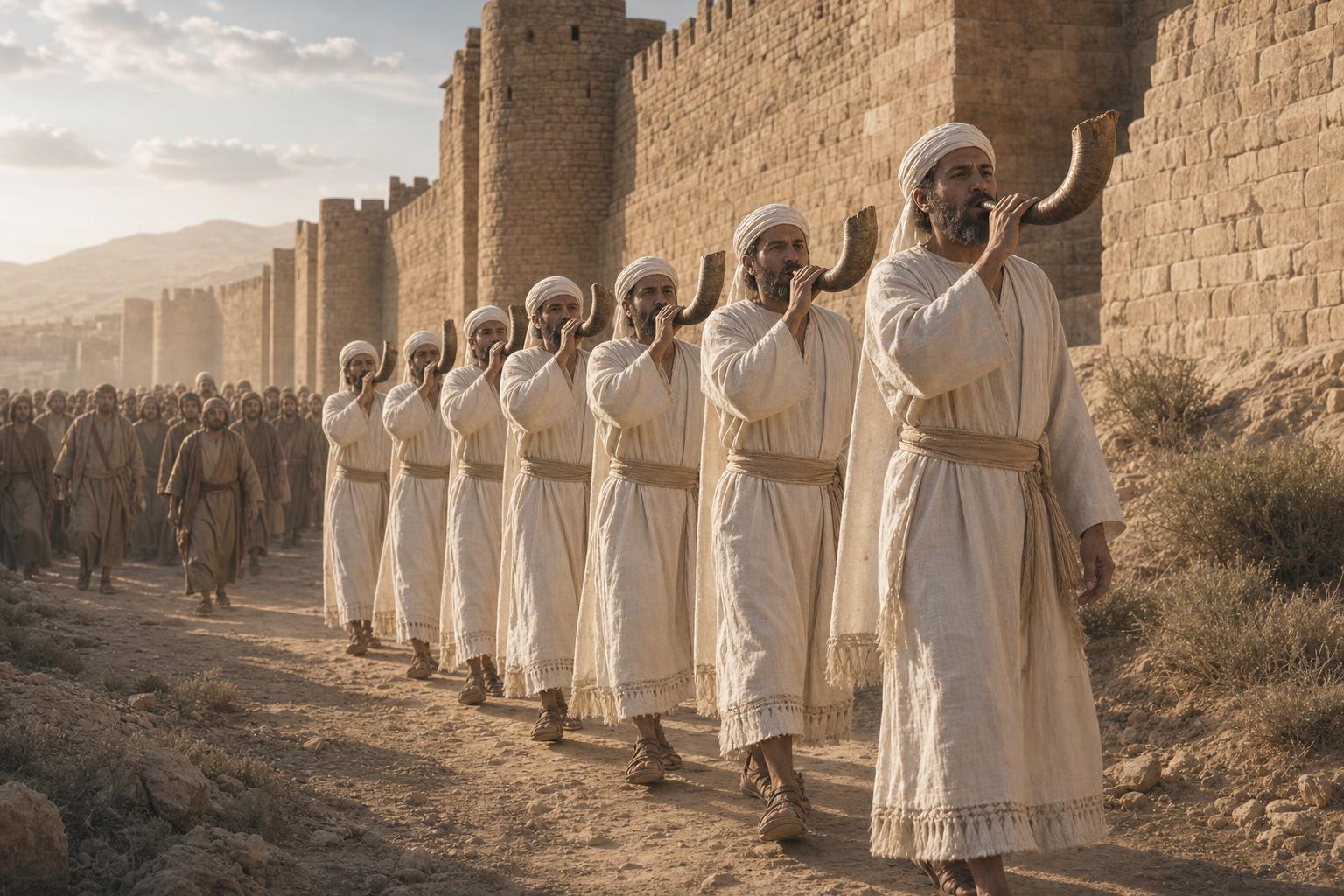
Joshua 6 layers seven into the story of Jericho on purpose: seven priests, seven trumpets, seven days, and on the seventh day seven circuits around the city. The point is not that seven worked like a charm. Israel did not win because it found the right ritual formula. Israel won because God gave the command, God set the timing, and God brought the victory.
That is why Jericho fits the larger meaning of seven so well. The repeated sevens frame the event as a work God brings through to completion. The number serves the story of obedient faith and divine fulfillment, not superstition.
Sabbath years and holy rhythms
Leviticus expands the same pattern into Israel's life with seventh-day rest, seventh-year rest for the land, and Jubilee after seven sevens of years. In other words, seven does not only mark a completed week. It also shapes holy time, worship, release, and covenant order.
That helps explain why seven often carries the idea of fullness and sacred rhythm, not only abstract perfection. The Bible uses seven to show life reordered under God's design. That same Sabbath pattern helps readers see why rest and holiness stay so closely connected to the number.
Naaman and complete cleansing
Second Kings 5 gives another clear example when Elisha tells Naaman to wash in the Jordan seven times. The healing does not come from the number by itself. It comes from God's word received in humble obedience. Even so, the sevenfold washing fits the wider biblical pattern of something carried all the way through to completion.
That is why seven in the Bible often feels fuller than a bare count. The number repeatedly appears where God finishes what He has appointed, whether that means rest, cleansing, judgment, or deliverance.
What does seven mean in Revelation?
Revelation uses seven again and again: seven churches, seven lampstands, seven seals, seven trumpets, and seven bowls. The repetition is so strong that it becomes one of the easiest places to see seven as a number of fullness.
In Revelation, seven helps signal the fullness of Christ's message to His churches and the completeness of God's unfolding judgment and plan. It does not mean readers should turn every detail into a private codebook. It means the book keeps using seven to show that God is acting completely, not partially, and that His purposes are moving toward their appointed end.
That is one reason Revelation gives so much weight to the number. Seven is not there to spark speculative theories. It helps the reader feel the wholeness, seriousness, and finality of what God is doing.
Does seven always mean perfection? Is it God's number?
Not every appearance of seven carries the same symbolic force. Sometimes seven is just a count. Context still decides meaning. That is an important guardrail, because a good biblical pattern can become a bad habit if readers start forcing symbolism into every verse.
Many Christians use the word perfection when they talk about seven, and that shorthand is understandable. But completion, fullness, and holy rest are usually safer ways to explain the pattern. Those words stay closer to what the major biblical examples are actually doing.
The Bible also never directly says, "Seven is God's number." People use that phrase because seven is so often tied to God's completed work and ordered purposes. But the phrase itself is not a biblical formula. It is better to say that seven is one of Scripture's most important repeated numbers, and its meaning comes from how the text uses it.
How Christians should read the number 7 without numerology
The safest way to read seven is to start with the passage itself, not with a hidden codebook. Ask what the author is doing with the number, whether the text repeats it for emphasis, and what is being completed, filled, or set apart as holy.
That is where biblical wisdom matters. Scripture does use numbers meaningfully, but it does not invite lucky-number thinking, angel-number language, or fortune-telling. Christians need humble discernment here so they stay anchored to the text instead of drifting into speculation.
That also means you do not need to panic if every appearance of seven does not feel symbolic. Sometimes a number is simply counting. Other times the repetition clearly carries theological weight. Faithful reading knows the difference and stays close to what Scripture actually says.
A short prayer for wisdom when reading biblical numbers
Lord, thank You for giving patterns in Scripture that help readers see Your wisdom, Your holiness, and Your finished work more clearly. Please give me humility when I read Your Word, wisdom to follow what the text truly says, and discernment to avoid superstition or guesswork. Teach me to trust You, rest in what You have finished, and read the Bible with reverence and clarity. Amen.

