
Who Is Asaph in the Bible? Role, Psalms, and Why He Matters
Asaph in the Bible was a Levite musician, worship leader, and psalmist appointed by David to minister before the ark of the covenant. His name is tied to Psalm 50 and Psalms 73-83, and 2 Chronicles 29:30 later calls him a seer, which shows that his ministry carried spiritual weight as well as musical skill.
That is why Asaph matters more than many readers first expect. He stands near the center of Israel's worship life, and his psalms give voice to praise, lament, justice, and faith during hard times. When people ask who Asaph was in the Bible, they usually mean this Davidic worship leader, not the other men in the Old Testament who share the same name.
Who was Asaph in the Bible?
Asaph was a Levite from the family line of Gershon and is identified in 1 Chronicles 6:39 as the son of Berechiah. Scripture places him among the men David appointed for musical service before the Lord, so the simplest answer is this: Asaph was one of David's chief worship leaders and a psalmist whose ministry shaped Israel's praise.
His name is often explained as meaning "collector" or "gatherer." That detail is not the main point of his story, but it fits his role well. Asaph helped gather God's people in worship and helped gather their prayers, songs, and cries before the Lord.
He is also one of those Bible figures whose influence is larger than the number of verses about him might suggest. Asaph does not dominate the narrative the way Moses, David, or Paul do. Still, his role places him close to the ark, close to public worship, and close to the psalms that still help believers pray today.
What did Asaph do under David?
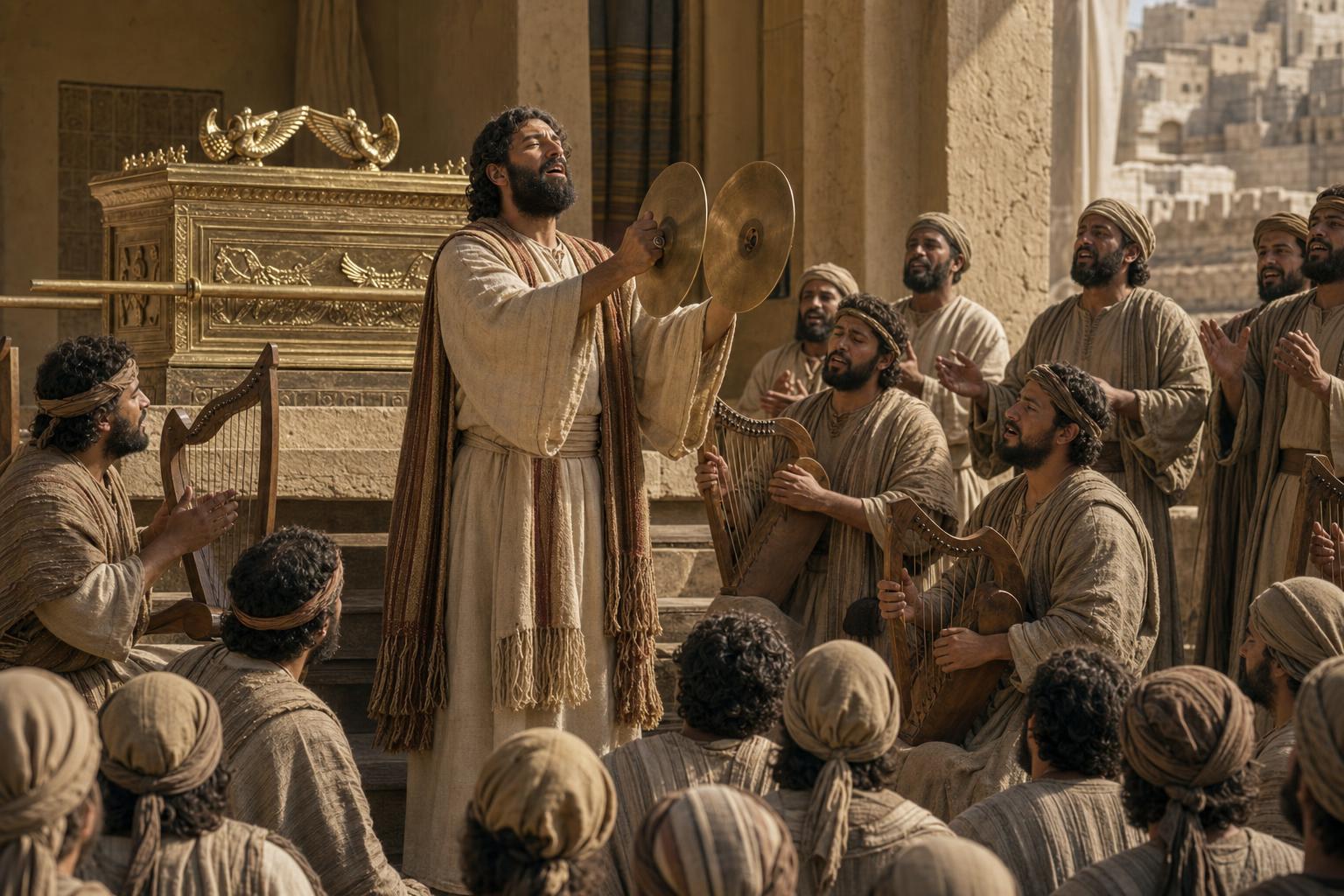
Asaph served during the period when David organized worship around the ark of the covenant in Jerusalem. First Chronicles says David commanded the Levites to appoint singers and musicians, and Asaph was one of the leading men in that work.
First Chronicles 16 gives one of the clearest pictures of his ministry. Asaph is named as chief among the musicians, and he is specifically connected with sounding the cymbals while others played harps and lyres. He was not a background figure. He helped lead public thanksgiving, praise, and remembrance before the Lord.
That matters because Asaph's work was not entertainment. It was worship leadership. He helped shape how Israel remembered God's deeds and responded to God's presence. His story fits naturally into the Bible's larger picture of worship.
What are the Psalms of Asaph?
The Psalms of Asaph are Psalm 50 and Psalms 73-83. That gives Asaph's name to a group of twelve psalms, which is one reason his importance reaches far beyond a few lines in Chronicles.
These psalms are not all the same, but they share a recognizable tone. They speak honestly about injustice, suffering, national trouble, covenant faithfulness, and the need to stay near God when life feels upside down. Some are songs of praise. Some are laments. Some sound like warnings. Together they show that true worship includes honesty as well as celebration.
Psalm 73 may be the clearest example for many readers. Asaph admits how deeply he struggled when he saw the prosperity of the wicked, yet he came back to clarity in the presence of God. That makes his psalms especially meaningful for believers who are trying to hold onto faith in confusing seasons.
If you have ever paused over the Psalms and wondered about words like Selah, this guide to the meaning of selah in the Bible is a helpful companion. If you want to keep reading through the Psalms after this article, the Random Psalm Generator is another simple next step.
Why is Asaph called a seer, and who were the sons of Asaph?
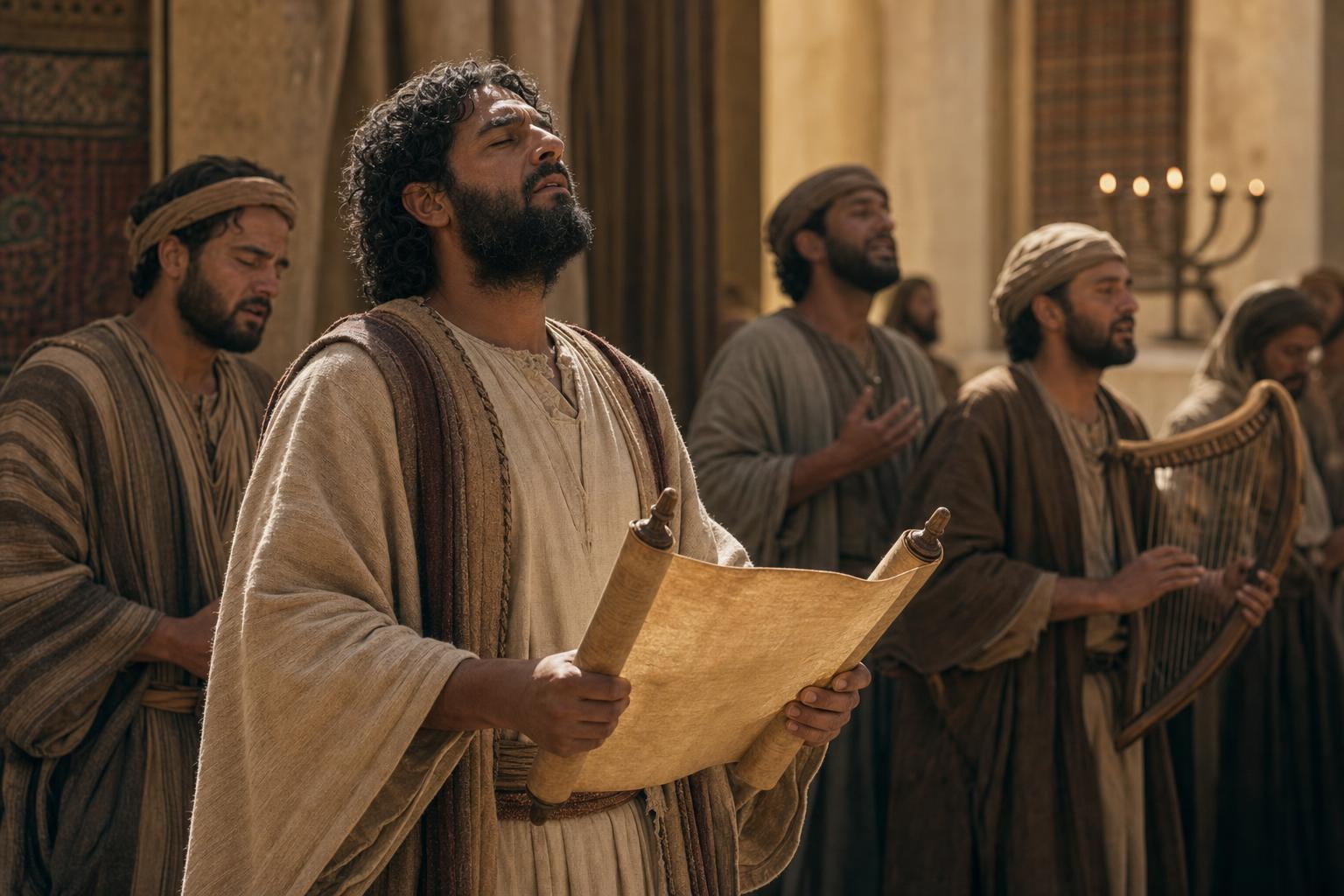
Second Chronicles 29:30 refers to "Asaph the seer." That title matters because it shows Asaph was more than a skilled musician. In the Bible, a seer is someone who perceives and speaks truth from God. So Asaph's ministry joined worship with spiritual insight.
That helps explain why his psalms often sound weighty and searching. He did not use music to avoid hard truth. He used it to help God's people face reality before God with honesty, repentance, and hope.
The Bible also speaks about the sons of Asaph. These later singers and worship servants appear in places like 1 Chronicles 25, Ezra 2:41, and Nehemiah 7:44. Whether the phrase points to biological descendants, a worship guild, or both, the main idea is clear: Asaph's ministry did not end with his own lifetime. His line continued helping lead the worship of God's people across generations.
That legacy still speaks to readers today. Worship is not only about musical ability. It is also about truth, memory, reverence, and helping other people turn their attention to God.
Were there other people named Asaph in the Bible?
Yes. The Old Testament mentions other men named Asaph besides the worship leader connected to David and the psalms.
One is the father of Joah, a recorder or court official in the days of King Hezekiah. Another appears in Nehemiah as the keeper of the king's forest who supplied timber for Jerusalem's rebuilding work. Those men matter in their own settings, but when most readers ask who Asaph was in the Bible, they mean the Levite musician and psalmist.
So the helpful rule is simple: if the discussion is about David, temple worship, or the psalms, the main Asaph in view is almost certainly the worship leader.
Why does Asaph still matter for believers today?
Asaph still matters because he shows that worship can be both beautiful and honest. His psalms do not pretend that evil is small or that pain is easy. They show a believer wrestling with injustice, crying out to God, and still returning to trust.
He also reminds readers that music in Scripture is not shallow decoration. In Asaph's life, worship carried memory, theology, warning, comfort, and hope. That is one reason his story still encourages worship leaders and believers who want to grow in worship.
There is also a quieter lesson in Asaph's story. He stayed close to God's presence and kept telling the truth in worship, even when the truth included sorrow, judgment, and waiting. Many believers need that kind of example. Faithful worship does not ignore dark seasons. It brings them into the sanctuary and places them before God.
Key Bible passages about Asaph
If you want to read Asaph's story and legacy directly in Scripture, these are strong places to start:
- 1 Chronicles 6:39 - Asaph is named in the Levitical line and identified as a worship leader.
- 1 Chronicles 15:16-19 - David appoints musicians when the ark is brought up.
- 1 Chronicles 16:4-7 - Asaph is placed in active ministry of thanksgiving and praise before the ark.
- 1 Chronicles 25:1-2 - the sons of Asaph are listed among those set apart for musical service.
- 2 Chronicles 29:30 - Asaph is called a seer.
- Ezra 2:41 - the sons of Asaph appear among those returning from exile.
- Nehemiah 7:44 - the Asaphite worship line is still remembered and counted.
- Psalm 50 - a psalm of worship and judgment tied to Asaph's name.
- Psalm 73 - one of the clearest windows into Asaph's honest struggle and renewed trust.
- Psalm 83 - a prayer that shows the national and covenant-focused burden of the Asaph psalms.
Taken together, these passages show why Asaph is remembered as more than a musician. He was a worship leader whose words still help God's people pray, praise, and persevere.
A short prayer after reading about Asaph
Lord, thank You for the example of Asaph and for the way his songs still teach Your people to worship in truth. Help me stay near You in both praise and difficulty. Give me an honest heart, a steady faith, and a life that points other people toward Your presence. In Jesus' name, amen.

