
SOAP Bible Study Method: Steps, Example, and Simple Template
The SOAP Bible study method is a simple way to slow down with Scripture and respond to what you read. SOAP stands for Scripture, Observation, Application, and Prayer. Instead of rushing through a passage, it gives you four clear moves: write the verse down, notice what stands out, ask how it applies to real life, and then talk to God about it.
That makes SOAP especially helpful if you want more structure in your quiet time without turning Bible study into a heavy academic exercise. It works well for beginners, journalers, busy readers, and anyone who wants a repeatable way to stay attentive in God's Word. This guide will show you what the method is, how to use it step by step, what a real SOAP entry looks like, and a simple template you can reuse.
What is the SOAP Bible study method?
The SOAP Bible study method is a short, repeatable framework for reading a Bible passage with focus. It helps you move from simply seeing words on a page to actually reflecting on them and answering God in prayer.
At its best, SOAP does four things well. It helps you stay with one passage long enough to notice something real. It keeps your observations tied to the text instead of drifting into vague thoughts. It pushes you toward one honest application instead of ten abstract ideas. And it ends with prayer, so the reading becomes relational rather than mechanical.
That is why the SOAP method works so well for daily Bible reading. You do not need a seminary background, a long study block, or a complicated notebook system to start. You need a Bible, a little time, and enough honesty to ask, "What is God showing me here, and what should change because of it?"
What does SOAP stand for?
SOAP stands for Scripture, Observation, Application, and Prayer. The method is simple, but each step has a different job.
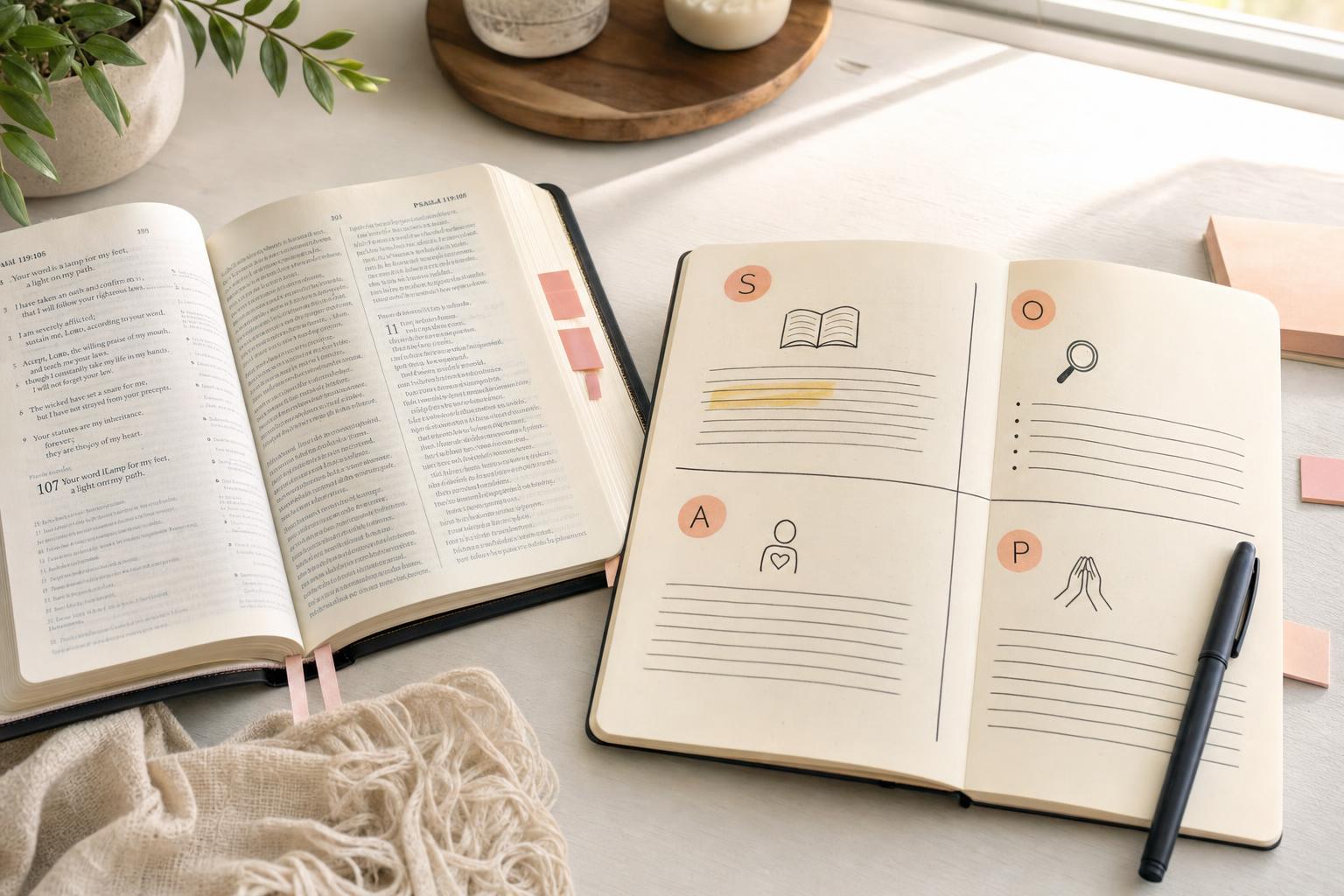
S - Scripture
Start by choosing a short passage and writing it out. This can be one verse, a few verses, or a short paragraph. Writing it down slows you enough to notice words you might otherwise skip.
If you are new to the method, keep the passage short. A psalm, a Gospel paragraph, a section from James, or a few verses from Proverbs usually works better than a long chapter.
O - Observation
Observation is where you ask, "What does this passage actually say?" Stay close to the text before you rush to personal meaning.
You might notice repeated words, a command, a promise, a contrast, a warning, or something the passage reveals about God's character. You are not trying to impress anyone here. You are simply paying attention.
Helpful observation questions:
- What stands out right away?
- What does this teach me about God, people, sin, faith, obedience, or hope?
- Is there a command, promise, warning, example, or pattern in the passage?
- What word or phrase seems especially important?
A - Application
Application is where the passage moves from the page into your actual life. Ask, "What should change because of what I just read?"
This step works best when it stays specific. A weak application sounds like, "I should trust God more." A stronger one sounds like, "Before I answer that stressful text today, I will stop, pray, and respond more calmly."
Helpful application questions:
- What does this passage call me to believe, stop, confess, start, or remember?
- Where does this confront my attitude, fear, habit, or assumption?
- What is one concrete step of obedience for today?
P - Prayer
Prayer is your response to God after reading. Thank Him, confess something, ask for help, or turn the passage back into a simple prayer.
This last step keeps SOAP from becoming a note-taking exercise only. You are not just collecting observations. You are meeting with God through His Word.
Helpful prayer prompts:
- Lord, what do I need to confess after reading this?
- What help do I need today?
- What truth from this passage do I want to thank You for?
- Where do I need strength to obey what I just read?
SOAP Bible study example
A real example makes the method much easier to start using. Here is a simple SOAP entry using James 1:5.
Scripture
If any of you lacks wisdom, let him ask of God, who gives to all liberally and without reproach, and it will be given to him.
Observation
This verse assumes that God's people will have moments when they do not know what to do. It also shows that asking for wisdom is not a sign of weakness. God is generous, and He does not shame honest need.
Application
When I feel pressured to make a quick decision, I usually move into worry or overthinking. Today I want to stop treating anxious thinking like wisdom. Before I answer a difficult message or make a rushed choice, I will ask God for wisdom first.
Prayer
Lord, I need Your wisdom today. Keep me from reacting out of fear, pride, or pressure. Teach me to slow down, ask for help, and trust that You give what I need. Amen.
That is all a SOAP entry needs to be. It does not have to sound polished. It just needs to be honest, clear, and tied to the passage you read.
SOAP Bible study template you can copy
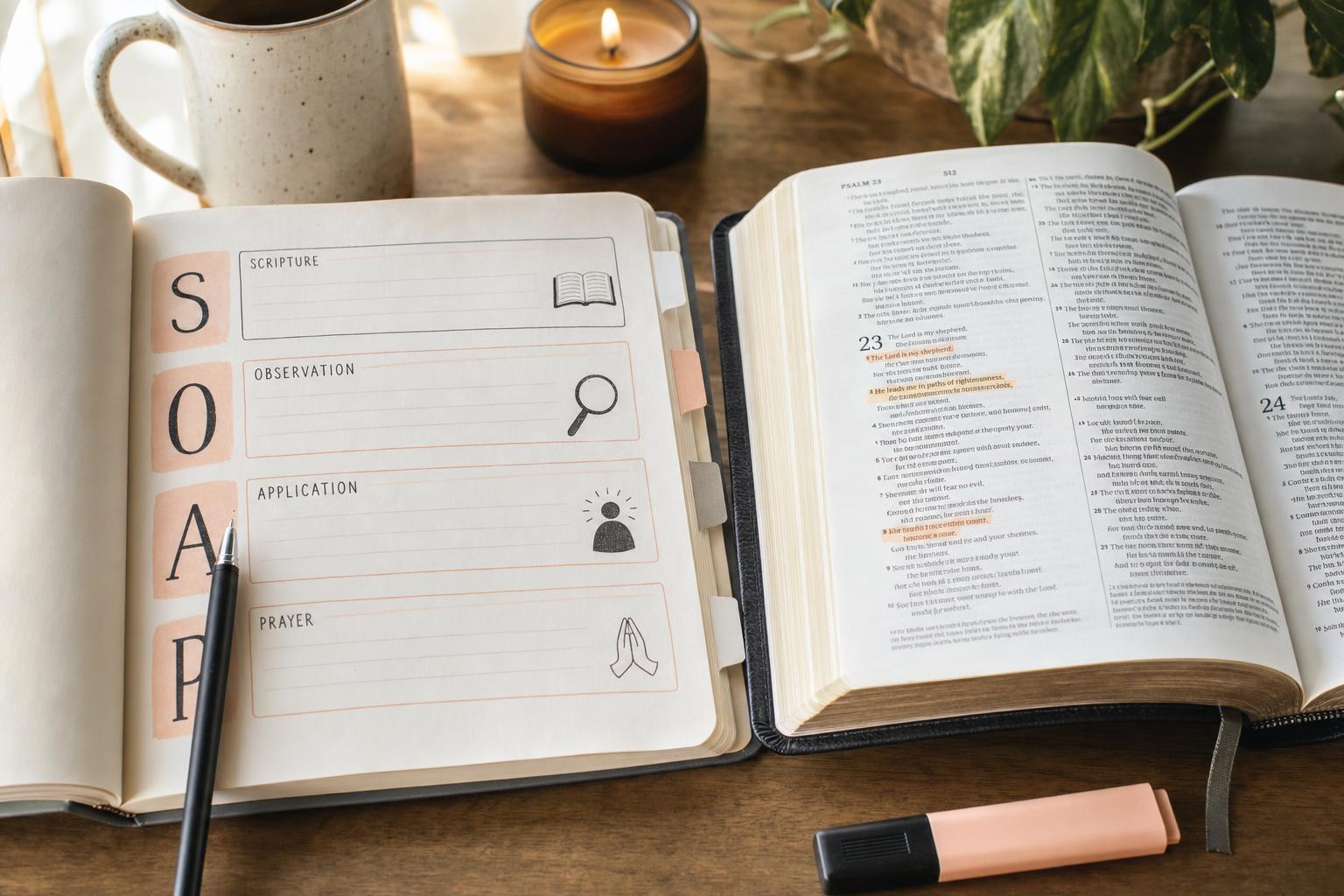
If you want a simple SOAP Bible study template, use this format in a notebook, journal, notes app, or printed page:
Scripture
Write the verse or short passage here.
- What verse or phrase stood out most?
Observation
Write what you notice in the passage.
- What does this show about God?
- What command, promise, warning, or truth stands out?
- What repeated word, contrast, or theme do you see?
Application
Write one clear way the passage applies to your life today.
- What needs to change in my thinking, attitude, or next action?
- What is one practical step of obedience?
Prayer
Turn the passage into a short prayer.
- What do I need to confess, ask, thank God for, or surrender?
If you were hoping for a printable SOAP Bible study worksheet, this copyable format is the simplest place to start. Put it on one page, reuse it daily, and adjust the prompts as your study habit gets stronger.
What passages work well for SOAP Bible study?
SOAP works best with manageable passages. If you start with too much text, the method can begin to feel rushed or cluttered.
Good places to begin include:
- Psalms when you want prayer language, emotion, worship, or honesty before God.
- The Gospels when you want to stay close to the words and actions of Jesus.
- Proverbs when you want short wisdom passages that are easy to observe and apply.
- James when you want direct, practical instruction for daily life.
- Short epistle paragraphs when you want to trace one clear thought without jumping around.
If you want help choosing passages day by day, this Bible reading plan can give you structure. If you ever want a slower, more meditative reading rhythm, lectio divina is another helpful method to explore.
Tips for beginners using the SOAP method
The SOAP Bible study method stays useful when it remains simple. A few habits will help:
- Keep the passage short at first. It is better to go deeper on four verses than to skim a full chapter and remember nothing.
- Do not overcomplicate observation. You are not writing a commentary. You are noticing what is really there.
- Make application small and concrete. The point is not to write a dramatic life plan every morning. The point is to obey the next clear thing.
- Use one notebook or one notes app. Consistency matters more than having a perfect journaling system.
- Treat SOAP as a tool, not a rule. The Bible does not command this exact method. It is simply a helpful structure for paying attention.
- Start again quickly after missed days. Do not wait for a perfect week to begin again.
If you want to pray before you study, keep this prayer for understanding or this prayer for guidance nearby. Sometimes a short prayer is enough to quiet the noise before you open the passage.
Helpful PrayersFor resources for Bible study habits
If you want a few natural next steps around Bible study, PrayersFor already has helpful companion resources.
The Bible reading plan can help if you want a clearer daily structure. The lectio divina guide is a good fit if you want a slower and more reflective way to stay with a passage.
The Daily Devotional can support your daily rhythm with a short reading habit, and the Random Bible Verse tool is useful on days when you want one simple starting point instead of a longer reading block.
A short prayer before you start your SOAP Bible study
Lord, thank You for giving Your Word to guide, correct, comfort, and teach me. As I read today, help me pay attention instead of rushing. Show me what is true, where I need to change, and how to respond to You with honesty. Give me understanding, a willing heart, and the grace to obey what You show me. Amen.

