
Who Is Titus in the Bible? Paul's Coworker and Leader
Titus in the Bible was a Greek Gentile believer, a trusted coworker of the apostle Paul, and the man Paul left in Crete to strengthen churches and appoint elders. He appears in Galatians, 2 Corinthians, Titus, and 2 Timothy, where he is shown as steady, dependable, and spiritually mature.
He matters because he is more than a name in the background of Paul's letters. He helped in hard ministry situations, carried responsibility with courage, and received a New Testament letter focused on leadership, sound doctrine, grace, and good works. When readers ask who Titus was in the Bible, they usually want both the biography and the reason his life still matters. Scripture gives enough to answer both.
Who was Titus in the Bible?
Titus was one of Paul's closest ministry partners. Galatians 2 shows that he traveled with Paul to Jerusalem, and the passage makes a point of saying Titus was Greek. That detail matters. It shows Titus was a Gentile believer and became an important example in the early church's debate over whether Gentile Christians had to adopt Jewish identity markers in order to belong to God's people.
Paul also addressed Titus with unusual warmth. In Titus 1:4, he called him "my true child according to a common faith." That language shows spiritual closeness and trust. Titus was not simply a courier or assistant. He was a disciple, coworker, and leader Paul relied on in difficult assignments.
The Bible does not tell us much about Titus's family, age, or personal background beyond what matters most. It does not spend time on speculative detail. Instead, Scripture presents Titus through his faithfulness, his work alongside Paul, and his role in helping churches stay healthy.
Where is Titus mentioned in the Bible?
Titus appears first in Galatians 2:1-3. There Paul says Titus traveled with him to Jerusalem, and Titus's status as an uncircumcised Greek believer became part of a major gospel issue. The point was clear: Gentiles could belong to Christ without first becoming Jews.
Most of the personal detail about Titus comes in 2 Corinthians. In 2 Corinthians 7:6-7, Paul's heart is lifted when Titus arrives with encouraging news from Corinth. In 2 Corinthians 8, Paul says Titus willingly accepted the task of helping with the Corinthians' collection and even calls him "my partner and fellow worker." Those lines show Titus acting as a trusted bridge between Paul and a troubled church.
Titus then appears as the direct recipient of the letter to Titus. Titus 1:5 says Paul left him in Crete to set things in order and appoint elders in every town. Later, 2 Timothy 4:10 mentions Titus going to Dalmatia, which suggests he remained active in ministry even late in Paul's life. Taken together, those references show a man who kept serving across several important moments in the early church.
What was Titus's role in Paul's ministry?
Titus was the kind of coworker Paul could trust in hard situations: dependable, wise, and willing to step into difficult assignments. Paul relied on him not only for theological clarity but also for real pastoral work. Titus helped carry news, rebuild confidence, and handle practical responsibilities that required courage and tact.
One of the clearest examples is Corinth. That church had tension, grief, and strained relationships with Paul. Yet Titus helped in that setting well enough that Paul described his arrival as a comfort. He was not just delivering information. He was helping restore peace. That gives Titus a quiet but important place in the story of the early church.
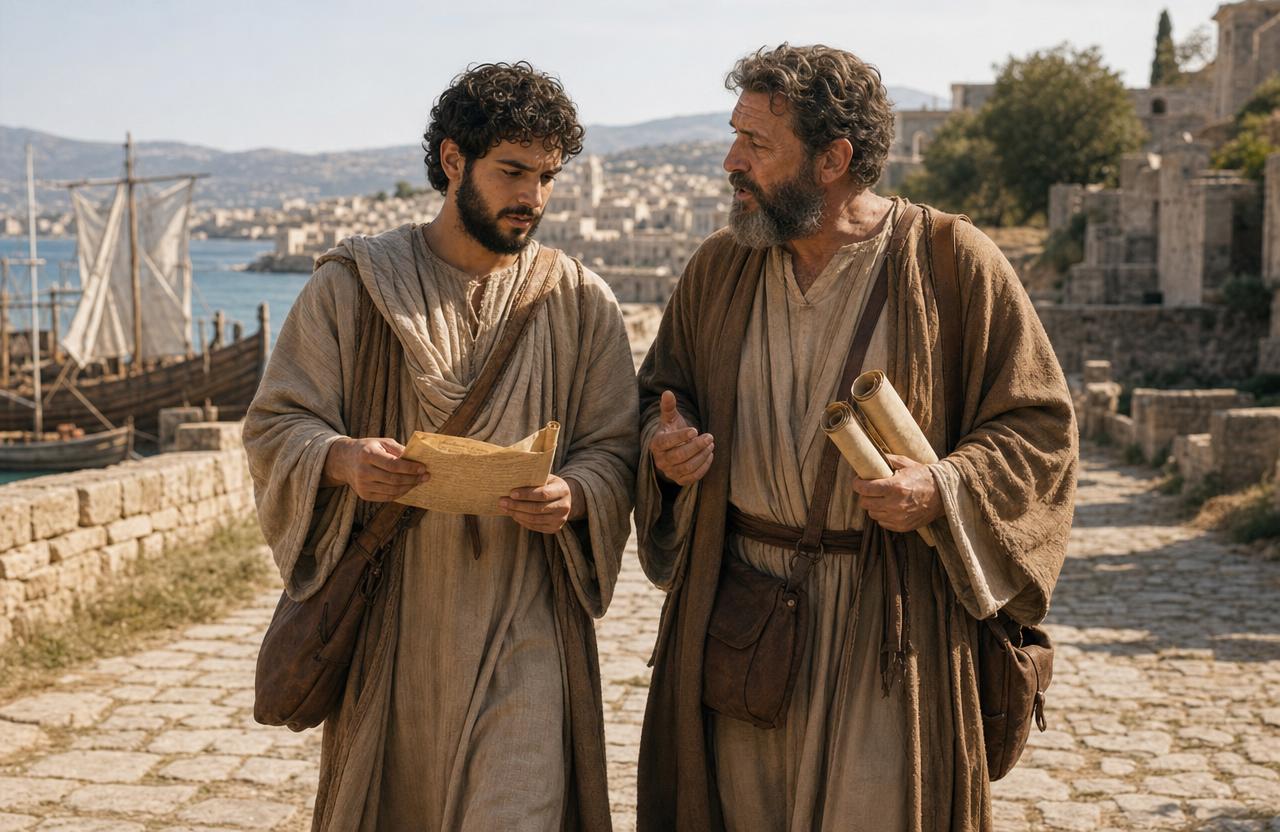
Second Corinthians 8 adds another layer. Titus was involved in a sensitive collection effort, and Paul praised both his eagerness and his character. So when Scripture shows Titus beside Paul, it presents him as a trustworthy leader, not a passive observer. If you want a fuller picture of the apostle he served alongside, this guide to who Paul was in the Bible is a helpful companion.
Why did Paul leave Titus in Crete?
Paul says in Titus 1:5 that he left Titus in Crete to "set in order the things that were lacking" and appoint elders in every city. Churches already existed there, but they needed stronger structure, mature leadership, and clearer direction.
The next verses show why the assignment was serious. Titus had to deal with false teachers and disruptive voices that were harming households. So Crete was not a place for a hesitant or careless leader. Paul sent Titus because Titus was steady enough to handle disorder and wise enough to put healthy leadership in place.
That assignment helps explain why Titus matters. He was trusted to strengthen church life where it was unstable. His story fits naturally with broader biblical themes of leadership and the life of the church. It also makes sense why readers praying for pastors and spiritual oversight often look for support like these prayers for church leaders.

What does the book of Titus teach?
The letter to Titus is short, but its message is weighty. Paul speaks about appointing qualified elders, correcting false teaching, and teaching believers to live in a way that matches the gospel. So the book of Titus is not only about administration. It is about healthy doctrine producing healthy lives.
One of the letter's clearest themes appears in Titus 2:11-14. Grace is not treated as permission to drift. Grace trains believers to reject ungodliness and live self-controlled, upright, and godly lives. That means Titus's ministry was not merely about managing church problems. It was about helping Christians live in a way that reflected the grace of God.
Titus 3:4-8 carries the same balance. Salvation comes through God's mercy, not through our own righteousness, yet those who trust in God should be careful to devote themselves to good works. That combination explains why Titus still feels so practical. The letter joins truth, grace, leadership, and everyday obedience in one pastoral voice.
Why does Titus still matter for Christians today?
Titus matters because he shows that faithfulness is not always loud, but it is deeply important. He was trusted in controversy, useful in reconciliation, and dependable in leadership. He reminds believers that God often works through people who are willing to serve steadily, strengthen others, and carry responsibility well.
He also shows that sound doctrine and practical godliness belong together. Titus was not left in Crete to win arguments for their own sake. He was there to help churches become ordered, healthy, and faithful. That still speaks to Christians who want wisdom, courage, and maturity in real life. If that is where you are, these prayers for wisdom and prayers for leaders are natural next steps.
Finally, Titus matters because his life points away from himself. The Bible presents him as a man shaped by grace and useful to God. That is part of the encouragement in his story: you do not have to be the loudest person in the room to become a faithful servant of Christ.
Key Bible passages about Titus
If you want to read Titus's story directly in Scripture, these are strong places to start:
- Galatians 2:1-3 - Titus appears as a Greek believer traveling with Paul, and his Gentile status matters in the circumcision question.
- 2 Corinthians 7:6-7 - Titus brings comfort and good news after the Corinthian conflict.
- 2 Corinthians 8:6, 16-17, 23 - Paul describes Titus as eager, dependable, and his partner in ministry.
- Titus 1:4-5 - Paul calls Titus his true child in the faith and explains why he left him in Crete.
- Titus 1:10-16 - Titus faces the challenge of confronting false teachers.
- Titus 2:11-14 - the letter summarizes how grace trains believers to live godly lives.
- Titus 3:4-8 - Paul highlights God's mercy, salvation by grace, and the importance of good works.
- 2 Timothy 4:10 - Titus appears later still active in ministry, traveling to Dalmatia.
Together, these passages show why Titus was remembered as much more than a background helper. He was a trusted coworker, a courageous church leader, and a faithful servant whose example still encourages believers.
A short prayer inspired by Titus's example
Lord, thank You for the faithful example of Titus. Give me the same steadiness, wisdom, and courage to serve You well. Help me love sound truth, strengthen others with humility, and live in a way that reflects Your grace. Teach me to be dependable in the work You place before me and ready for every good work. In Jesus' name, amen.

