
Who Is Jacob in the Bible? Israel and Esau
Jacob in the Bible is the son of Isaac and Rebekah, the twin brother of Esau, the grandson of Abraham, and the man God later called Israel. He matters because his life sits near the center of Genesis. Through Jacob, the covenant line continues, the family of Israel takes shape, and readers see a deeply flawed man whom God still leads, disciplines, and blesses.
Many people know Jacob for one dramatic scene, like the stolen blessing or the night he wrestled with God. But his story is bigger than one moment. It begins with rivalry before birth, passes through deception, exile, marriage, and reconciliation, and ends with the family line that becomes the twelve tribes of Israel. That full arc is what makes Jacob so important in Scripture.
How is Jacob connected to Isaac, Rebekah, and Esau?
Jacob was born into the same covenant family as Abraham and Isaac. He was Isaac and Rebekah's younger son, and he entered the world gripping the heel of his older twin brother, Esau. Even before the boys were born, Rebekah received a word from God that the older would serve the younger. That early tension helps explain why Jacob's story never feels small or accidental.
Esau and Jacob grew up very differently. Esau became a man of the field, while Jacob is presented as staying closer to the tents. Scripture also shows how divided the household became. Isaac favored Esau, while Rebekah favored Jacob. That kind of family partiality did not stay hidden in the background. It shaped the choices the family made and deepened the conflict between the brothers.
So when readers ask who Jacob is in the Bible, the first answer is that he was a patriarch inside a tense covenant family where promises, birth order, and blessing all mattered. Jacob's story cannot be separated from Isaac, Rebekah, and Esau because that family setting is where his life takes shape.
Why did Jacob take Esau's birthright and blessing?
The first major turning point comes when Esau returns from the field exhausted and agrees to trade his birthright for food. That scene is short, but it matters because it shows both Jacob's opportunism and Esau's disregard for what he was giving away. The birthright carried real weight in the inheritance line, which is why the moment is remembered so strongly.
Later, when Isaac grows old and prepares to bless Esau, Rebekah helps Jacob disguise himself so he can receive the blessing instead. That event is one of the clearest reminders that Jacob's story is not a simple hero story. He receives the blessing through deception. The Bible does not hide the ugliness of that choice, and the family fracture becomes immediate.
Once Esau understands what happened, his anger turns deadly. Jacob is sent away before his brother can act on it. That means Jacob's journey out of home begins under pressure, guilt, and fear. He is part of God's covenant plan, but he is also a man dealing with the consequences of his own actions. That combination is one reason his story feels so human.
What happened to Jacob at Bethel and in Haran?
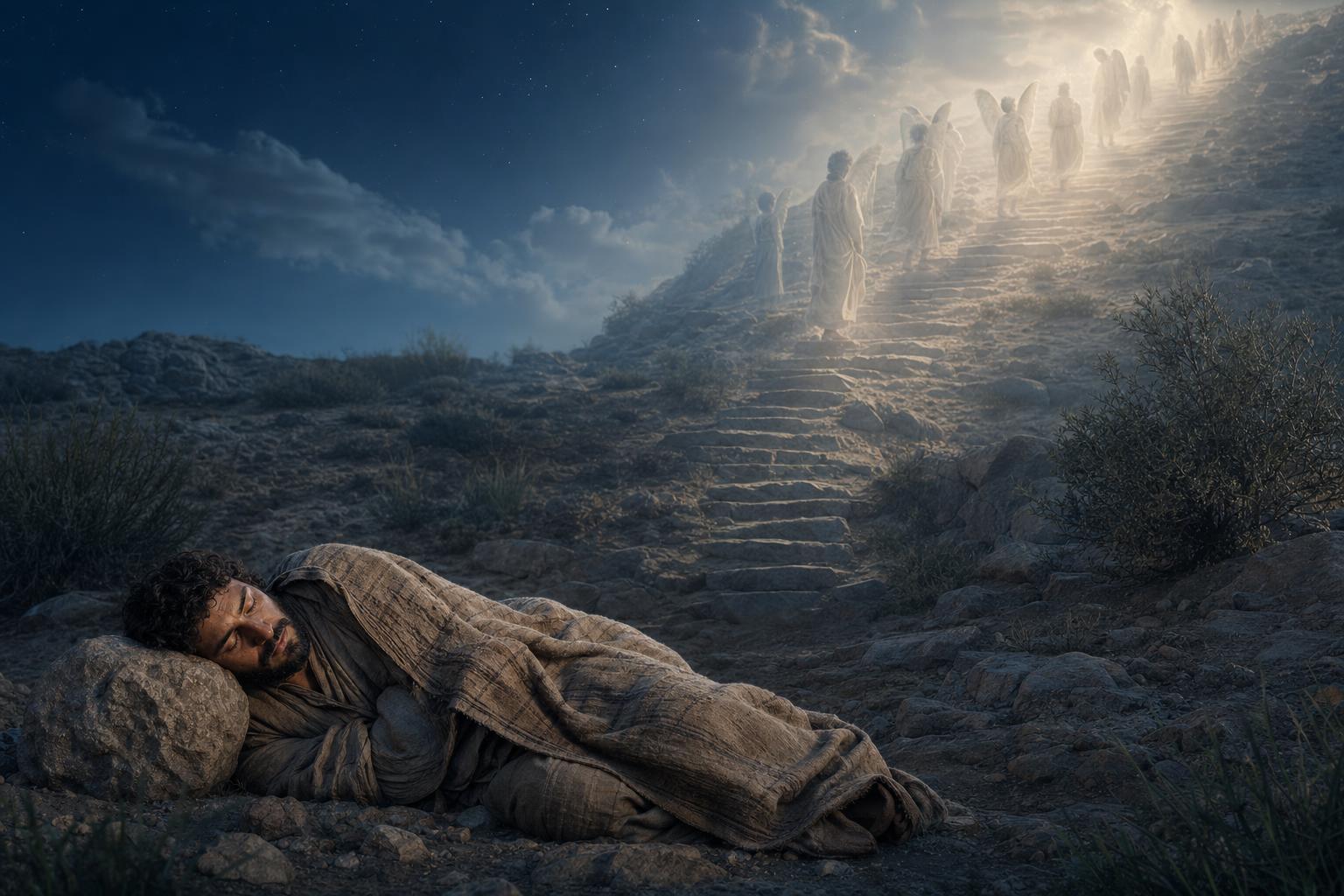
As Jacob flees, one of the most important scenes in his life takes place at Bethel. There he dreams of a stairway, or ladder, reaching between earth and heaven, with angels ascending and descending. In that moment God speaks to Jacob and renews God's promises connected to Abraham and Isaac. Jacob is running from danger, and God meets him there.
That scene matters because it changes the way readers see him. Jacob is still the same man who left home in fear, but now his story is tied to God's presence and promise in a more personal way. Bethel keeps the article from becoming only a family drama. It shows that Jacob's life belongs inside the larger story of God's faithfulness.
From there Jacob goes to Haran, where he meets his uncle Laban and falls in love with Rachel. He agrees to work seven years to marry her, only to be deceived on the wedding night when Laban gives him Leah instead. Jacob then works another seven years for Rachel. In other words, the man who deceived his father becomes the man deceived by his uncle.
Those Haran years matter for more than the marriage story. Jacob's household grows there. His wives, their servants, and their children form the family that later becomes Israel's tribal line. He also leaves Haran with substantial flocks and a much larger household than the one he brought with him. The middle of Jacob's life is not a side note. It is where God shapes him through hardship, delay, and responsibility.
Why is Jacob also called Israel?
The name Israel comes from one of the most famous nights in the Old Testament. As Jacob returns home, he learns that Esau is coming to meet him. Jacob is afraid. He prays for deliverance and openly acknowledges his need for God's help. The prayer matters because Jacob stops scheming long enough to ask God for mercy.
Then, during the night, Jacob is left alone and wrestles until daybreak with the mysterious figure Scripture presents in a deeply unusual way. By the end of the struggle, Jacob receives a new name: Israel. The explanation given in the text is tied to struggling with God and with men. However carefully a reader phrases the details of that scene, the point is clear. Jacob leaves that night marked, blessed, and changed.
That is why the Bible can refer to him as both Jacob and Israel. The older name points back to the man readers have been following through rivalry, deception, and fear. The newer name points to the man whose life is now identified with struggle, blessing, and covenant destiny. The name Israel is not a random nickname. It belongs to one of the defining moments of his story.
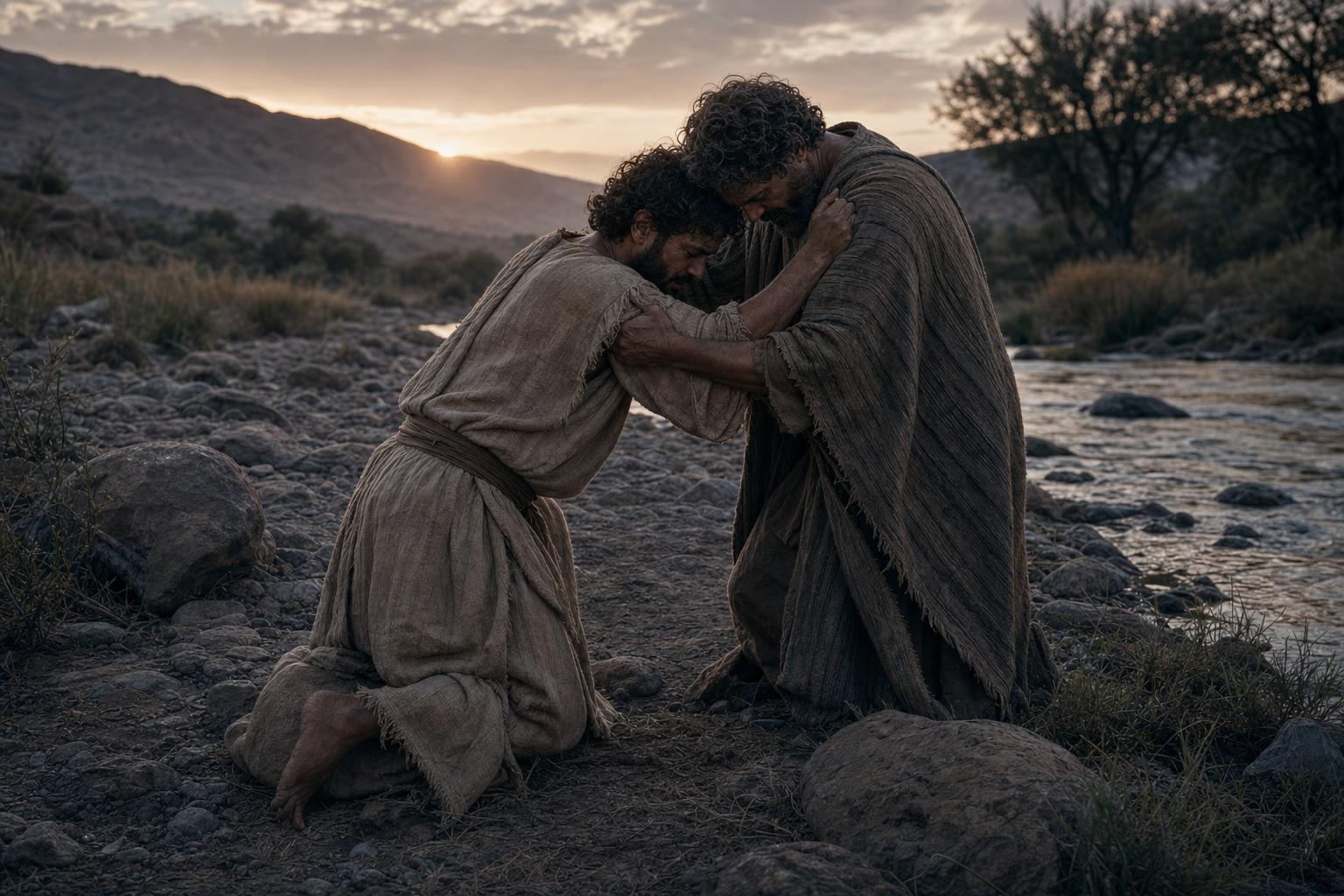
The next chapter makes the return even more striking. Instead of attacking Jacob, Esau runs to him, embraces him, and weeps with him. The reunion does not erase everything that happened before, but it does keep the story from ending in bitterness alone. Jacob's life includes reconciliation as well as rivalry.
How does Jacob connect to Joseph and the 12 tribes of Israel?
Jacob's family legacy is one of the main reasons he matters so much in the Bible. Through Leah, Rachel, and their servant women, he becomes the father of the sons who stand at the root of the tribes of Israel. That does not mean every detail of the family tree must be memorized to understand him. It does mean Jacob stands at a turning point in the story of God's people.
Joseph is especially important in Jacob's later life. Rachel gives birth to Joseph after years of longing, and Joseph later becomes Jacob's favored son. That favoritism creates another round of family pain, because Joseph's brothers grow resentful. Even so, God uses the broken family situation to move the story toward Egypt, where Joseph eventually rises to power and preserves the family during famine.
Jacob's move to Egypt is a major bridge between Genesis and Exodus. He does not simply disappear after the wrestling scene. He leads the family into a new stage of the story, and before his death he blesses his sons. That final blessing scene matters because it frames them as the beginnings of the tribes.
So if someone asks how Jacob connects to Israel as a people, the answer is straightforward. Jacob becomes Israel in name, and his family becomes Israel in historical and covenant identity.
Why is Jacob important in the Bible?
Jacob is important in the Bible because he stands in the covenant line and because his life shows God's faithfulness to a flawed person. Scripture does not present him as naturally noble, consistently honest, or spiritually uncomplicated. He is often fearful. He manipulates. He suffers. He grows slowly. Yet God keeps meeting him, correcting him, preserving him, and carrying His promises forward through him.
That makes Jacob important for more than family history. He helps readers see that God's purposes are not defeated by human weakness. Jacob's life begins with grasping and striving, but it does not end there. The later parts of Scripture remember him for blessing and faith as well as deception.
Hebrews 11:21 is especially helpful here. It remembers Jacob at the end of life blessing Joseph's sons in faith. That is a meaningful way to remember him. It does not erase the harder parts of his story, but it shows that those harder parts are not the whole story. The final picture is of a man who still leans on God.
Jacob also matters because the people of Israel trace their identity through him. His life is one of the clearest links between the promises given to Abraham and the nation that later fills the biblical storyline. Jacob is both a very personal figure and a very large one. His story is intimate, but its consequences are national and covenantal.
Key Bible passages about Jacob
If you want to read Jacob's story for yourself, these passages are a strong place to start:
- Genesis 25:19-34 - Jacob's birth, his rivalry with Esau, and the birthright scene.
- Genesis 27:1-40 - Jacob receives Isaac's blessing through deception.
- Genesis 28:10-22 - Jacob's ladder dream at Bethel and God's renewed promise.
- Genesis 29:15-30 - Jacob, Leah, Rachel, and Laban's deception.
- Genesis 32:22-32 - Jacob wrestles through the night and receives the name Israel.
- Genesis 33:1-11 - Jacob and Esau are reconciled.
- Genesis 35:9-15 - God reaffirms the name Israel and the covenant promise.
- Genesis 49:1-28 - Jacob blesses his sons before death.
- Hebrews 11:21 - the New Testament remembers Jacob by faith.
A short prayer inspired by Jacob
Lord, thank You for being faithful even when people are weak, fearful, and slow to change. Teach me to trust You more than my own schemes. Give me honesty where I have been evasive, courage where I have been afraid, guidance when I do not know what to do, and grace to seek forgiveness where relationships have been strained. Shape my life the way You shaped Jacob's, and help me walk in faith with a humbled heart. In Jesus' name, amen.

