
Who Are the Ishmaelites in the Bible? Origins and Story
The Ishmaelites in the Bible are the descendants of Ishmael, Abraham's son by Hagar. Scripture presents them as a related but distinct line from Israel, best known through the family records of Genesis and the caravan that carried Joseph toward Egypt.
If you are asking who the Ishmaelites were, the short answer is this: they were the tribes that came from Ishmael. They matter because they help readers trace Abraham's wider family story and understand how the Bible distinguishes Ishmael's line from the Israelites who later come through Isaac and Jacob.
What does the name Ishmaelites mean?
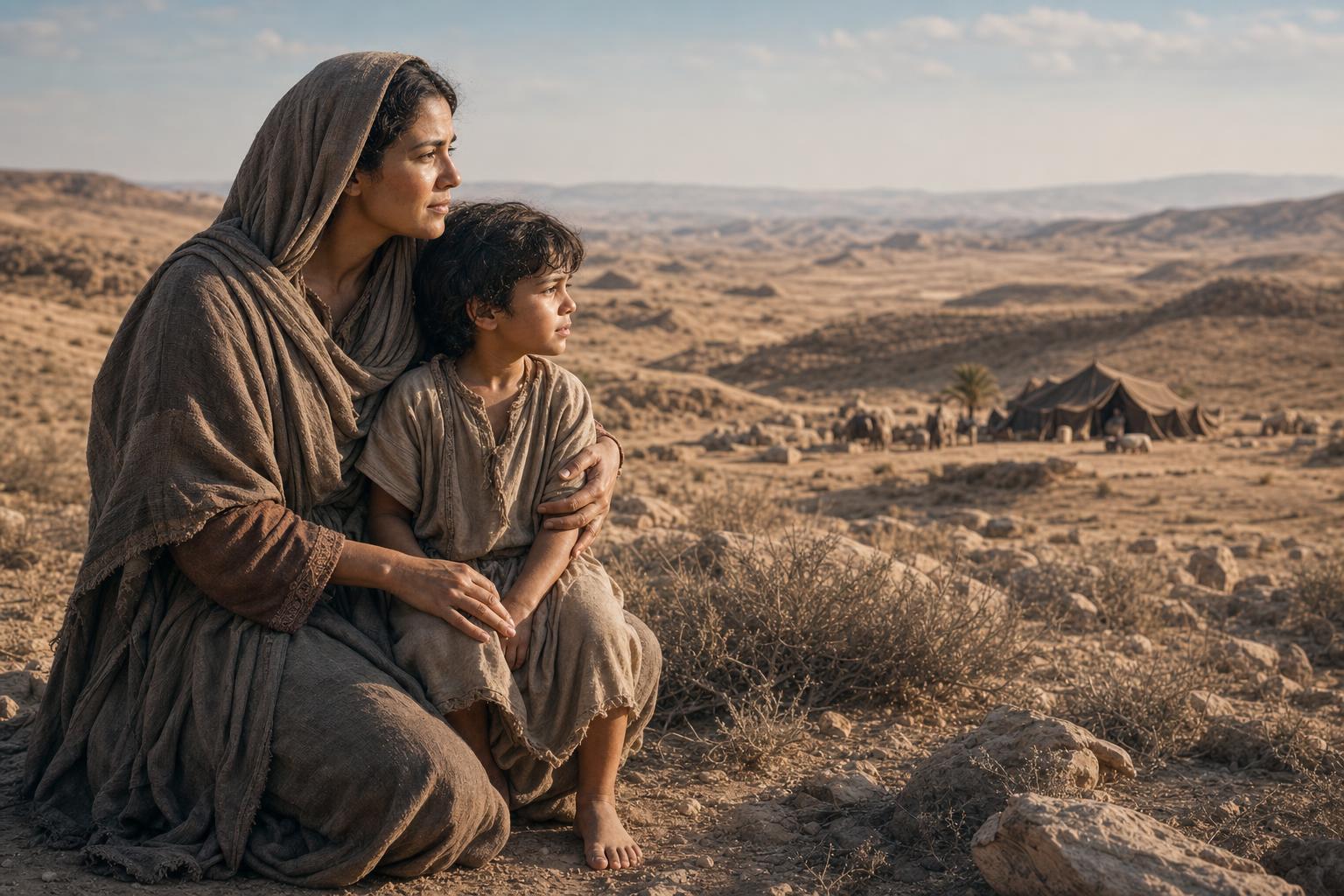
The name Ishmaelites points back to Ishmael himself. Ishmael was the son of Abraham and Hagar, and Genesis 16 says the angel of the Lord told Hagar to name her son Ishmael because God had heard her affliction.
That matters because the Bible is not using Ishmaelites as a vague label for random desert peoples. It is tying the group to one specific branch of Abraham's family. Ishmael is one person. The Ishmaelites are the descendants and tribes that come from him.
That simple distinction helps the rest of the article stay clear. Once a reader sees that Ishmael is the ancestor and the Ishmaelites are the later people group, the Joseph story and the later references make much more sense.
Where did the Ishmaelites come from?
The Ishmaelites came from Ishmael, Abraham's first son, but the Bible is careful about the next step in the story. In Genesis 17, God tells Abraham that Isaac will be the son through whom the covenant line is established. At the same time, God also says He has heard Abraham's concern for Ishmael and will bless him, make him fruitful, and turn him into a great nation. That promise fits naturally with the Bible's larger theme of God's promises.
Genesis 21 keeps that same balance. Ishmael is not the covenant child, but he is still Abraham's son, and God still preserves him and promises to make him into a nation. So when readers later meet the Ishmaelites, they are meeting the branch of Abraham's family that comes from Ishmael rather than from Isaac.
Genesis 25 gives the clearest people-group description. It lists Ishmael's sons, describes them as twelve princes, and says they lived by their villages and encampments. It also places their range from Havilah to Shur, east of Egypt. That picture makes the Ishmaelites easier to understand: they are not only a name in a genealogy. They are a real tribal people line in the biblical world.
Where do the Ishmaelites appear in the Bible?
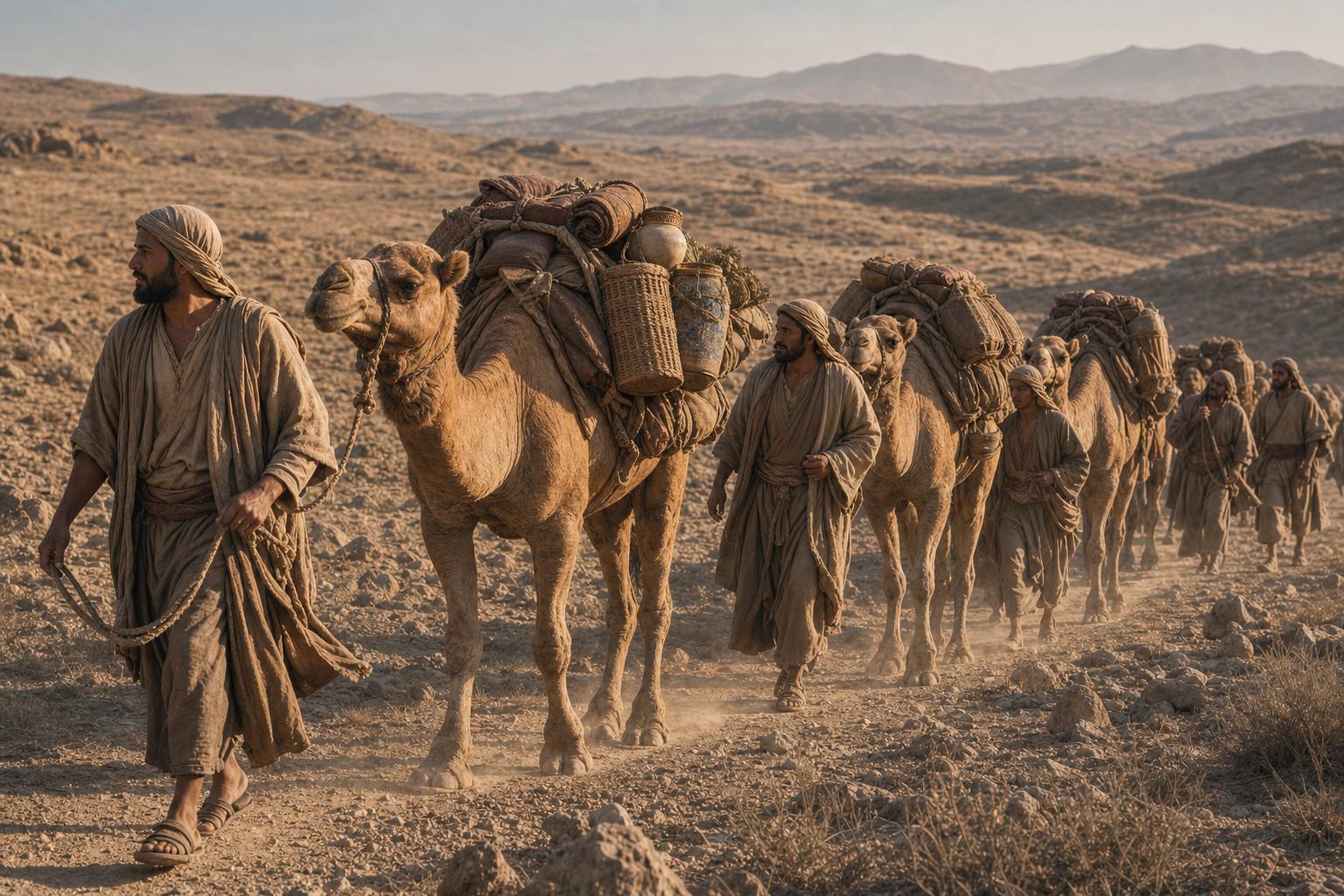
The Ishmaelites first matter as a people group in the family records of Genesis, but the scene most readers remember is Joseph's sale into Egypt. Genesis 37 says a caravan of Ishmaelites was coming from Gilead with camels carrying spices, balm, and myrrh on the way to Egypt. That detail gives the Ishmaelites a clear storyline role as traveling traders.
The same passage says Judah urged his brothers to sell Joseph rather than kill him. If you want to revisit that family scene more directly, PrayersFor already has Bible verses about Joseph and an explainer on Judah in the Bible.
Genesis 37 also uses the word Midianites in the same episode, so the most careful way to say it is this: the Joseph story places Ishmaelites and Midianites close together in the same trading scene. The article does not need a long digression about that overlap, but it is worth noting so readers do not assume the wording is simpler than it is.
The Ishmaelites appear again later in Psalm 83, where they are listed among peoples aligned against Israel. That later reference matters because it shows the name still functioning as a people-group label beyond Abraham's family records.
Are the Ishmaelites the same as Israelites?
No. The Ishmaelites and the Israelites are related, but they are not the same people. Both lines go back to Abraham. The difference is that the Ishmaelites come through Ishmael, while the Israelites come through Isaac and then through Jacob, whom God renames Israel.
That is why the Bible speaks differently about the two lines. Ishmael is blessed, heard, and made into a nation. But the covenant line that shapes the main storyline of Israel runs through Isaac. If you want the fuller explanation of Jacob's line, PrayersFor already has a guide to the Israelites in the Bible. If you want to follow that line into the Exodus story, the article on Moses in the Bible is the most natural next step.
This distinction also keeps the topic from drifting into confusion about later history. The dominant biblical question here is not how to map every later nation back onto one ancient family tree. The biblical question is simpler: who were the Ishmaelites inside Scripture itself? The answer is that they were the descendants of Ishmael, related to Israel through Abraham but distinct from the covenant people who come through Isaac and Jacob.
Why do the Ishmaelites matter in the Bible?
The Ishmaelites matter because they show that the Bible tracks Abraham's wider family with real care. Scripture does not only follow the covenant line. It also shows what happens around that line and which neighboring peoples remain connected to the story.
They also matter because they keep one important truth in view: God did not forget Ishmael. The covenant line runs through Isaac, but Ishmael is still blessed as Abraham's son. That makes the Ishmaelites an important reminder that biblical distinction is not the same thing as divine neglect. Scripture can distinguish roles without pretending one branch of the family never mattered.
Finally, the Ishmaelites matter because they help readers understand the Joseph story and the wider world around Israel. They are part of the reason Genesis feels like history unfolding through actual families, places, and trading routes rather than through disconnected religious sayings.
Key Bible passages about the Ishmaelites
If you want to study the Ishmaelites directly in Scripture, these are the strongest places to begin:
- Genesis 16:11-12 - Ishmael is named before birth, which anchors the people group in one specific son of Abraham.
- Genesis 17:18-20 - God promises to bless Ishmael and make him into a great nation with twelve princes, while distinguishing Isaac as the covenant son.
- Genesis 21:13-21 - God preserves Hagar and Ishmael and repeats the promise that Ishmael will become a nation.
- Genesis 25:12-18 - the clearest list of Ishmael's sons, princes, and encampments.
- Genesis 37:25-28 - Joseph is sold in the direction of an Ishmaelite caravan going to Egypt.
- Psalm 83:5-6 - the Ishmaelites appear among neighboring peoples hostile to Israel.
- 1 Chronicles 1:28-31 - a later genealogy that preserves Ishmael's line again.
If you want a longer way to keep those passages in order, this Bible reading plan and this chronological Bible reading plan make good companions.
What can Christians learn from the Ishmaelites?
One lesson is that God keeps His word even when family stories become painful and complicated. The Bible never says the covenant line goes through Ishmael, but it also never says Ishmael falls outside God's notice. The promises attached to his line still matter.
Another lesson is that details in Scripture are there for a reason. Family names, genealogies, and people-group labels can feel easy to skip, but they often explain why later stories unfold the way they do. The Ishmaelites are one of those details. Once readers understand who they are, Joseph's story, Israel's neighbors, and Abraham's wider family line all become easier to follow.
A third lesson is that careful Bible reading protects us from forcing the text to answer questions it is not trying to answer. The clearest use of this article is not to settle every modern identity debate. It is to help readers see what Scripture itself says, in its own order and emphasis. If you want a prayerful next step while reading those kinds of passages, these prayers for guidance and prayers for obedience fit naturally.
A short prayer after reading about the Ishmaelites
Lord, thank You for the way Scripture tells one connected story with care and truth. Help me read Your word closely, understand what You have actually said, and trust Your promises even when the story is more complex than I expected. Give me wisdom, humility, and a willing heart as I keep reading. In Jesus' name, amen.
If you want one simple next step after this article, keep reading through Genesis slowly and carefully so the wider family story stays in view.

