
Who Is Ezra in the Bible? Priest, Scribe, and Why He Matters
Ezra in the Bible was a Jewish priest and skilled scribe who returned from Babylon to Jerusalem, taught God's Law, and helped lead God's people back to covenant faithfulness after the exile. His importance lies in the way he helped rebuild the spiritual life of the community through Scripture, prayer, repentance, and worship.
Ezra is one of the clearest examples in Scripture of a leader who loved God's Word, obeyed it, and then helped others understand it too.
Where does Ezra fit in the Bible story?
Ezra belongs to the period after Judah's exile in Babylon. Jerusalem had been broken, the temple had been destroyed, and God's people had been carried away from their land. Then the Lord stirred the Persian king Cyrus to let the exiles return and rebuild the house of God in Jerusalem. That is the larger setting of the book of Ezra.
One detail helps this story make more sense: the book of Ezra begins before Ezra himself personally appears. The early chapters focus on the first return under Zerubbabel and the rebuilding of the temple. Ezra arrives later, in chapter 7, when the main need is no longer just a building project but the spiritual health of the people.
So if you are trying to place Ezra on the Bible timeline, it helps to think of him this way: Cyrus opens the door for return, Zerubbabel helps lead the temple rebuilding, Ezra comes later to teach and reform the people, and Nehemiah follows with the rebuilding of Jerusalem's walls. Ezra's role is the restoration of the community's heart and obedience.
What kind of leader was Ezra?
Ezra 7 describes him as both a priest and a scribe. That means he stood in Aaron's priestly line and was also deeply trained in the Law of Moses. He was a man shaped by God's Word.
The clearest summary of Ezra's life comes in Ezra 7:10: he devoted himself to studying the Law of the Lord, to doing it, and to teaching God's decrees in Israel. That verse explains why Ezra still stands out. He did not separate knowledge from obedience. He did not treat truth as something to collect without living it. He sought God's Word, practiced it, and passed it on.
Even Ezra's name points in a helpful direction. It is often connected with the idea of help or "Yah helps." That is not the main reason Ezra matters, but it fits his story well. Ezra's life keeps showing the help of God at work through a faithful servant.
If you have ever wanted a simple biblical model for how to approach Scripture, Ezra is one of the strongest examples. He was the kind of leader who let God's Word shape his own life before asking others to listen to it.
What did Ezra do when he returned from Babylon?
Ezra 7 records a letter from King Artaxerxes that gave him authority to return, bring offerings for the temple, appoint judges, and teach the Law of God in Judah. In other words, Ezra came with both spiritual purpose and real public responsibility.
He also led a company of returnees back from Babylon. Ezra 7 says the journey began on the first day of the first month and ended on the first day of the fifth month. That long trip mattered because it showed both the seriousness of the mission and the faith required to carry it out.
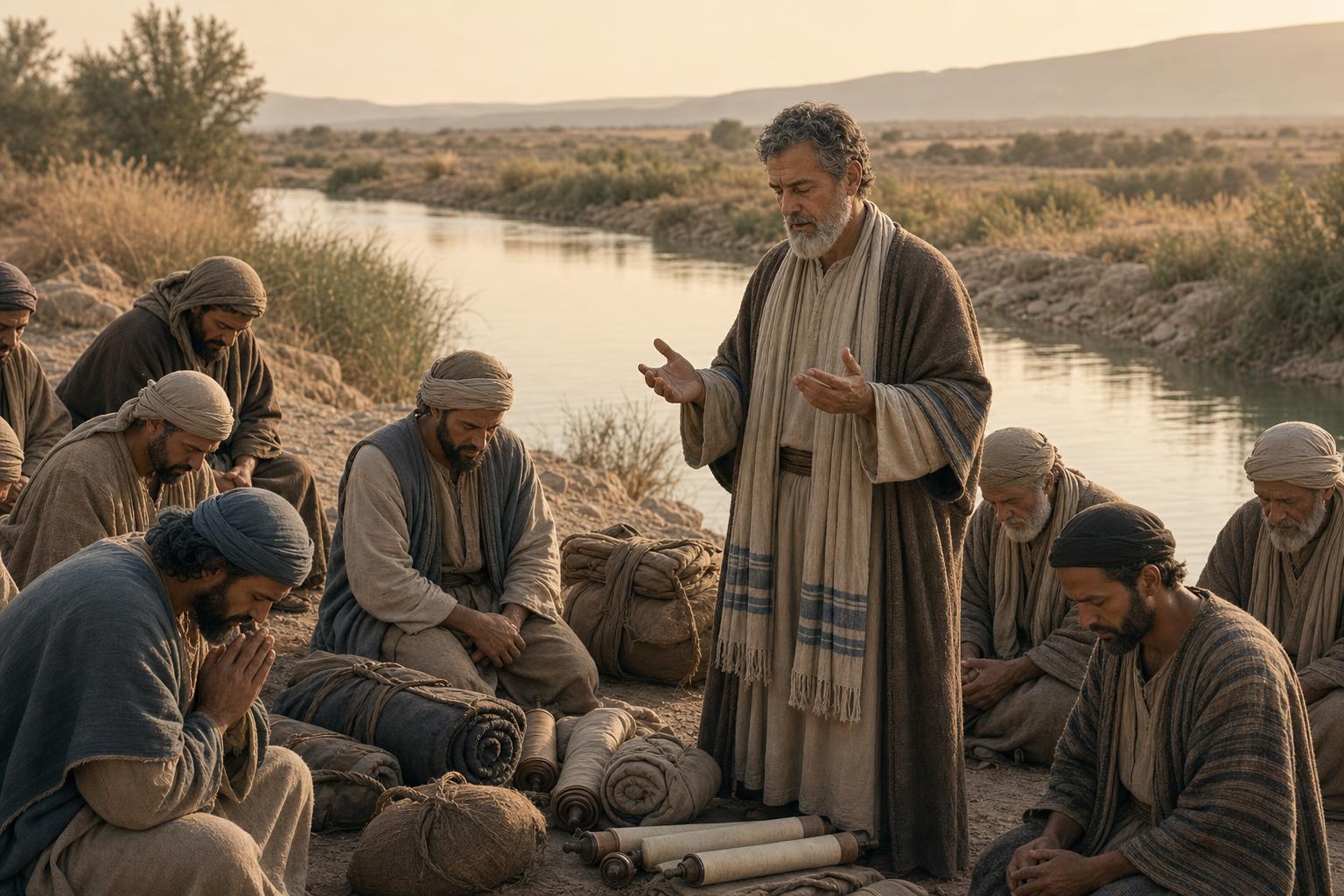
One of the most moving parts of Ezra's story happens before the travelers leave. At the Ahava Canal, Ezra proclaimed a fast so the people could humble themselves before God and ask Him for a safe journey. Ezra had already spoken about God's protecting hand, so he was ashamed to ask the king for soldiers and horsemen as if God's help would not be enough. Instead, the people fasted and prayed, and God answered them.
That scene reveals Ezra as a careful leader who still depended on God. He organized the mission, but he did not trust planning alone. Later the group reached Jerusalem safely, delivered the resources they carried, and saw the king's commands strengthen the worship of God's house.
If you are walking through a season that needs wisdom and steady dependence on God, this is one reason Ezra remains so encouraging. His leadership was built on trust in the Lord's hand.
How did Ezra lead the people back to God's Word?
Ezra's most important work in Jerusalem was spiritual renewal. He came to call the people back to the Word God had already given them.
That became especially clear when Ezra learned that many in the community, including leaders, had entered unfaithful marriages with the surrounding peoples. Ezra 9 shows how deeply this grieved him. He tore his clothing, sat appalled, and then prayed a long confession that acknowledged the people's guilt and God's mercy. Ezra's first response to sin was not cold control. It was brokenhearted repentance before God.
Ezra 10 then shows the community gathering around that grief and beginning a difficult reform process. This is one of the hardest parts of Ezra's story, and it should be handled carefully. In its own setting, the crisis is presented as a covenant-faithfulness issue tied to Israel's post-exile worship life, not as a generic statement about ethnicity. But the passage does make one thing plain: Ezra took covenant faithfulness seriously, and his public humility moved the people to take their sin seriously too.
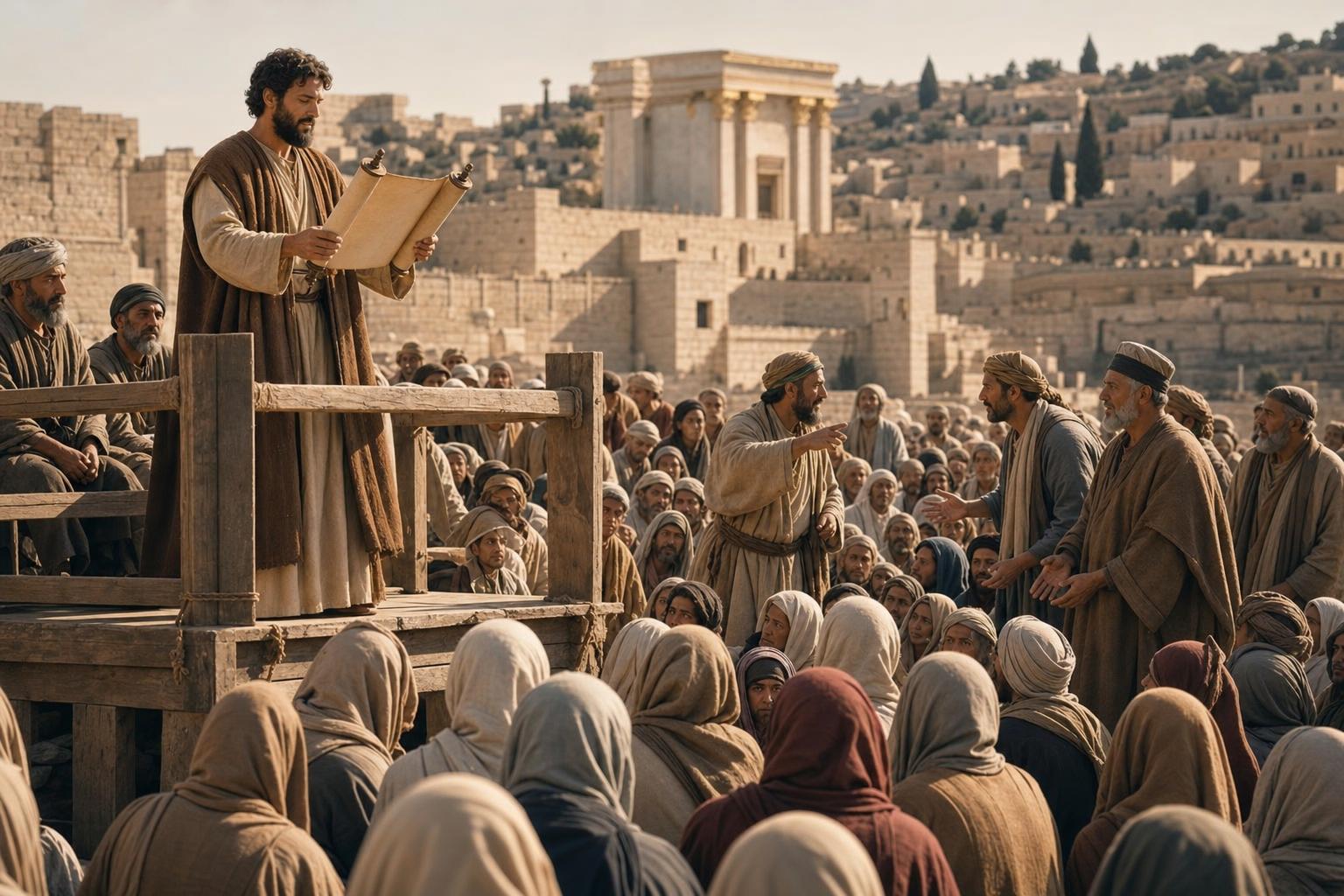
Later, in Nehemiah 8, Ezra appears in another defining scene. He brings out the Book of the Law before the assembled people and reads it from daybreak until noon while others help the crowd understand what is being read. This is one of the Bible's clearest pictures of Scripture-centered renewal. Ezra is helping a whole community hear God's Word with understanding.
That is why Ezra's leadership feels so different from a purely political or administrative role. He leads through confession, teaching, and faithful attention to what God has said.
Why is Ezra so important in the Bible?
Ezra is important because he helped restore the people of God after exile at the level that mattered most. Buildings can be repaired. City walls can be rebuilt. But if the people do not know God's Word, fear the Lord, and turn from sin, their restoration is still incomplete. Ezra's ministry addressed that deeper need.
He also reminds readers that true renewal usually starts in quieter ways than we expect. Ezra's story includes a royal letter and a long journey, but the heart of his significance is found in things like studying Scripture, praying for help, grieving over sin, and teaching God's truth clearly.
That is one reason Ezra 7:10 still speaks so powerfully. Ezra prepared his heart to seek the Law of the Lord, to do it, and to teach it. That order matters. He sought first. He obeyed next. Then he taught. Ezra did not try to lead others somewhere he refused to go himself.
Ezra remains a model for anyone who wants to handle God's Word faithfully today. If you want help growing in that kind of steady, Scripture-shaped life, our guide to Bible study methods is a natural next step. And if Ezra's prayerful dependence stands out to you, these Bible verses about fasting can help you keep exploring that theme.
Key Bible passages about Ezra
If you want to study Ezra more closely, start with these passages:
- Ezra 1:1-4 - the decree of Cyrus that sets the post-exile return in motion.
- Ezra 7:6-10 - Ezra's identity as a priest and skilled scribe, plus the defining summary of his life.
- Ezra 7:11-26 - Artaxerxes' letter authorizing Ezra's mission.
- Ezra 8:21-23 - Ezra's call to fasting and prayer before the journey.
- Ezra 9:1-15 - Ezra's grief and confession over the people's unfaithfulness.
- Ezra 10:1-17 - the people's response and the beginning of reform.
- Nehemiah 8:1-8 - Ezra reading the Law publicly so the people can understand it.
A short prayer inspired by Ezra
Lord, give me a heart like Ezra's. Teach me to seek Your Word with honesty, to obey what You show me, and to live it before I speak it to anyone else. When I am weak, proud, or distracted, draw me back to repentance and humble dependence on You. Help me love Your truth, trust Your hand, and walk in a way that leads others closer to You. In Jesus' name, amen.
If you are asking God for wisdom in your own next step, spend time with our prayers for guidance.
Frequently asked questions
What does the name Ezra mean in the Bible?
Ezra is usually connected with the idea of help or "Yah helps." That meaning fits his story, but the Bible's main emphasis is not on the name itself. It is on Ezra's role as a priest, scribe, and leader who helped restore God's people after exile.
Was Ezra a priest or a prophet?
The Bible clearly identifies Ezra as a priest and skilled scribe. Readers sometimes group him with prophets because he called the people back to faithfulness, but Scripture's plain description emphasizes his priestly line and his teaching of God's Law.
Is Ezra in the Bible a man or woman?
Ezra in the Bible is a man. Ezra 7 presents him as a male priest descended from Aaron and a leader of the returning exiles.
How did Ezra die in the Bible?
The Bible does not say how Ezra died. Later traditions make different claims, but Scripture itself stays silent on the details of Ezra's death.
Are Ezra and Nehemiah the same person?
No. Ezra and Nehemiah are different leaders who served during the post-exile restoration. Ezra is especially tied to teaching God's Law and spiritual renewal, while Nehemiah is especially tied to rebuilding Jerusalem's walls and governing the city.

